
You’ve just had your office carpets professionally cleaned, yet within days they look grimy again. It’s frustrating, especially when you’ve invested time and money into maintaining a fresh workspace. The truth is, even after cleaning, office carpets can accumulate dirt faster than you’d expect. Understanding why this happens arms you with the knowledge to better manage carpet hygiene in your Yarra Valley office. Addressing these issues not only improves workplace appearance but also supports staff wellbeing and productivity.
Table of Contents
- What makes office carpets collect dirt?
- Hidden sources: Dirt that office cleaning misses
- Carpet fibres and office environments: Why type matters
- The role of air quality and allergens in dirty office carpets
- Common mistakes that make carpets dirtier after cleaning
- How Yarra Valley offices can manage carpet soiling
- Expert carpet cleaning makes all the difference
- Frequently asked questions
Key Takeaways
| Point | Details |
|---|---|
| Carpets trap more than dirt | Office carpets hold dust, allergens, and moisture brought in by shoes and air movement. |
| Not all cleaning removes deep soil | Improper cleaning can leave sticky residues or cause wicking, making carpets dirty again quickly. |
| Fibre type influences appearance | Wool carpets look cleaner for longer but still accumulate hidden dirt like other fibres. |
| Practical maintenance extends carpet life | Regular vacuuming, proper cleaning and professional servicing keep office carpets looking and performing their best. |
| Clean carpets support a healthy office | Reducing surface dirt and trapped allergens improves workplace hygiene and staff wellbeing. |
What makes office carpets collect dirt?
Now that you know why your office carpet isn’t always as clean as it looks, let’s break down what’s at play beneath the surface.
High foot traffic is the primary culprit. Every person walking through your office brings in dust, soil, and moisture from outside. Multiply that by dozens of employees and visitors daily, and you’ve got a constant stream of contaminants. Carpet fibres act as a natural filter, trapping airborne particles and allergens more effectively than hard floors. While this benefits air quality, it means your carpet holds onto dirt.
Open-plan layouts and communal kitchens add to the problem. Spills from coffee, crumbs from lunch, and general debris get walked across the office, spreading soil into previously clean areas. Furniture placement creates track marks where dirt builds up along pathways between desks, meeting rooms, and break areas.
Key contributors to office carpet soiling:
- Outdoor soil and moisture tracked in on shoes
- Airborne dust settling into carpet fibres
- Food and beverage spills in communal spaces
- Furniture creating high-traffic pathways
- Inadequate entry matting systems
The difference between carpets and hard floors is significant. Hard surfaces show dirt immediately, prompting quick cleaning. Carpets hide soil within their fibres, allowing it to accumulate unnoticed until it becomes visible. This makes understanding your carpet’s impact on office health crucial for maintaining a hygienic workspace.
Pro Tip: Place commercial-grade entry mats at all entrances to capture up to 80% of tracked-in dirt before it reaches your carpet. Change or clean these mats weekly during wet weather.
“Carpets in office environments function as passive air filters, continuously trapping particles that would otherwise circulate through the workspace. This protective role comes at the cost of visible soiling, requiring regular maintenance to preserve both appearance and function.”
Regular essential carpet maintenance routines help manage this constant influx of dirt, but understanding the hidden sources is equally important.
Hidden sources: Dirt that office cleaning misses
While the basics are important, invisible offenders are often to blame for stubborn, unsightly carpets.
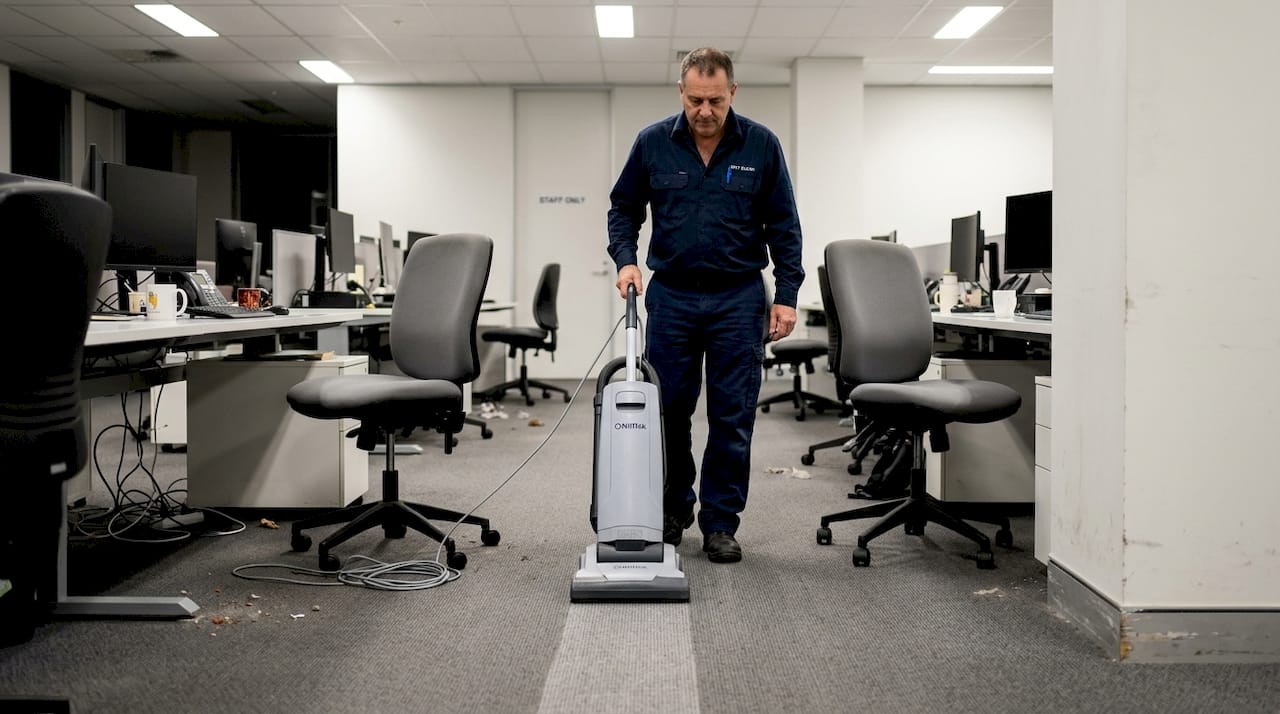
Soil tracked in from entrances persists despite regular vacuuming. Standard vacuum cleaners remove surface debris but struggle with embedded particles pressed deep into carpet fibres by foot traffic. This hidden dirt gradually works its way to the surface, making carpets look dirty again.
Cleaning residue creates a sticky film that attracts new dirt quickly. When cleaning solutions aren’t properly rinsed, they leave behind a tacky layer that acts like a magnet for dust and soil. This is why some carpets look worse a week after cleaning than they did before.
Spillages that aren’t properly treated can wick back to the surface after drying. Coffee, soft drinks, and other liquids seep deep into carpet backing and padding. Even when the surface appears clean, moisture from concrete subfloors can lift this hidden dirt back up through the fibres, creating mysterious stains that appear days or weeks later.
Common hidden soiling sources:
- Embedded soil below vacuum reach
- Sticky residues from improper cleaning
- Deep spills wicking back to the surface
- Moisture from concrete subfloors
- Neglected corners and under-desk areas
Neglected areas contribute to future odours and stains. Spaces under desks, behind filing cabinets, and along walls rarely receive thorough cleaning. These zones become reservoirs of dirt that gradually spread across the office. Boosting productivity with clean carpets requires addressing these overlooked spots.
Pro Tip: Test for cleaning residue by rubbing a white cloth on your carpet after it dries. If the cloth picks up colour or feels sticky, residue is present and will accelerate re-soiling.
The wicking effect is particularly problematic in older Yarra Valley buildings where concrete slabs may have moisture issues. Deep natural carpet cleaning methods that properly extract moisture and residues help prevent this recurring problem.
Carpet fibres and office environments: Why type matters
Knowing what’s hiding beneath the surface is only part of the story. What your carpet is made of also plays a key role in dirt build-up.
Common office carpet fibre types include wool, nylon, and polypropylene. Each has distinct characteristics affecting how dirt appears and how effectively cleaning works. Wool fibres hide dirt better than synthetic options due to their natural crimp and colour variation. Nylon offers durability and resilience but shows soiling more readily. Polypropylene resists stains but can appear worn quickly in high-traffic areas.
Fibre construction influences dirt visibility and cleaning effectiveness. Loop pile carpets trap less dirt on the surface but can be harder to deep clean. Cut pile carpets show footprints and vacuum marks but release soil more easily during cleaning. Carpet age also affects soiling rates, as older fibres lose their protective treatments and become more porous.
| Fibre type | Dirt visibility | Cleaning ease | Durability | Best for |
|---|---|---|---|---|
| Wool | Low | Moderate | High | Executive areas |
| Nylon | High | Easy | Very high | High-traffic zones |
| Polypropylene | Moderate | Very easy | Moderate | Budget-conscious offices |
| Blends | Moderate | Moderate | High | General office use |
Why some office carpets appear cleaner even when dirty relates to fibre colour and pattern. Darker colours and multi-toned patterns mask soiling effectively, while light solid colours show every speck. This doesn’t mean dark carpets are actually cleaner, just that dirt is less visible.
Understanding these differences helps you make informed decisions about carpet cleaning tips and business carpet maintenance strategies tailored to your specific flooring.
The role of air quality and allergens in dirty office carpets
Soiling doesn’t only matter for what you see. Let’s look at why office carpets can actually benefit your building’s air quality, too.
Carpets act as passive air filters in workplace settings. They trap allergens and particles, preventing them from circulating through the air where staff would breathe them in. This filtering function is particularly valuable in offices with poor ventilation or high outdoor pollution levels.
Comparison studies show particle counts above carpet are significantly lower than above hard flooring. While hard floors are easier to clean visibly, they allow dust and allergens to become airborne with every footstep. Carpets hold these particles until they’re removed through proper vacuuming and professional cleaning.
| Surface type | Airborne particles | Surface soil visibility | Cleaning frequency needed |
|---|---|---|---|
| Carpet | Low | Moderate to high | Weekly vacuum, quarterly deep clean |
| Hard floor | High | Low to moderate | Daily sweep, weekly mop |
| Combination | Moderate | Varies | Tailored approach |
Here’s the nuance: cleaner air often means a dirtier-looking carpet surface. You must manage both aspects. Regular professional cleaning removes the trapped particles before they impact indoor air quality, while maintaining the carpet’s filtering benefits.
“The relationship between carpet cleanliness and air quality is counterintuitive. A carpet doing its job of trapping allergens will appear soiled faster than one that allows particles to remain airborne. Effective building management requires balancing visual cleanliness with the health benefits of proper air filtration.”
When to prioritise air quality versus carpet appearance depends on your office environment. Medical offices, childcare centres, and spaces with staff who have allergies should focus on air quality benefits while maintaining regular cleaning schedules. Retail-facing offices might prioritise appearance but shouldn’t neglect the health advantages of proper office carpet sanitation.
Common mistakes that make carpets dirtier after cleaning
Understanding the science is only helpful if you avoid the most common cleaning traps. Here’s what to watch for when planning your office maintenance.
-
Leaving excess cleaning solution: Improper rinsing creates sticky residues that attract dirt like a magnet. Professional cleaners use hot water extraction to remove both soil and cleaning agents, but DIY methods often skip this crucial step.
-
Over-wetting the carpet: Too much water causes wicking, bringing dirt from deep fibres and backing to the surface as it dries. This makes carpets look dirty within days of cleaning, even though the surface was initially clean.
-
Skipping post-clean vacuuming: After professional cleaning, carpets need regular vacuuming to remove particles that surface during drying. Many offices resume normal use immediately without this maintenance step.
-
Ignoring drying time: Insufficient ventilation and air circulation extend drying time, increasing the risk of mould, mildew, and wicking. Open windows, run fans, and avoid heavy foot traffic until carpets are completely dry.
-
Using one-size-fits-all approaches: Different carpet types, soiling levels, and office environments require tailored cleaning methods. What works for a lightly used reception area won’t suit a busy call centre floor.
Pro Tip: Schedule professional carpet cleaning for Friday afternoons or before long weekends. This gives carpets maximum drying time before staff return, reducing the risk of premature soiling from foot traffic on damp fibres.
Understanding carpet cleaning preparation steps and following recommended carpet cleaning frequency guidelines helps avoid these costly mistakes.
How Yarra Valley offices can manage carpet soiling
With this knowledge, here’s how you can take control and keep your office carpets looking fresh, longer.
Develop a regular maintenance plan tailored to traffic patterns. High-traffic areas need daily vacuuming, while quieter zones can be addressed two to three times weekly. Map your office to identify hotspots requiring extra attention.
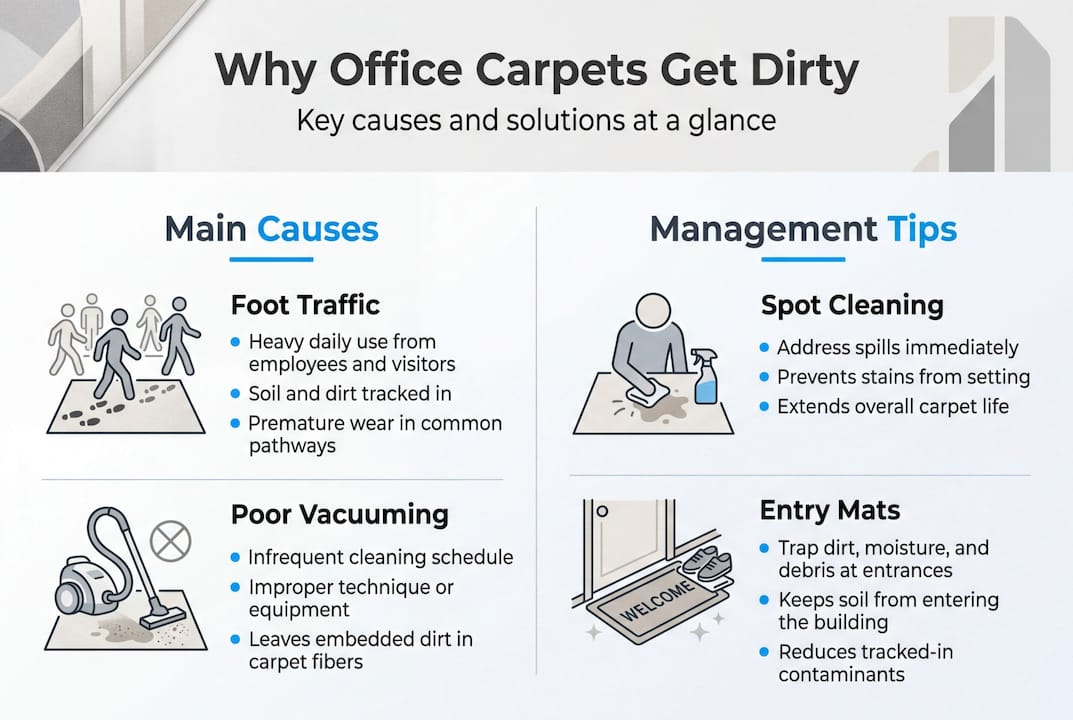
Invest in high-quality entry mats and targeted spot cleaning. Commercial-grade mats at every entrance capture the majority of tracked-in dirt before it reaches your carpet. Train staff to report spills immediately and keep spot-cleaning supplies accessible for quick treatment.
Schedule professional deep cleans to address invisible soiling. Regular professional cleaning improves both appearance and health outcomes, reducing productivity loss from poor indoor air quality. Most Yarra Valley offices benefit from quarterly deep cleans, with high-traffic businesses requiring more frequent service.
Practical maintenance checklist:
- Daily vacuuming of main walkways and reception areas
- Weekly vacuuming of all carpeted spaces
- Immediate spot treatment of spills
- Monthly inspection for wear patterns and hidden soiling
- Quarterly professional deep cleaning
- Annual assessment of carpet condition and replacement needs
Educate staff on spill management and daily vacuuming needs. A quick response to spills prevents permanent staining and reduces the workload for professional cleaners. Simple training on proper vacuum technique ensures your daily maintenance is actually effective.
Monitor moisture issues, especially in older Yarra Valley buildings. Concrete slabs in heritage buildings or those near waterways may have higher moisture levels. Use dehumidifiers if needed and address any leaks or drainage problems promptly to prevent wicking and mould growth.
Following top carpet care tips consistently transforms carpet maintenance from a reactive chore into a proactive strategy that protects your investment and supports a healthier workplace.
Expert carpet cleaning makes all the difference
If ongoing dirt and stains are impacting your workspace, expert help is just a call away.
Professional cleaners deliver better, longer-lasting results because they understand the science behind carpet soiling. They use commercial-grade equipment that extracts more water, removes more residue, and dries carpets faster than rental machines. Their training covers different fibre types, appropriate cleaning solutions, and techniques that prevent common mistakes like over-wetting and residue build-up.
Tailored cleaning plans help address recurring soiling in your specific office environment. A professional assessment identifies problem areas, recommends appropriate cleaning frequencies, and suggests preventive measures based on your traffic patterns and carpet type. This customised approach is far more effective than generic cleaning schedules.
For Yarra Valley offices struggling with persistent carpet issues, local carpet cleaning services offer the expertise and equipment needed to restore and maintain your flooring investment. Whether you need routine maintenance or commercial steam cleaning solutions for stubborn soiling, professional support ensures your carpets contribute to a clean, healthy, and productive workplace.
Frequently asked questions
How often should office carpets be professionally cleaned?
Most offices benefit from professional carpet cleaning every 6 to 12 months, depending on foot traffic and use. High-traffic areas may need quarterly service.
Can vacuuming alone prevent office carpet soiling?
Vacuuming removes surface dirt but can’t address deep-seated grime or residues, so periodic professional cleaning is essential for thorough maintenance.
Which office carpet fibres hide dirt best?
Wool fibres hide soil better than nylon or polypropylene due to natural crimp and colour variation, though all types accumulate dirt over time.
Why does dirt return soon after cleaning office carpets?
Sticky residues and wicking effects from improper cleaning quickly bring deep soil back to the surface, making carpets appear dirty again within days.
Are office carpets better or worse for air quality?
Carpets trap allergens and particles, reducing airborne exposure compared to hard flooring, but must be regularly cleaned to avoid creating hygiene issues.
Recommended
- Essential Office Carpet Maintenance for a Clean Workspace – Yarra Valley Carpet Cleaning
- 7 Best Office Carpet Cleaning Tips for Fresh Workspaces – Yarra Valley Carpet Cleaning
- Clean office carpets regularly to boost health and productivity – Yarra Valley Carpet Cleaning
- Office Carpet Cleaning Frequency: Best Practices for 2025 – Yarra Valley Carpet Cleaning
- Carpet Cleaning | J R Cleaning