
Over 50 percent of australian office managers are surprised by how quickly workplace upholstery traps hidden dirt and allergens. In the lively business communities of the Yarra Valley, maintaining clean office furniture is about more than just appearances. Professional upholstery cleaning protects employee health, preserves investments, and ensures your office sends the right message to both staff and clients. Discover the specific steps and benefits that keep australian workplaces looking and feeling their best year-round.
Table of Contents
- What Office Upholstery Cleaning Involves
- Hidden Hygiene Risks in Office Furniture
- Types of Dirt and Contaminants Removed
- Impact on Employee Health and Wellbeing
- Enhancing Workplace Image and Client Perception
- Cost Savings and Sustainability Benefits
Key Takeaways
| Point | Details |
|---|---|
| Professional Upholstery Cleaning is Essential | Regular cleaning helps eliminate allergens, bacteria, and other contaminants, ensuring a hygienic workplace environment. |
| Impact on Employee Health | Clean upholstery contributes to improved employee wellbeing, reducing risks of respiratory issues and increasing productivity. |
| Enhancing Workplace Image | Well-maintained office furniture positively influences client perceptions, reflecting organisational professionalism and attention to detail. |
| Cost Savings and Sustainability | Investing in professional cleaning extends furniture lifespan, reduces replacement costs, and supports sustainability efforts while enhancing corporate reputation. |
What Office Upholstery Cleaning Involves
Office upholstery cleaning is a comprehensive process that extends far beyond simple surface wiping. This specialised service involves systematic cleaning techniques designed to maintain workplace hygiene, extend furniture lifespan, and create a professional environment for Yarra Valley businesses. Professional cleaning techniques are critical for removing deep-seated dirt, allergens, and potential microbial contaminants that accumulate in office furniture over time.
The cleaning process typically encompasses multiple strategic steps. First, professional cleaners conduct a thorough fabric assessment to determine the most appropriate cleaning method. Different upholstery materials like leather, cotton, polyester, and synthetic blends require unique approaches. Trained technicians use specialised equipment and eco-friendly solutions to extract dirt, neutralise odours, and sanitise surfaces without causing fabric damage. Steam cleaning, hot water extraction, and targeted stain removal are common techniques used to restore office furniture to pristine condition.
Specifically for Yarra Valley workplaces, upholstery cleaning involves addressing regional environmental challenges. Offices in areas like Lilydale, Mooroolbark, and Chirnside Park often face dust, pollen, and occasional mud tracking that can rapidly degrade furniture quality. Professional cleaners understand these localised conditions and implement cleaning strategies that protect against premature fabric wear while maintaining a hygienic workspace. Infection prevention protocols are also integrated into the cleaning process, ensuring that upholstered surfaces remain free from harmful microorganisms.
Here’s an overview of common office upholstery cleaning methods and their primary business impacts:
| Cleaning Method | Suitable Material Types | Key Benefit | Typical Business Impact |
|---|---|---|---|
| Steam Cleaning | Synthetic blends, some wools | Deep sanitisation | Reduces allergens, improves air |
| Hot Water Extraction | Most fabrics (excluding silk) | Removes embedded soil | Extends furniture lifespan |
| Targeted Stain Removal | All, method varies | Restores fabric appearance | Enhances office presentation |
| Dry Cleaning | Delicate or moisture-sensitive | Prevents water damage | Minimises business disruption |
Pro Tip: Schedule professional upholstery cleaning during off-peak business hours to minimise workplace disruption and maintain continuous operational efficiency.
Hidden Hygiene Risks in Office Furniture
Office furniture harbours numerous hidden hygiene risks that many Yarra Valley businesses underestimate. Microbial contamination risks lurk in seemingly clean upholstery, with fabric surfaces potentially becoming breeding grounds for bacteria, viruses, and allergens that can compromise workplace health. These microscopic threats accumulate rapidly in shared office environments, particularly in high-traffic areas like meeting rooms and communal workspaces in towns such as Lilydale, Mooroolbark, and Chirnside Park.
Dust mites, bacteria, and viral particles can become embedded deep within office chair fabrics, armrests, and cushioned surfaces. Areas like chair backs, armrests, and shared seating are particularly susceptible to pathogen transmission. Infection prevention protocols highlight that these frequently touched surfaces can facilitate rapid spread of infectious agents among employees. Regular professional cleaning becomes crucial in disrupting these potential transmission pathways and maintaining a hygienic workplace environment.
The risks extend beyond immediate health concerns. Accumulated dirt, skin cells, and organic matter can degrade upholstery materials, creating an increasingly porous surface that becomes even more challenging to clean over time. For Yarra Valley businesses, this means potential long-term impacts on both employee health and furniture investment. Comprehensive cleaning approaches that address deep-seated contaminants are essential for maintaining a professional, safe workplace that protects both human health and office infrastructure.
Pro Tip: Implement a quarterly professional deep-cleaning schedule for office furniture to effectively interrupt potential pathogen transmission cycles.
Types of Dirt and Contaminants Removed
Office upholstery in Yarra Valley workplaces accumulates a complex array of contaminants that extend far beyond simple surface dust. Airborne workplace contaminants include microscopic particles that settle into fabric fibres, creating potential health risks for employees. These range from environmental pollutants tracked in from Lilydale’s industrial areas to biological debris generated within office environments.
The specific types of dirt and contaminants encountered include organic materials like body oils, dead skin cells, and food residues. Microbial contaminants such as bacteria, fungi, and mould spores can rapidly proliferate in upholstered surfaces, particularly in humid regions around Mooroolbark and Chirnside Park. Chemical residues from office equipment, printer toners, and cleaning agents also contribute to the complex contamination profile that professional cleaning services must address.
Key Contaminant Categories Include:
- Biological contaminants (bacteria, fungi, dust mites)
- Organic matter (skin cells, food particles)
- Environmental pollutants (dust, pollen, industrial particulates)
- Chemical residues (toner dust, cleaning agent remnants)
- Moisture-related contaminants (mould spores, mineral deposits)
Pro Tip: Conduct monthly visual inspections of office upholstery to identify early signs of contamination and schedule targeted professional cleaning.
Impact on Employee Health and Wellbeing
Clean office upholstery plays a critical role in protecting employee health across Yarra Valley workplaces. Workplace wellbeing strategies demonstrate that maintaining hygienic furniture directly impacts staff physical and psychological wellness. In busy business districts like Lilydale and Mooroolbark, where employees spend significant time in shared office spaces, clean upholstery becomes a fundamental health intervention.

Potential health risks associated with unclean office furniture include respiratory irritations, allergic reactions, and increased susceptibility to infectious diseases. Dust mites, mould spores, and bacterial colonies embedded in upholstery fabrics can trigger asthma, skin conditions, and immune responses. These microscopic contaminants create invisible health hazards that compromise employee resilience and workplace productivity. By implementing regular professional cleaning, businesses can significantly reduce these potential health risks and create a safer working environment.
Beyond physical health, clean office environments contribute substantially to psychological wellbeing. Employees perceive well-maintained workspaces as a reflection of organisational care and professionalism. This perception enhances job satisfaction, reduces workplace stress, and promotes a positive organisational culture. When staff feel their health is prioritised through consistent maintenance of office infrastructure, they are more likely to feel valued and engaged.
Pro Tip: Develop a quarterly professional upholstery cleaning schedule and communicate this proactive health initiative to employees to boost workplace morale and demonstrate organisational commitment to staff wellbeing.
Enhancing Workplace Image and Client Perception
In the competitive business landscape of the Yarra Valley, office presentation speaks volumes about an organisation’s professionalism and attention to detail. Workplace professionalism standards demonstrate that clean, well-maintained upholstery serves as a critical visual indicator of a company’s commitment to quality. For businesses in Lilydale, Mooroolbark, and Chirnside Park, pristine office furniture becomes a silent yet powerful communication tool that signals competence to potential clients and partners.
First impressions are formed within seconds of entering a workspace, and dirty or worn upholstery can undermine years of brand building. Stained chairs, dusty sofas, and neglected meeting room furniture suggest organisational carelessness, potentially causing clients to question the company’s reliability and professional standards. Clean, well-maintained upholstery conversely communicates meticulousness, suggesting that if a business pays attention to small details like furniture maintenance, they will likely apply the same level of care to client services and professional responsibilities.
Beyond aesthetic considerations, clean upholstery contributes to a broader narrative of organisational culture and values. Clients and visitors subconsciously interpret a meticulously maintained workspace as an reflection of internal processes, employee respect, and commitment to excellence. This perception extends beyond mere cleanliness, suggesting a workplace that values employee wellbeing, invests in its infrastructure, and maintains high operational standards. Such an environment can subtly influence client confidence, potentially increasing trust and the likelihood of securing business partnerships.
Pro Tip: Rotate professional upholstery cleaning with strategic timing, such as before important client meetings or quarterly business reviews, to consistently present a polished and professional workplace image.
Cost Savings and Sustainability Benefits
Professional upholstery cleaning represents a strategic investment for Yarra Valley businesses, delivering significant financial and environmental advantages. Sustainable cleaning practices demonstrate that regular maintenance can dramatically extend furniture lifespan, preventing premature replacement and reducing long-term capital expenditure. For businesses in Lilydale, Mooroolbark, and Chirnside Park, this approach translates into tangible cost savings and reduced waste generation.
The economic benefits extend beyond immediate furniture preservation. By implementing professional cleaning protocols, organisations can defer substantial replacement costs. A well-maintained office chair might last 7-10 years instead of 3-5 years, representing potential savings of hundreds of dollars per furniture piece. This approach aligns with circular economy principles, minimising unnecessary waste and reducing the environmental footprint of corporate infrastructure.
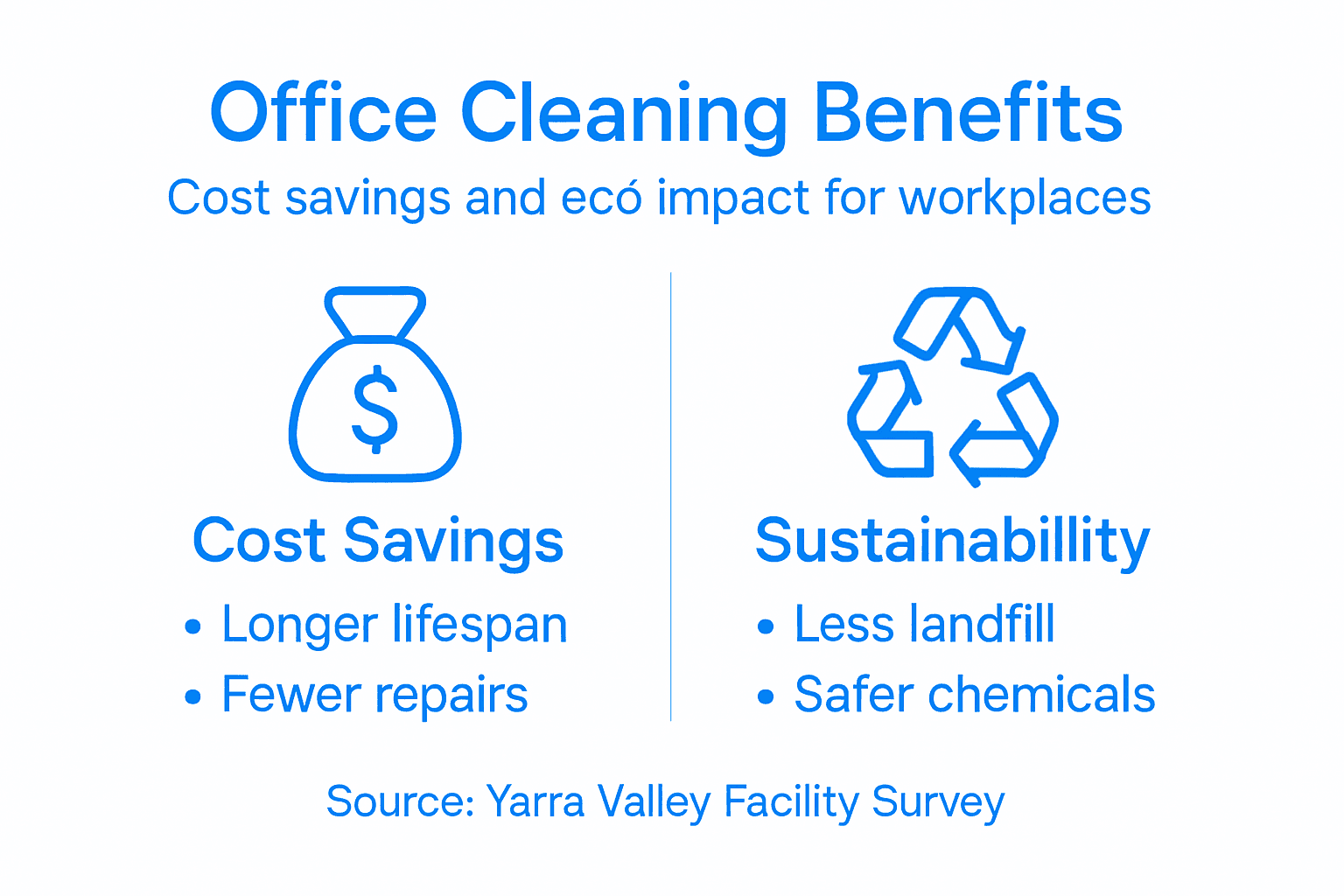
Sustainability considerations are increasingly important for modern businesses. By choosing professional cleaning services that utilise eco-friendly products and techniques, companies can demonstrate corporate social responsibility. These practices not only reduce landfill waste but also support broader environmental conservation efforts. The indirect benefits include enhanced corporate reputation, potential tax incentives, and alignment with emerging sustainability standards that many clients and stakeholders now expect.
The following table summarises the financial and environmental benefits of regular professional upholstery cleaning for businesses:
| Benefit Area | Short-Term Outcome | Long-Term Value |
|---|---|---|
| Cost Savings | Defers replacement expenses | Preserves capital for other use |
| Sustainability | Reduces landfill waste | Aligns with corporate responsibility |
| Employee Wellbeing | Lowers illness rates | Boosts morale and productivity |
| Brand Reputation | Maintains clean image | Enhances client trust and loyalty |
Pro Tip: Develop a comprehensive furniture maintenance schedule that integrates regular professional cleaning, tracking both cost savings and sustainability metrics to demonstrate long-term organisational value.
Protect Your Yarra Valley Workplace with Expert Upholstery Cleaning
Maintaining clean office upholstery is essential for Yarra Valley businesses facing hidden hygiene risks and wanting to enhance employee wellbeing while projecting a professional image. If you are concerned about deep-seated dirt, allergens, or microbial contaminants embedded in your office furniture, Yarra Valley Carpet Cleaning offers specialised solutions tailored to these challenges. Using advanced steam cleaning and eco-friendly products, our family-owned team services Lilydale, Mooroolbark, Chirnside Park, and surrounding areas to ensure a healthier workspace and extended furniture lifespan.
Don’t let stained or contaminated upholstery undermine your workplace health or client perception. Discover how our reliable, professional cleaning services can support your business’s hygiene and sustainability goals by visiting our Uncategorized Archives – Yarra Valley Carpet Cleaning. Ready to experience the difference in your office environment? Contact us today at Yarra Valley Carpet Cleaning for a prompt, effective upholstery cleaning service that helps protect your team and impress your clients.
Frequently Asked Questions
What are the benefits of professional upholstery cleaning for offices?
Professional upholstery cleaning helps maintain workplace hygiene, extends the lifespan of furniture, reduces allergens, and improves the overall appearance of the office, thereby enhancing employee health and wellbeing.
How often should I schedule professional upholstery cleaning in my office?
It is recommended to conduct professional upholstery cleaning at least quarterly to effectively manage dirt, allergens, and potential pathogens, as well as maintain a clean and professional workplace environment.
What types of contaminants are commonly found in office upholstery?
Common contaminants in office upholstery include biological materials like bacteria and dust mites, organic matter such as food particles and skin cells, environmental pollutants, and chemical residues from office supplies.
What upholstery cleaning methods are most effective for office furniture?
Effective upholstery cleaning methods include steam cleaning, hot water extraction, targeted stain removal, and dry cleaning, each tailored to specific fabric types to safely remove dirt and maintain the integrity of the upholstery.
Recommended
- Upholstery Cleaning for Businesses: 2025 Guide for Yarra Valley – Yarra Valley Carpet Cleaning
- Essential Office Furniture Cleaning Tips for 2025 – Yarra Valley Carpet Cleaning
- Upholstery Cleaning for Businesses: 2025 Guide for Yarra Valley – Yarra Valley Carpet Cleaning
- Complete Guide to Why Upholstery Cleaning Matters – Yarra Valley Carpet Cleaning