
TL;DR:
- Immediate action within 24 hours is critical to prevent mold growth and irreversible damage.
- Professional drying techniques reduce mold risk and ensure thorough moisture removal from carpets and underlays.
- Ongoing maintenance and prompt response to leaks help prevent future water damage and carpet deterioration.
Water damage on carpets is one of those problems that looks manageable at first glance. The carpet is wet, you throw down some towels, and you figure you’ll deal with it properly tomorrow. That one-day delay is where things go seriously wrong. Mould can begin growing in carpet fibres within just 24 to 48 hours of water exposure, and by the time you smell it, the damage is often already done. Whether you’re dealing with a burst pipe in Lilydale, storm flooding in Healesville, or an overflowing washing machine in Mooroolbark, the steps you take in the first few hours will determine whether your carpet survives.
Table of Contents
- Understanding water damage on carpets
- Immediate steps after water damage occurs
- Drying and restoring water-damaged carpets
- Preventing future water damage and maintaining carpets
- A Yarra Valley expert’s perspective: what truly matters in carpet water damage restoration
- Professional carpet restoration services in the Yarra Valley
- Frequently asked questions
Key Takeaways
| Point | Details |
|---|---|
| Act fast | Start drying and cleaning carpets within 24 hours to prevent mould and costly damage. |
| Professional help is vital | For moderate to severe water damage, expert drying and equipment are needed to fully restore carpets. |
| Prevention pays off | Ongoing carpet care and leak protection help reduce future water damage risks. |
| Know the signs | Look for lingering moisture, smells, or stains as prompts to seek pro help. |
Understanding water damage on carpets
Not all water damage is the same, and knowing what you’re dealing with helps you respond correctly. The most common causes are burst or leaking pipes, storm water entering through doors or windows, overflowing sinks or bathtubs, and appliance failures like dishwashers or washing machines. Each of these carries different contamination risks, and that matters when deciding how to treat the carpet.
Water damage falls into three broad categories. Clean water (Category 1) comes from supply lines and is the least hazardous. Grey water (Category 2) comes from appliances or overflow and may contain mild contaminants. Black water (Category 3) comes from sewage or storm flooding and is a serious health hazard requiring professional handling immediately.
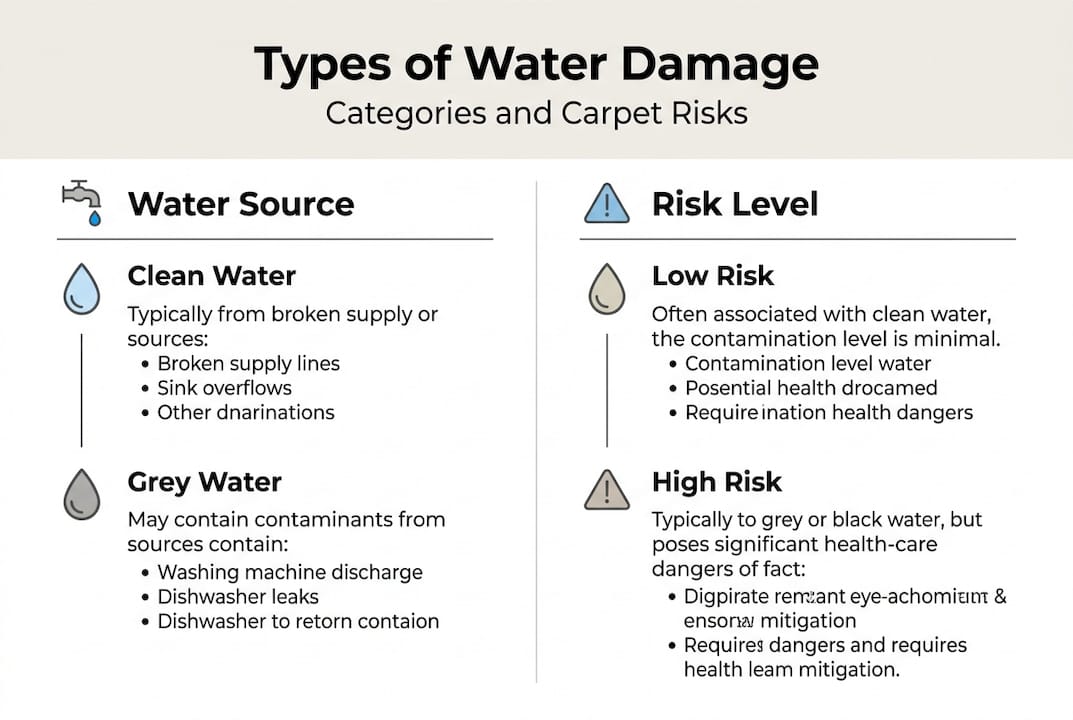
Here’s a quick summary of what to expect based on flooding severity:
| Flooding level | Mould risk | Estimated drying time |
|---|---|---|
| Light (surface wet) | Low if dried quickly | 12 to 24 hours |
| Moderate (soaked through) | Moderate, rises fast | 24 to 72 hours |
| Severe (deep flooding) | High without intervention | 3 to 7 days with professional equipment |
The 24 to 48 hour window is critical. After that point, mould spores already present in the environment find the moisture they need to colonise carpet fibres and underlay. Once mould takes hold, it’s not just a cleaning problem. It becomes a health risk, particularly for children, elderly residents, and anyone with respiratory conditions.
Long-term risks from untreated water damage include permanent fibre degradation, persistent musty odours that no amount of cleaning can fully remove, and structural damage to the subfloor beneath the carpet. The underlay, which is the foam or felt layer sitting between your carpet and the floor, absorbs water like a sponge and is often the first casualty.
Key signs your carpet may be water-logged include:
- A spongy or squelching feeling underfoot
- Visible discolouration or tide marks on the carpet surface
- A musty or damp smell, even after surface drying
- Bubbling, lifting, or warping at the carpet edges
- Wet patches that reappear after you’ve dried the surface
If you’re unsure about the extent of the damage, spotting carpet damage early is the single best way to avoid a costly replacement.
Immediate steps after water damage occurs
Understanding the risks sets the stage. Here’s what to do if your carpet gets soaked.
Speed is everything. Every minute the water sits in your carpet, it’s working its way deeper into the fibres, the underlay, and potentially the subfloor. Here’s the order of action to follow:
- Turn off the water source if it’s a leak or burst pipe, and switch off electricity in the affected area to eliminate any safety risk.
- Move furniture and valuables away from the wet zone immediately. Furniture legs sitting on wet carpet can cause rust stains and dye transfer that are nearly impossible to remove.
- Soak up as much water as possible using old towels, mops, or ideally a wet-dry vacuum. A wet-dry vacuum removes far more water than towels alone.
- Lift the carpet edges if you can, to check the underlay and begin air circulation underneath.
- Set up fans and a dehumidifier pointed directly at the wet area. Open windows if the outside air is dry and warm.
- Call a professional if the affected area is larger than a couple of square metres, if the water source is grey or black water, or if you have any doubt about the extent of the saturation.
Pro Tip: Don’t wait until the carpet looks dry to stop drying efforts. The surface can feel dry while the underlay underneath is still saturated. Keep fans and dehumidifiers running for at least 24 hours after the surface appears dry.
Mould risk begins as early as 24 hours after water exposure. Even if your carpet looks fine on the surface, the conditions for mould growth may already be developing beneath it.
For guidance on the full process of cleaning water-damaged carpets, or if you need practical advice on drying wet carpets quickly, those resources can help you move through the process with confidence.
Drying and restoring water-damaged carpets
After the immediate rush, proper drying and restoration makes all the difference.
Getting the carpet dry is not just about comfort. It’s about preventing the chain of damage that starts with mould and ends with a full carpet replacement. The methods you use and how fast you use them will determine the outcome.
The best drying methods available include:
- Pedestal and box fans positioned to create cross-ventilation across the wet area
- HVAC systems set to a warm, dry mode to pull moisture from the air
- Dehumidifiers placed in the room to continuously extract airborne moisture
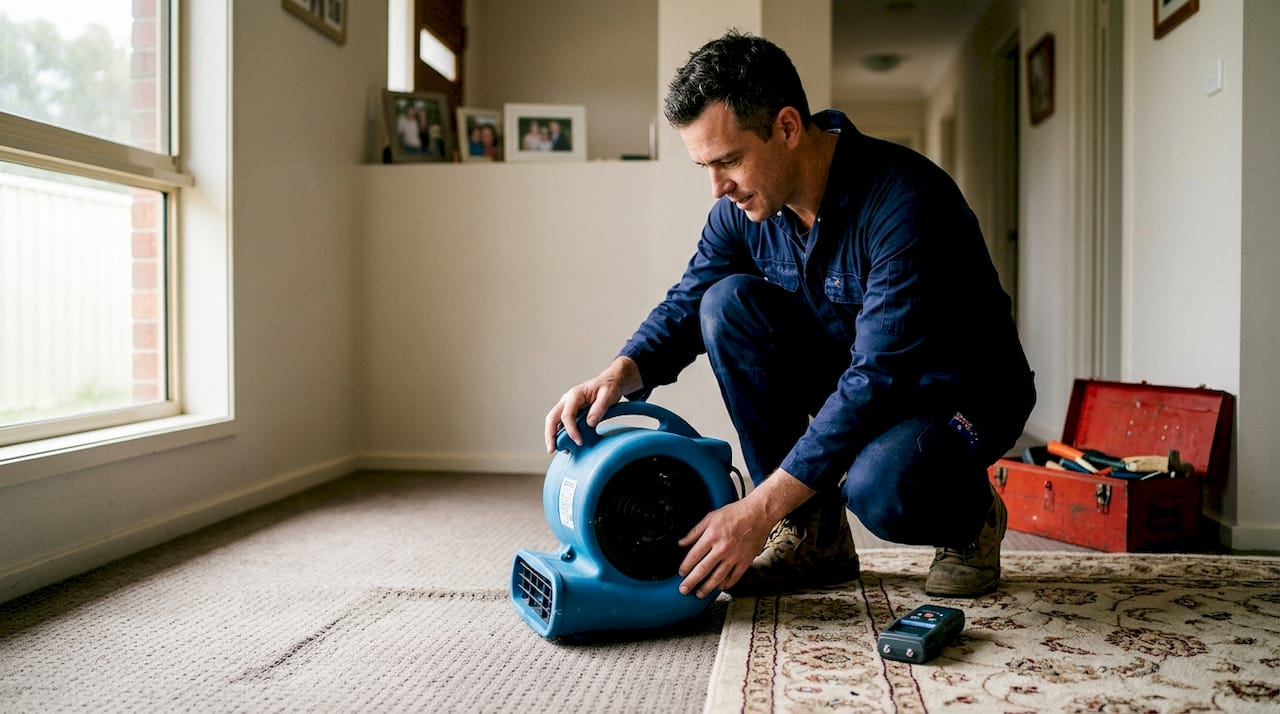
- Professional air movers (high-velocity blowers used by restoration specialists) which are significantly more powerful than household fans
Here’s an honest comparison of DIY drying versus professional drying:
| Factor | DIY drying | Professional drying |
|---|---|---|
| Cost | Low upfront | Higher but protects carpet value |
| Speed | Slow, 2 to 5 days | Faster, 1 to 3 days for most cases |
| Effectiveness | Moderate for light damage | High, even for severe flooding |
| Mould risk | Higher if underlay stays wet | Lower with proper extraction |
| Equipment | Household fans, towels | Industrial air movers, moisture metres |
Professional equipment advantages are significant. Technicians use moisture metres to measure saturation levels in both the carpet and subfloor, ensuring drying is complete rather than assumed. They also use thermal imaging in some cases to detect hidden moisture pockets.
Pro Tip: Never let a carpet stay wet overnight, even after what seems like mild flooding. The underlay retains moisture long after the surface feels dry, and that hidden dampness is where mould begins.
When should you replace rather than restore? If the underlay has been wet for more than 24 hours, replacement is almost always necessary. If the carpet itself shows signs of shrinkage, delamination (where the backing separates from the fibres), or persistent odour after drying, replacement is the safer and more cost-effective choice long-term.
For more detail on how long carpets should dry after treatment, or to understand carpet drying timeframes in more depth, those guides break it down clearly.
Preventing future water damage and maintaining carpets
Restoring your carpet is just the beginning. Protecting it from repeat incidents is crucial.
Once you’ve been through a water damage event, you don’t want to go through it again. The good news is that a few consistent habits can dramatically reduce the risk and catch problems before they escalate.
Long-term moisture issues increase mould and odour risk significantly, which is why ongoing maintenance matters just as much as the initial response.
Here’s what ongoing carpet care should look like after a water incident:
- Inspect pipe connections and appliance hoses every six months for signs of wear, cracking, or slow leaks
- Check window and door seals before the wet season, particularly in areas like Healesville and Yarra Glen where rainfall can be heavy
- Use moisture-resistant underlay when replacing carpet in flood-prone areas of your home
- Schedule professional cleaning at least once a year to remove embedded dirt, bacteria, and any residual moisture-related contaminants
- Address spills and minor leaks immediately rather than leaving them to dry on their own
- Ensure good ventilation in rooms where condensation is common, such as bathrooms and laundries adjacent to carpeted areas
- Place water sensors near washing machines, dishwashers, and under sinks to alert you to leaks before they become floods
Prompt and thorough drying after any moisture event prevents musty odours from becoming permanent. Odour molecules bind to carpet fibres and underlay over time, and once that happens, surface cleaning alone won’t fix it. Professional steam cleaning can reach deeper into the fibres and neutralise odour-causing bacteria in a way that household products simply cannot.
Regular professional cleaning also gives technicians a chance to spot early signs of moisture damage, fibre wear, or underlay deterioration before they become expensive problems. Think of it as a health check for your flooring.
For practical carpet care tips after any cleaning or water event, as well as guidance on carpet protection steps and long-term carpet maintenance, those resources are worth bookmarking.
A Yarra Valley expert’s perspective: what truly matters in carpet water damage restoration
After working with Yarra Valley homeowners through countless water damage situations, one pattern stands out clearly. Most people act fast on the surface and slow on the underlay. They soak up the visible water, run a fan for a few hours, and assume the job is done. The carpet looks fine. The problem is invisible.
The underlay is the silent casualty in almost every water damage case we see. It holds moisture for days after the surface appears dry, and that trapped moisture is exactly what mould needs. By the time the smell arrives, remediation has become significantly more involved than it needed to be.
The local myth that “you can wait a day before calling for help” is genuinely damaging. We’ve seen carpets that were restorable at the 12-hour mark become unsalvageable by hour 36. That’s not an exaggeration. It’s a pattern.
The single biggest mistake isn’t failing to act. It’s acting on the visible problem and ignoring what’s underneath.
Understanding prompt stain removal insight applies just as directly to water damage as it does to spills. The faster the response, the better the outcome. Every time.
Professional carpet restoration services in the Yarra Valley
If your carpet needs more than basic drying, local experts can step in for deeper restoration.
When water damage goes beyond what towels and fans can handle, Yarra Valley Carpet Cleaning is ready to help. We work with homeowners across Lilydale, Mooroolbark, Healesville, Croydon, and the wider Yarra Valley to restore carpets quickly and thoroughly using professional-grade equipment and eco-friendly products. Whether it’s emergency extraction, deep steam cleaning, or odour removal after a flood, our family-owned team brings genuine care and real expertise to every job.
Find carpet cleaning near you, explore our carpet care tips for ongoing maintenance, or browse our before and after results to see what professional restoration really looks like.
Frequently asked questions
How quickly should I act after water damage to my carpet?
Start drying and cleaning within the first 24 hours to prevent mould and permanent damage. Mould risk begins as early as 24 to 48 hours after water exposure, so every hour counts.
Can I save water-damaged carpet myself or do I need a professional?
Light surface damage can sometimes be managed with immediate DIY action using fans and a wet-dry vacuum. However, moderate or severe flooding typically needs professional help, as severe flooding requires professional equipment and up to 7 days of controlled drying.
How long will my carpet take to dry after water damage?
Drying times vary from 12 to 24 hours for light flooding, 24 to 72 hours for moderate cases, and 3 to 7 days for severe flooding when using professional equipment.
How do I know if my carpet underlay needs replacing?
If the underlay remains wet for more than 24 hours or develops a musty smell, replacement is usually the right call. Trying to dry saturated underlay in place rarely works and often leads to ongoing mould problems.
Recommended
- Essential Guide to Water Damage Cleaning Carpets Effectively – Yarra Valley Carpet Cleaning
- How to Dry Wet Carpets Quickly: Effective Methods for Homeowners – Yarra Valley Carpet Cleaning
- How to Spot Carpet Damage: A Step-by-Step Guide – Yarra Valley Carpet Cleaning
- Why prompt carpet stain removal protects your home – Yarra Valley Carpet Cleaning
- Top Carpet Cleaning Tips & Tricks: DIY Methods With Professional Results — I-Care Cleaning Services