
Upholstery is everywhere in Yarra Valley homes and businesses, quietly shaping the look and feel of our favourite chairs and sofas. You might think it is all about picking a nice fabric and matching it to your decor. But the real surprise is in the numbers. Research shows quality upholstery can extend furniture lifespan by up to 70 percent. That is not just good for comfort. It is a sound investment that changes the way we think about every seat in the house.
Table of Contents
- What Is Upholstery And Its Importance?
- Why Upholstery Maintenance Matters For Longevity
- Key Concepts In Upholstery Care And Protection
- Understanding Upholstery Fabrics And Their Needs
- Real-World Applications Of Upholstery Maintenance Strategies
Quick Summary
| Takeaway | Explanation |
|---|---|
| Quality upholstery enhances comfort and aesthetics. | Upholstery is vital for both visual appeal and functional support in homes and businesses. |
| Regular maintenance prevents costly replacements. | Proactive care significantly extends furniture lifespan and avoids expensive fabric degradation. |
| Understand fabric types for optimal care. | Each upholstery fabric has unique needs; knowing these helps maintain its appearance and durability. |
| Protect furniture from environmental factors. | Factors like UV exposure and humidity can damage upholstery; strategic care safeguards against these risks. |
| Implement tailored maintenance strategies. | Different environments require specific approaches to preserve upholstery integrity and functionality effectively. |
What is Upholstery and Its Importance?
Upholstery represents the soft, padded textile covering that adorns furniture pieces like sofas, chairs, and ottomans across Yarra Valley homes and businesses. Far more than a simple decorative element, upholstery plays a crucial functional role in creating comfortable, aesthetically pleasing living and working environments.
The Fundamental Components of Upholstery
Upholstery consists of multiple intricate layers that work together to provide comfort, support, and visual appeal. These layers typically include:
- Fabric Layer: The visible outer material that determines the furniture’s aesthetic and texture
- Padding Layer: Cushioning materials like foam, cotton, or synthetic fibres that provide comfort
- Frame Layer: The underlying structural support that gives the furniture its shape and stability
In the Yarra Valley region, from Lilydale to Mooroolbark, upholstery selections reflect both personal style and practical considerations. Homeowners and businesses carefully choose upholstery materials that complement their interior design while meeting durability requirements.
Understanding the Importance of Quality Upholstery
Quality upholstery serves multiple critical purposes beyond mere decoration. Research from the Furniture Design Institute highlights that well-maintained upholstery contributes significantly to:
- Enhanced comfort and ergonomic support
- Improved indoor aesthetic appeal
- Protection of underlying furniture structures
- Noise reduction and acoustic management
For residents in Chirnside Park and surrounding areas, understanding upholstery becomes crucial in maintaining furniture investments. Recognising the intricate composition and significance of upholstery helps individuals make informed decisions about furniture selection, maintenance, and read more about professional upholstery care strategies that preserve both appearance and functionality.
Upholstery is not merely a surface covering but a sophisticated system designed to provide comfort, support, and aesthetic value to our living and working spaces. By appreciating its complexity, homeowners can make more informed choices about furniture selection and maintenance.
Why Upholstery Maintenance Matters for Longevity
Maintaining upholstery is not merely about aesthetic preservation but about protecting significant financial investments and ensuring functional comfort in residential and commercial spaces across the Yarra Valley region. Regular and strategic maintenance directly impacts the durability, appearance, and performance of furniture pieces.
The Economic Impact of Proper Maintenance
Neglecting upholstery maintenance can lead to premature wear, fabric degradation, and substantial replacement costs. Innovations in fabric protection technologies demonstrate that proactive care substantially extends furniture lifespan. For residents in Lilydale, Mooroolbark, and Chirnside Park, understanding maintenance economics means recognising that:
- Preventative care costs significantly less than full furniture replacement
- Regular cleaning prevents deep-set stains and fabric deterioration
- Maintained upholstery retains aesthetic and functional value longer
Protecting Against Environmental Degradation
Upholstery faces continuous environmental challenges that accelerate wear. Sunlight exposure, humidity, dust accumulation, and daily usage contribute to gradual fabric breakdown. Proper maintenance creates a protective barrier against these destructive elements. Learn more about comprehensive upholstery protection strategies to safeguard your furniture investments.
Key environmental factors affecting upholstery include:
- UV radiation causing colour fading and fabric weakening
- Dust and particulate matter embedding into fabric fibres
- Moisture creating potential mould and mildew risks
- Ongoing friction from regular usage
By implementing systematic maintenance practices, homeowners and businesses can significantly mitigate these degradation risks, preserving the structural integrity and visual appeal of their furniture.
Understanding maintenance as an investment rather than an expense transforms how we approach furniture care in the Yarra Valley.
Key Concepts in Upholstery Care and Protection
Upholstery care extends far beyond simple cleaning routines, encompassing a comprehensive approach to preserving fabric integrity, aesthetic appeal, and functional performance. For homeowners and businesses in the Yarra Valley region, understanding these key protective strategies becomes paramount in maintaining furniture investments.
Understanding Fabric Vulnerability
Preventive measures are crucial in protecting upholstered furniture from potential damage. Different fabric types exhibit unique characteristics that influence their maintenance requirements. Cotton, leather, synthetic blends, and wool each demand specialised care strategies that address their inherent material properties.
Key fabric vulnerability factors include:
- Susceptibility to moisture absorption
- Sensitivity to direct sunlight exposure
- Potential for colour fading and fibre degradation
- Varying resistance levels to staining and wear
Protective Strategies and Maintenance Principles
Effective upholstery protection involves a multifaceted approach that combines proactive maintenance with strategic interventions. Residents in Lilydale, Mooroolbark, and Chirnside Park can implement comprehensive care strategies to extend furniture longevity. Read our detailed guide on upholstery cleaning methods for advanced insights into professional maintenance techniques.
Essential protective principles encompass:
- Regular professional cleaning schedules
- Immediate spill and stain management
- Strategic furniture positioning away from direct sunlight
- Use of protective covers and treatments
By recognising the intricate relationship between fabric composition, environmental factors, and maintenance techniques, property owners can develop nuanced approaches that preserve their upholstered furniture’s quality, appearance, and functional performance across years of usage.
Understanding Upholstery Fabrics and Their Needs
Upholstery fabrics represent complex textile systems that require nuanced understanding and specialised care approaches. Each fabric type possesses unique characteristics that directly influence maintenance requirements, durability, and aesthetic performance across residential and commercial environments in the Yarra Valley region.
Fabric Composition and Performance Characteristics
Scientific textile research reveals that fabric performance depends on intricate molecular structures and material compositions. The Yarra Valley’s diverse environmental conditions demand careful fabric selection and maintenance strategies that account for local climate variations.
Key fabric composition categories include:
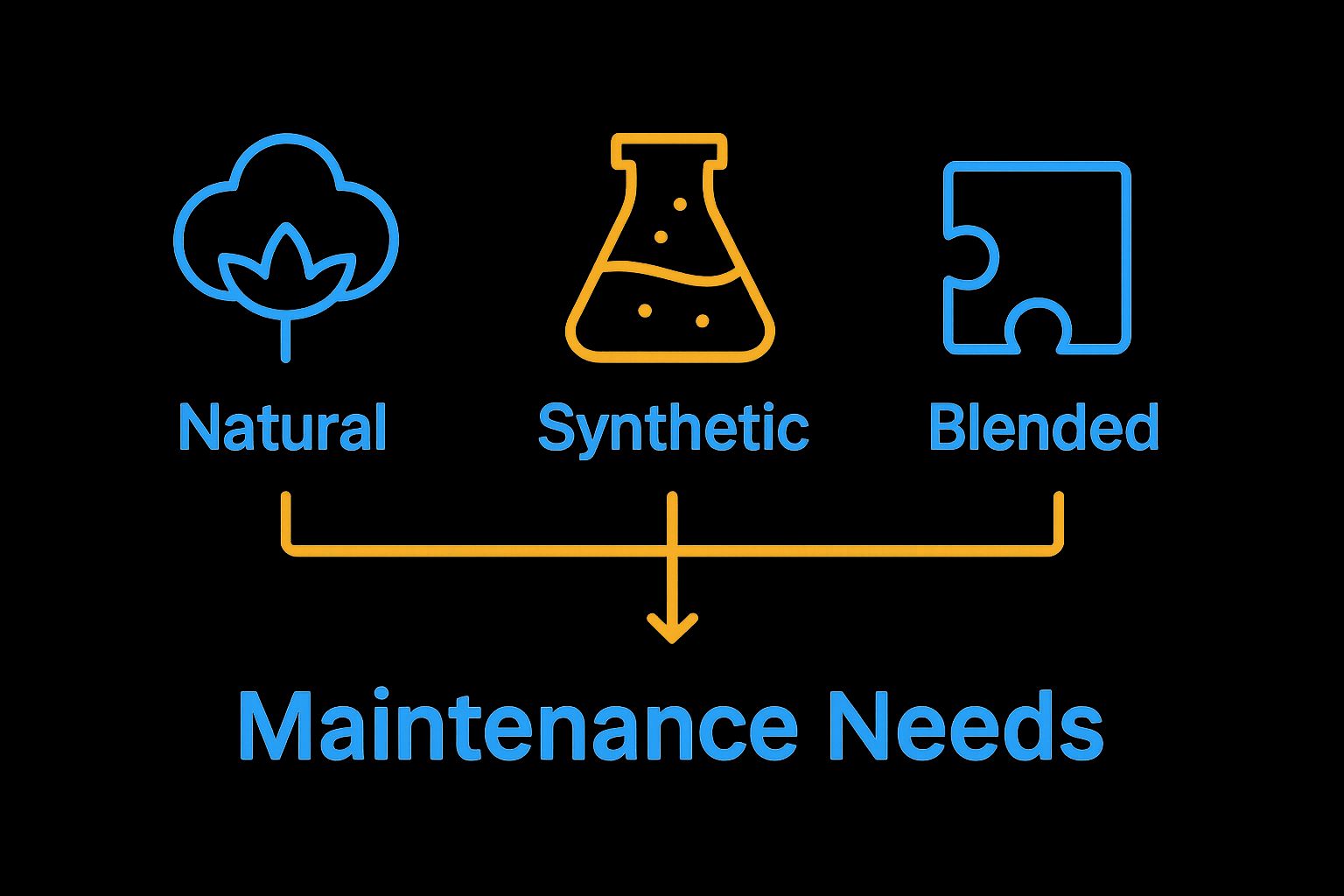
- Natural Fabrics: Cotton, wool, silk, and leather
- Synthetic Fabrics: Polyester, nylon, acrylic, and microfibre
- Blended Fabrics: Combinations designed to enhance specific performance attributes
Material-Specific Care Requirements
Each fabric type demands targeted maintenance approaches that preserve its inherent qualities. Residents in Lilydale, Mooroolbark, and Chirnside Park must understand the specific needs of their upholstery materials. Explore our comprehensive upholstery fabric guide for detailed insights into material-specific care techniques.
Critical considerations for fabric maintenance include:
- Moisture sensitivity variations
- Potential for colour fading
- Stain absorption and resistance levels
- Structural integrity under different environmental conditions
By developing a sophisticated understanding of fabric compositions and their unique characteristics, property owners can implement targeted maintenance strategies that significantly extend the lifespan and aesthetic appeal of their upholstered furniture across residential and commercial settings.
The table below compares the key characteristics, vulnerabilities, and care needs of popular upholstery fabric types mentioned in the article.
| Fabric Type | Key Characteristics | Vulnerabilities | Specific Care Needs |
|---|---|---|---|
| Cotton | Soft, natural fibre, breathable | Moisture absorption, fading | Immediate stain management, keep dry |
| Leather | Durable, luxurious, pliable | Cracking, moisture sensitivity | Routine conditioning, gentle cleaning |
| Synthetic Blends | Stain-resistant, durable | Heat sensitivity, pilling | Mild cleaners, avoid high temps |
| Wool | Warm, resilient, natural texture | Shrinking, moth damage | Dry cleaning, avoid excess moisture |
| Polyester | Strong, colourfast, less absorbent | Static build-up, oil stains | Regular vacuuming, prompt stain care |
Real-World Applications of Upholstery Maintenance Strategies
Upholstery maintenance strategies transcend theoretical knowledge, representing practical approaches that protect furniture investments across diverse environments in the Yarra Valley. Real-world applications demonstrate how targeted maintenance techniques can dramatically extend furniture lifespan and preserve aesthetic quality.
Strategic Maintenance in Different Settings
Conservation protocols from museum-grade preservation techniques reveal sophisticated approaches to fabric protection that can be adapted for residential and commercial contexts. Different environments require nuanced maintenance strategies tailored to specific usage patterns and environmental challenges.
Key application contexts include:
- Residential Spaces: Managing daily wear from family activities
- Commercial Environments: Maintaining professional appearance in high-traffic areas
- Hospitality Settings: Preserving furniture quality under frequent usage
- Educational Institutions: Protecting communal furniture from constant interactions
Environmental Adaptation and Maintenance Techniques
Upholstery maintenance in the Yarra Valley demands understanding local environmental factors. Residents in Lilydale, Mooroolbark, and Chirnside Park face unique challenges from variable humidity, temperature fluctuations, and potential UV exposure. Learn more about localised upholstery protection strategies to safeguard your furniture investments.
Critical adaptive maintenance techniques involve:
- Implementing seasonal cleaning protocols
- Using protective treatments suited to local climate conditions
- Developing fabric-specific maintenance schedules
- Addressing regional environmental stress factors
By understanding and implementing context-specific maintenance approaches, property owners can transform upholstery care from a reactive process to a proactive strategy that preserves furniture quality, aesthetic appeal, and functional performance across diverse real-world settings.

Unlock Long-Lasting Comfort with Expert Upholstery Care
Struggling to maintain the look and feel of your furniture despite your best efforts? If the article about ‘Understanding Best Practices for Maintaining Upholstery’ resonated with your battle against stubborn stains, worn fabrics, or fading comfort, you are not alone. Many Yarra Valley locals face challenges keeping their upholstery fresh due to the area’s unique climate and everyday wear, which puts fabric integrity and furniture investment at risk.
Instead of worrying about rapid wear or unsightly spots, let the team at Yarra Valley Carpet Cleaning help protect your furniture and extend its lifespan. Our specialists use advanced methods and eco-friendly products to target everything from hidden dust and allergens to visible stains, giving your upholstery the deep care it deserves. Check our Uncategorized Archives for more expert insights, or take the next step and contact us today. Give your furniture a new lease on life and enjoy a cleaner, healthier home—start with a professional upholstery clean by local experts who genuinely care about your comfort and investment.
Frequently Asked Questions
What are the best practices for maintaining upholstery?
Regularly clean your upholstery using appropriate methods for the specific fabric type. Also, address spills and stains immediately to prevent deeper damage.
How often should I have my upholstery professionally cleaned?
Schedule professional cleaning at least once every 12 months to maintain the condition of your upholstery. This helps prevent dirt buildup and prolongs longevity.
What immediate steps should I take for spills on upholstery?
Blot the spill with a clean, dry cloth to absorb moisture without rubbing it in. Follow up by using a suitable upholstery cleaner specific to the fabric type.
How can I protect my upholstery from environmental damage?
Utilise protective treatments designed for upholstery fabrics to create a barrier against dust, UV rays, and moisture. Consider applying these treatments every 6–12 months for optimal protection.
Are there specific maintenance tips for leather upholstery?
For leather upholstery, regularly dust and wipe down surfaces with a damp cloth, and use a leather conditioner every 3-6 months. This helps maintain its suppleness and prevents cracking.
How do I choose the right cleaning method for different upholstery fabrics?
Identify the fabric type and refer to care instructions before selecting a cleaning method. For delicate fabrics, opt for gentler techniques, while sturdier materials may withstand more robust cleaning methods.
Recommended
- Upholstery Fabrics and Cleaning Guide 2025 for Yarra Valley – Yarra Valley Carpet Cleaning
- Upholstery Cleaning Methods for Yarra Valley Homes 2025 – Yarra Valley Carpet Cleaning
- What Is Upholstery Cleaning? Guide for Yarra Valley Homes 2025 – Yarra Valley Carpet Cleaning
- Upholstery Cleaning for Businesses: 2025 Guide for Yarra Valley – Yarra Valley Carpet Cleaning