
TL;DR:
- Steam cleaning effectively kills dust mites deep within carpets and upholstery using high heat.
- Proper technique, including slow passes and thorough drying, is crucial for optimal results.
- Combining steam cleaning with ongoing humidity control, vacuuming, and protective covers provides a comprehensive mite management strategy.
Most Yarra Valley homeowners believe that regular vacuuming keeps dust mites under control. It doesn’t. Vacuuming removes surface debris and some allergens, but it leaves the vast majority of mites and their droppings deep in carpet fibres, mattresses, and upholstery. Dust mites are microscopic, eight-legged creatures that thrive in warm, humid environments, and they are one of the leading triggers of indoor allergies and asthma. Steam cleaning offers a fundamentally different approach, using heat rather than suction or chemicals to destroy mites at the source. This article covers the science, the practical steps, the limitations, and how Yarra Valley residents can build a realistic dust mite control strategy.
Table of Contents
- How steam cleaning kills dust mites
- The process: steps for effective dust mite reduction
- Limitations and health outcomes: what users need to know
- Keeping Yarra Valley homes and offices dust-mite free
- Our take: what most guides miss about steam cleaning and dust mites
- Professional steam cleaning and ongoing support in Yarra Valley
- Frequently asked questions
Key Takeaways
| Point | Details |
|---|---|
| Steam kills mites | Steam cleaning can kill dust mites if used at the correct temperature and contact time. |
| Technique matters | Effective steam cleaning depends on reaching the right temperature and ensuring thorough coverage. |
| Mixed health results | Reducing dust mites with steam cleaning does not guarantee improved asthma or allergy symptoms. |
| Holistic approach | Combine steam cleaning with vacuuming, drying, and covers for best dust mite control. |
| Local support | Yarra Valley professionals offer tailored steam cleaning services for homes and businesses. |
How steam cleaning kills dust mites
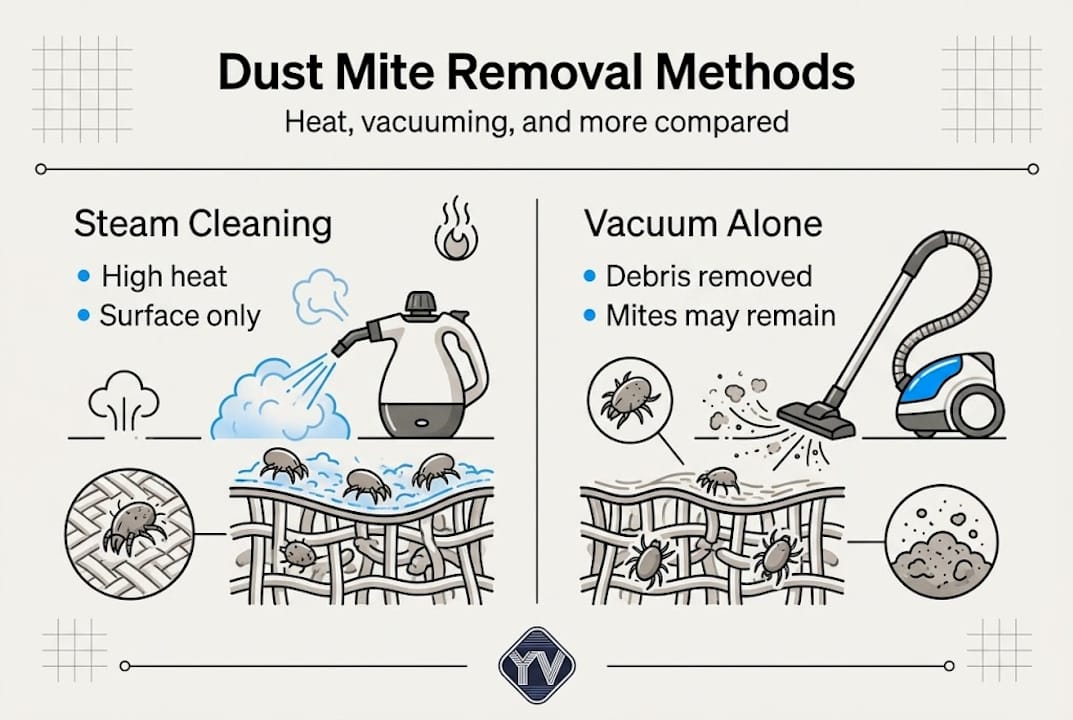
Dust mites cannot survive sustained exposure to high heat. The lethal temperature threshold sits between 54°C and 60°C, and professional steam cleaning equipment generates steam at temperatures reaching up to 100°C. When that heat contacts carpet fibres, upholstery foam, or mattress fabric, it destroys the mites’ cellular structure and denatures the proteins that make their droppings so allergenic.
Steam cleaning can kill dust mites on contact when the treated surface actually reaches those temperatures. That phrase “on contact” is doing a lot of work. The steam must penetrate deep enough into the material to reach where the mites are living, not just heat the surface layer. Slow, deliberate passes with a steam cleaner are far more effective than rushing. Speed matters enormously here.
Comparing dust mite removal methods
| Method | Mite elimination | Allergen removal | Risk of moisture damage |
|---|---|---|---|
| Dry vacuuming | Low | Moderate | None |
| Chemical sprays | Moderate | Low | Low |
| HEPA vacuuming | Low to moderate | High | None |
| Steam cleaning | High | High | Moderate if poorly managed |
| Hot water extraction | High | High | Moderate if poorly managed |
The comparison makes one thing clear: steam and hot water extraction outperform dry methods when it comes to actually killing mites. Chemical acaricides (mite-killing sprays) can reduce live mite populations, but they often leave allergen proteins behind and require careful handling around children and pets. Steam eliminates both the mites and much of the allergenic debris in a single treatment.
Important: Steam cleaning effectiveness depends entirely on technique. Under-heated or overly brief passes may fail to kill mites living deep in thick pile carpet or in padding beneath the carpet layer.
Here’s why technique matters so much. A typical carpet has a surface pile, a backing layer, and often an underlay beneath that. Mites colonise all three layers. A steam cleaner moving too quickly only heats the top few millimetres. By the time the steam dissipates into the middle and lower layers, it may have cooled below the lethal threshold. Professional equipment solves part of this problem by generating sustained, high-pressure steam, but slower pass speeds and multiple overlapping strokes are still essential.
For households exploring their options, these dust mite removal steps explain the broader picture of what an effective mite management programme looks like from start to finish.
A few key facts about dust mite behaviour worth knowing:
- A single gram of carpet dust can contain hundreds of mites and thousands of mite faecal pellets
- Dust mites feed on shed human skin cells, meaning carpeted bedrooms and lounges carry the heaviest infestations
- Mite populations spike during humid months, which is relevant for Yarra Valley’s wetter seasons
- Dead mites and their droppings continue to cause allergic reactions even after the mites are killed
This last point is critical. Steam cleaning kills mites but does not automatically remove the debris. Post-clean vacuuming is not optional.
The process: steps for effective dust mite reduction
Understanding how steam kills mites is just the first step. The real benefit comes from applying this knowledge consistently and correctly. A poorly executed steam clean can leave carpets damp, redistribut allergens, and even create conditions where mould develops. Here is a practical framework for getting it right.
Step-by-step process for effective steam cleaning:
-
Pre-clean vacuuming. Use a HEPA-filter vacuum to remove surface debris, loose skin cells, and existing mite debris before steaming. This reduces the organic load in the carpet and allows the steam to reach deeper into the pile rather than being absorbed by surface material.
-
Check your equipment settings. Set the steam cleaner to the highest appropriate temperature for the surface. For most wool and synthetic carpets, this means maximum heat with a slow, overlapping stroke pattern. Avoid steam on delicate natural fibres like silk without professional guidance.
-
Work in sections. Divide the room into manageable strips and work systematically so no area is missed. Overlap each pass by about 30% to ensure consistent heat coverage, especially along edges and corners where mites congregate.
-
Control contact time. Slower passes allow the steam to penetrate deeper. A good rule of thumb is no faster than one metre every five to seven seconds on carpet.
-
Ventilate immediately. Open windows and doors as soon as steaming is complete. Run ceiling fans or floor fans to accelerate drying. Damp carpets left for more than a few hours risk mould growth, which creates a completely different indoor air quality problem.
-
Post-clean vacuuming. Once the carpet is dry, vacuum again with a HEPA-filter unit. This removes the dead mites, dislodged droppings, and any debris brought to the surface by the steam. Combining steam cleaning with thorough vacuuming and rapid drying is the recommended approach for dust mite and allergen control.
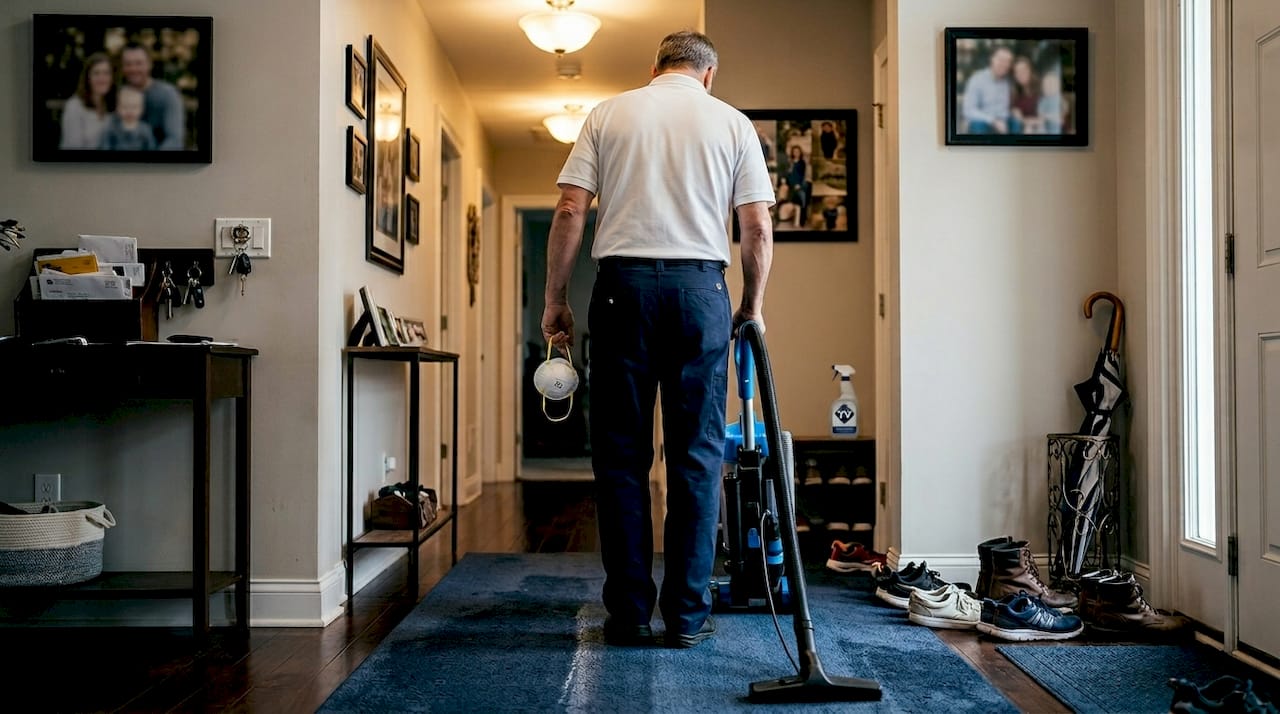
Pro Tip: If you have allergy sufferers in the household, the person vacuuming after steam cleaning should wear a P2 face mask. Post-clean vacuuming stirs up concentrated allergen debris before it is captured by the filter.
Drying time expectations by surface type
| Surface | Typical drying time | Recommended fan use |
|---|---|---|
| Short pile carpet | 2 to 4 hours | Yes |
| Medium pile carpet | 4 to 6 hours | Yes, essential |
| Thick or shag pile | 6 to 12 hours | Yes, critical |
| Upholstery fabric | 1 to 3 hours | Yes |
| Mattress fabric | 4 to 8 hours | Yes, essential |
Proper aftercare is just as important as the steam clean itself. Read more about carpet care after cleaning to make sure the work holds up over time. For households with allergy sufferers, these carpet cleaning allergy tips offer additional guidance on reducing ongoing allergen exposure between professional cleans.
Common mistakes that undermine the process include steaming too quickly, skipping pre-clean vacuuming, not allowing sufficient drying time, and assuming one clean is a permanent fix. Dust mites repopulate. Without ongoing management, populations return within weeks.
Limitations and health outcomes: what users need to know
While steam cleaning is useful, it is important to understand its limits and set realistic expectations, particularly for homeowners managing asthma or severe allergies.
The most significant limitation is coverage. Steam cleaning works on the surfaces it reaches. Mites living in mattress padding, behind skirting boards, in stuffed toys, and in curtain folds are not addressed by carpet steam cleaning alone. A whole-home approach is necessary to meaningfully reduce the total mite load in your environment.
The second limitation is health outcomes. Many people assume that reducing dust mite exposure will directly improve asthma control or allergy symptoms. The research tells a more complicated story. Evidence for health improvements from dust mite control is mixed, and systematic reviews have not consistently found improvements in asthma symptoms even when mite exposure is measurably reduced.
This does not mean steam cleaning is worthless. It means you should not expect a single treatment to resolve a health condition. The benefit is cumulative and part of a broader strategy.
Reality check: Dust mite reduction is one input into a complex allergic response. Individual sensitivity, the presence of other allergens like pet dander and mould, and medication management all influence health outcomes alongside cleaning practices.
A realistic, holistic dust mite management strategy includes:
- Mattress and pillow encasements. Tightly woven dust mite proof covers physically block mites from colonising bedding, which is the single highest exposure site for most people.
- Humidity control. Dust mites need relative humidity above 50% to survive. Maintaining indoor humidity below 50% with dehumidifiers significantly inhibits mite reproduction.
- HEPA vacuuming. Regular vacuuming with a certified HEPA filter vacuum removes allergen debris between steam cleans without spreading it back into the air.
- Washing bedding weekly. Hot washing at 60°C or above kills mites in sheets, pillowcases, and duvet covers.
- Professional steam cleaning. Addresses carpets, rugs, and upholstery at regular intervals.
For those managing asthma specifically, understanding the relationship between cleaning practices and symptom triggers is essential. The articles on carpet cleaning for asthma and ways to reduce asthma triggers offer practical, local guidance for Yarra Valley households.
Keeping Yarra Valley homes and offices dust-mite free
To make steam cleaning sustainable and maximise its benefits, Yarra Valley residents and business owners need an ongoing maintenance strategy that accounts for local conditions.
The Yarra Valley experiences a temperate climate with cool, wet winters and warm summers. Humidity levels during autumn and winter can remain elevated for extended periods, particularly in low-lying areas near the river and in properties with older construction and less insulation. These conditions are favourable for dust mite reproduction. Understanding this local context changes how you should approach mite management compared with drier inland regions.
After any steam clean, post-clean moisture management is critical. If carpets remain damp, you risk encouraging mould growth, which introduces a second major indoor air quality problem. Drying completely within four to six hours is the target for most carpet types.
Practical ongoing maintenance tips for Yarra Valley homes and offices:
- Vacuum with HEPA filters at least twice a week in high-traffic areas. For offices in Mooroolbark, Lilydale, or Healesville with significant foot traffic, daily vacuuming of key zones is worthwhile.
- Use a dehumidifier through winter and autumn to keep indoor relative humidity below 50%, particularly in bedrooms and carpeted living areas.
- Apply dust mite proof encasements to all mattresses and pillows in the home, and replace them if they develop holes or tears.
- Schedule professional steam cleaning every three to six months for high-risk environments such as homes with allergy sufferers, toddlers, pets, or thick pile carpets.
- Consider eco-friendly pest exclusion approaches as a complementary layer of protection. Resources on eco-friendly pest exclusion outline how physical barriers and environmental controls work alongside cleaning.
Pro Tip: In Yarra Valley offices, common areas like meeting rooms and reception lounges see the highest mite load because of constant human occupancy. Prioritise these spaces for more frequent steam cleaning over less-used storage or utility areas.
Improving indoor air quality in Yarra Valley properties is not only about mite control. Carpets trap pollutants including pollen, pet dander, and fine particulate matter from outside air. This carpet air quality guide explains the broader relationship between carpet maintenance and the air you breathe indoors. For businesses, the office steam cleaning benefits page outlines why staff wellbeing and professional presentation are both supported by regular steam cleaning schedules.
Our take: what most guides miss about steam cleaning and dust mites
After years of cleaning carpets across the Yarra Valley, from older weatherboard homes in Mount Evelyn to modern offices in Chirnside Park, the pattern we see repeatedly is this: homeowners treat steam cleaning as a one-time event rather than part of a system.
Most guides focus on the killing power of heat, which is real and significant. What they rarely discuss is what happens in the days after the clean. If a property lacks adequate ventilation, the carpets stay damp. Damp carpets in a humid climate become a mould risk within 24 to 48 hours. The steam clean that was meant to improve air quality can actually worsen it if aftercare is neglected.
The second thing guides miss is the expectation gap around asthma and allergy relief. We’ve spoken with clients who are frustrated because their symptoms didn’t improve after a professional clean. Steam cleaning reduces mite populations and dislodges allergens, but allergen proteins can persist in the environment for weeks. It takes consistent, layered management before sensitive individuals notice a meaningful difference.
Our advice is to treat steam cleaning as one tool among several. Read about carpet allergen tips to round out your approach, and resist the temptation to assume a single clean has solved the problem.
Professional steam cleaning and ongoing support in Yarra Valley
If you’re ready to move beyond surface-level cleaning and address dust mites properly, the team at Yarra Valley Carpet Cleaning is here to help. We service homes and businesses across the Yarra Valley, including Lilydale, Healesville, Croydon, Wandin North, and surrounding areas, with professional steam cleaning equipment that reaches the temperatures needed to genuinely eliminate mites, not just disturb them.
Whether you need a one-off deep clean before allergy season or a regular maintenance schedule for your office or rental property, we make it straightforward. Find a local team using our carpet cleaning near me page, explore our deep steam cleaning services, or read our carpet care advice to get the most from every clean.
Frequently asked questions
Does steam cleaning kill dust mites deep inside carpets?
Steam cleaning kills dust mites if the hot steam penetrates deep enough and reaches the required lethal temperatures, but thick pile carpets may prevent sufficient heat from reaching mites in lower layers if technique is poor.
How often should you steam clean carpets to control dust mites?
For high-risk environments, steam cleaning every three to six months is advisable, but combining steam cleaning and vacuuming with humidity management gives consistently better results than relying on any single method.
Is steam cleaning enough to improve asthma or allergy symptoms?
Steam cleaning reduces mite populations, but health outcome evidence is mixed, and asthma relief is not guaranteed even when mite exposure is measurably reduced.
What should you do after steam cleaning to prevent dust mite return?
Rapid drying, post-clean vacuuming with a HEPA filter, and applying protective mattress covers are the most effective steps because post-clean moisture management is critical to preventing both mite repopulation and mould growth.
Recommended
- 7 Expert Carpet Cleaning Tips for Allergies at Home – Yarra Valley Carpet Cleaning
- Effective Carpet Cleaning for Asthma Relief – Yarra Valley Carpet Cleaning
- Effective carpet cleaning to reduce asthma triggers – Yarra Valley Carpet Cleaning
- Understanding How Steam Cleaning Kills Germs Effectively – Yarra Valley Carpet Cleaning