
TL;DR:
- Prompt action and correct blotting are essential for effective stain removal.
- Waiting hours can cause stains to set, odours develop, and mould risk increases.
- Professional cleaning is recommended for set stains, odours, and delicate carpets.
A small stain left on your carpet for even a few hours can begin a chemical process that makes it far harder to remove. Many homeowners across the Yarra Valley treat spills as low priority, assuming a quick clean later will do the job. It won’t. Speed is critical when it comes to stain removal, and the difference between acting now and acting later can mean the difference between a clean carpet and a permanent mark. This article walks you through the science, the risks, and the practical steps you need to protect your carpets and your home.
Table of Contents
- Why speed matters: The science of stains and carpets
- Permanent risks: What happens if you wait
- Prompt removal: Step-by-step guide for home and rental properties
- DIY vs professional help: Choosing the right stain solution
- What most homeowners overlook about stain removal
- Get trusted help for clean, stain-free carpets
- Frequently asked questions
Key Takeaways
| Point | Details |
|---|---|
| Act fast for success | Immediate action boosts your chances of fully removing carpet stains. |
| Delays can be permanent | Procrastinating allows stains to damage fibres and set for good. |
| Choose the right method | Match your removal approach to the type of stain and carpet for the best results. |
| Test before treating | Always test cleaning solutions on a hidden area to prevent unexpected damage. |
Why speed matters: The science of stains and carpets
When something spills onto your carpet, it doesn’t just sit on the surface. Within minutes, it begins to migrate down through the fibres and into the backing material beneath. The longer it stays, the deeper it goes, and the harder it becomes to lift out completely.
Different stains behave in different ways, and understanding this helps you respond correctly. There are three main categories worth knowing:
- Protein-based stains (blood, egg, dairy) coagulate when exposed to heat, bonding tightly to fibres. Protein stains set with heat, which is why using hot water on them makes things worse, not better.
- Tannin-based stains (tea, coffee, red wine) oxidise over time, darkening and spreading as air and light interact with the compounds left behind.
- Dye-based stains (cordial, ink, some food colouring) can begin to permanently alter the colour of carpet fibres within hours.
Sun exposure, warm air, and foot traffic all accelerate how quickly a stain bonds to your carpet. In high traffic carpet areas, stains get ground deeper into the pile with every step, making removal increasingly difficult.
The first 10 minutes after a spill are the most important. Act fast, and most stains can be fully removed. Wait a day, and you may be managing a permanent mark.
This is why removing carpet stains effectively starts with one principle above all others: blot immediately, and blot correctly. Rubbing spreads the stain and pushes it deeper. Blotting lifts it out.
Wool carpets, which are common in Yarra Valley homes due to their quality and warmth, are especially sensitive. Wool fibres react poorly to both high heat and extreme pH levels, meaning the wrong cleaner applied too late can cause more damage than the original spill. Knowing your carpet type before you reach for any product is just as important as acting quickly.
The chemistry is straightforward: stains are easier to remove when they are still liquid and haven’t bonded to fibres. Every minute you wait narrows your window for a clean result.
Permanent risks: What happens if you wait
Now that you understand the chemistry behind stains, consider what’s really at stake if you ignore that coffee spill or pet accident.
The consequences of delayed stain removal go well beyond a visible mark on your carpet. Here’s what actually happens over time:
- The stain sets permanently. Once a stain dries and oxidises, the compounds bind to carpet fibres at a molecular level. Bleach and peroxide cause irreversible dye loss when used incorrectly on set stains, and even professional cleaning may not fully restore the original colour.
- Odours develop and linger. Organic stains from pets, food, or beverages break down into bacteria over time. That bacteria produces odour compounds that penetrate deep into the underlay, making the smell difficult to eliminate without professional treatment.
- Mould and allergens take hold. Moisture trapped beneath carpet fibres creates the perfect environment for mould growth, particularly in cooler or poorly ventilated rooms. This poses real health risks, especially for children, elderly residents, and anyone with respiratory conditions.
- Your carpet’s value drops. Visible staining and odour damage reduce the lifespan of your carpet and lower the perceived value of your home, which matters significantly if you’re preparing to sell or lease your property.
| Delay time | Likely outcome |
|---|---|
| Under 10 minutes | Most stains fully removable with correct blotting |
| 10 to 60 minutes | Partial removal likely; some residue may remain |
| Several hours | Stain begins to set; professional help often needed |
| Overnight or longer | High risk of permanent staining and odour |
Pro Tip: To keep your carpets healthy long-term, keep a small stain kit near high-risk areas like the dining room or living room. A clean white cloth, cold water, and a pH-neutral cleaner are all you need to act fast.
For rental properties and homes on the market, the stakes are even higher. Stained carpets are one of the most common reasons tenants lose bond money and sellers receive lower offers. Acting immediately isn’t just about cleanliness; it’s about protecting your investment.
Prompt removal: Step-by-step guide for home and rental properties
Knowing the risks, let’s move to exactly what you can do when stains strike.
The method you use matters as much as how quickly you act. Follow these steps for the best chance of a clean result:
- Blot, don’t rub. Use a clean white cloth or paper towel and press firmly onto the stain. Work from the outer edge inward to avoid spreading it further.
- Remove solids first. For food or thick spills, use a spoon or blunt knife to lift the bulk of the material before applying any liquid.
- Match your cleaner to the stain type. Enzyme-based cleaners work best for protein stains like blood, pet accidents, and dairy. pH-neutral cleaners suit most general spills. Avoid anything too alkaline or acidic on wool carpets.
- Test before you treat. Always test cleaning solutions on hidden areas before applying to the main stain. This is especially important for vinegar, which can actually worsen coffee stains rather than remove them.
- Apply, blot, and rinse. Apply your chosen cleaner sparingly, blot to lift the stain, then rinse with cold water and blot again to remove any residue.
- Dry thoroughly. Place a dry towel over the area and weigh it down to absorb remaining moisture. Allow it to dry completely before walking on it.
Pro Tip: Never use hot water on a fresh stain. Cold water prevents protein-based stains from setting and is gentler on most carpet fibres.
For DIY carpet cleaning to be effective, you also need to avoid a few common mistakes. Don’t over-wet the carpet, as excess moisture leads to mould. Don’t layer multiple products on top of each other, as chemical reactions between cleaners can cause discolouration. And always use safe carpet solutions if you have young children or pets in the home.
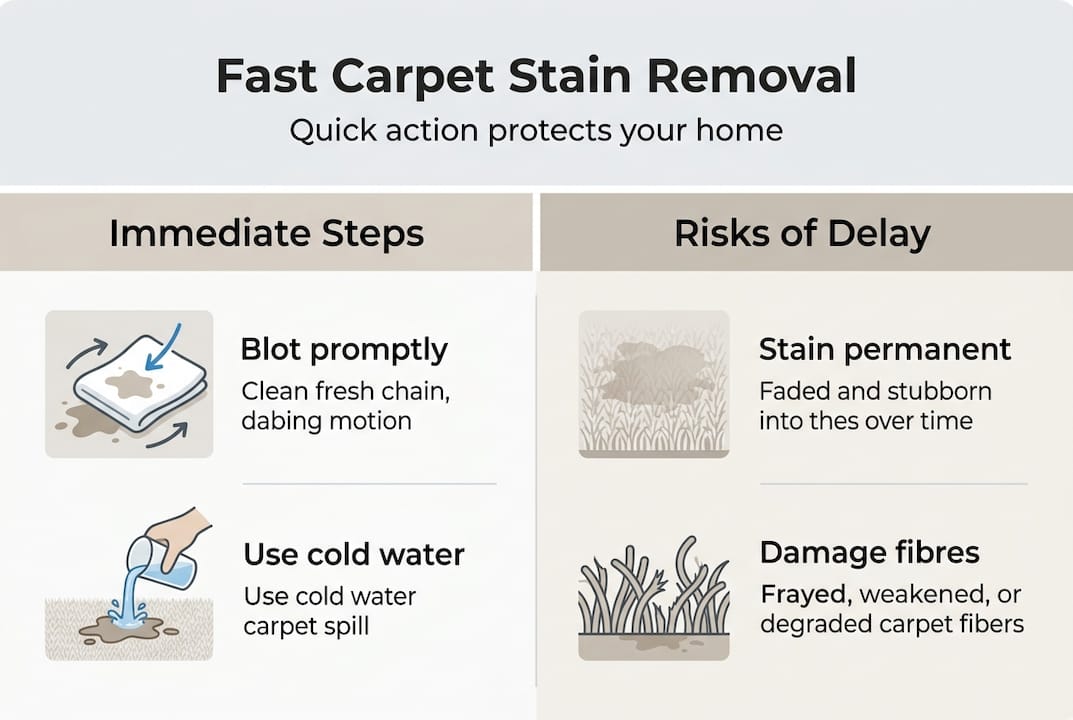
Knowing what not to do is just as valuable as knowing what to do. A calm, methodical approach beats a panicked scrub every time.
DIY vs professional help: Choosing the right stain solution
Whether you’re acting on a fresh spill or facing a stubborn old mark, deciding between DIY and expert help makes a real difference.
DIY stain removal is absolutely the right first step for fresh spills. With the correct technique and the right product, most new stains can be fully resolved at home without spending a cent on professional services. DIY is effective for fresh spills, but professionals bring specialised tools and solutions for deep residues that home methods simply can’t reach.
| Factor | DIY removal | Professional cleaning |
|---|---|---|
| Best for | Fresh spills, light marks | Set stains, odours, deep soiling |
| Cost | Low | Moderate to higher |
| Equipment | Household items | Industrial steam cleaners |
| Risk of damage | Moderate if done incorrectly | Low with trained technicians |
| Result quality | Good for new stains | Excellent for all stain types |
Here’s when you should call in the professionals:
- The stain has been there for more than a few hours
- DIY attempts have not fully removed the mark
- There is an odour accompanying the stain
- The carpet is made from a delicate fibre like wool or silk
- You’re preparing a rental property for inspection or handover
Learning how to remove carpet stains correctly at home is a worthwhile skill, but it has limits. Professional steam cleaning reaches the backing and underlay, removing residues that DIY methods leave behind. These residues attract dirt over time, causing the stain to reappear even after it looked clean. Following stain-resistant carpet tips after a professional clean can also help extend the time between treatments. For a broader look at what you might be dealing with, reviewing common stain solutions for the most frequent household offenders is a smart starting point.
What most homeowners overlook about stain removal
After working in Yarra Valley homes for years, we’ve noticed a pattern. Most people don’t fail at stain removal because they lack effort. They fail because they reach for the wrong product with confidence, or they wait just a little too long before acting.
There is no miracle product that fixes every stain. What actually works is a combination of immediate action, correct technique, and knowing your carpet’s fibre type before you apply anything. The homeowners who get the best results are the ones who blot first, test before treating, and resist the urge to scrub.
We also see a lot of damage caused by well-meaning attempts with harsh chemicals. Bleach, undiluted vinegar, and strong alkaline cleaners can strip colour from carpet fibres permanently. Investing in carpet protection after cleaning is a far smarter long-term strategy than trying to fix damage after the fact.
Think of stain removal less as a cleaning task and more as a first response. The goal in the first few minutes is containment and lifting, not perfection. Perfection comes later, with the right tools and, when needed, professional support.
Get trusted help for clean, stain-free carpets
For stains you can’t control or want professional reassurance, here’s how we can help.
At Yarra Valley Carpet Cleaning, we understand that some stains need more than a cloth and good intentions. Our team uses advanced steam cleaning equipment and eco-friendly products to remove even the most stubborn marks from carpets across Lilydale, Mooroolbark, Healesville, and beyond. Whether you need carpet cleaning near you or want to understand our stain removal techniques in more detail, we’re here to help. We also share practical carpet care tips to help you maintain results between cleans. Contact us today for a fast, affordable, and reliable solution.
Frequently asked questions
What happens if I leave a stain on my carpet overnight?
Leaving a stain overnight allows it to set deeply into the fibres, often making it permanent and harder to remove, even with professional treatment.
Can most carpet stains be removed with DIY methods?
Fresh stains are often treatable at home, but old or set stains usually require professional equipment to fully remove residue from the carpet backing.
Is it safe to use vinegar on all carpet stains?
No. Vinegar worsens coffee stains and can damage certain fibres, so always test it in a hidden spot before applying it to the main area.
What’s the best cleaner for protein-based stains?
Enzyme cleaners work best for protein-based stains like blood, pet accidents, or dairy because they break down the organic compounds at a molecular level.
Recommended
- 10 Essential Carpet Stain Prevention Tips for Homeowners – Yarra Valley Carpet Cleaning
- Stain Resistant Carpet Tips for a Spotless Home – Yarra Valley Carpet Cleaning
- Essential Carpet Protection After Cleaning: A Step-by-Step Guide – Yarra Valley Carpet Cleaning
- Best Ways to Remove Carpet Stains for a Fresh Home – Yarra Valley Carpet Cleaning
- Master Cleaning Window Treatments for a Fresh Look