
Office carpets cop heaps of foot traffic every single day and they quietly collect a surprising amount of grime and allergens. Most people reckon a quick vacuum now and then does the trick. But research shows that professional deep cleaning every 12 to 18 months can extend your carpet’s lifespan by years and cut replacement costs. There’s a smarter way to keep your workspace fresh and healthy that could be saving money without you even noticing.
Table of Contents
- Why Regular Carpet Cleaning Matters
- Step-By-Step Office Carpet Cleaning Checklist
- Choosing Cleaning Methods For Every Need
- Tips For Maintaining Cleaner Carpets Longer
Quick Summary
| Takeaway | Explanation |
|---|---|
| Regular cleaning enhances health and air quality. | Unclean carpets trap allergens and pollutants, negatively affecting indoor air and employee health. Regular cleaning mitigates these risks. |
| Professional cleaning prolongs carpet lifespan. | Professional maintenance removes dirt that can degrade carpet fibers, saving costs on early replacements and maintaining aesthetics. |
| Targeted cleaning techniques are essential. | Assessing carpet type and condition helps select appropriate cleaning methods, ensuring effective stain removal without damaging fibers. |
| Preventative measures are highly effective. | Using entry mats and implementing clean policies significantly reduces dirt and staining, extending the carpet’s lifespan. |
| Schedule regular professional cleans. | Plan for deep cleaning every 12 to 18 months to maintain appearance and condition, preventing long-term damage and costly replacements. |
Why Regular Carpet Cleaning Matters
Maintaining clean office carpets is far more than a cosmetic concern. Regular carpet cleaning represents a critical investment in workplace health, productivity, and long term asset preservation. While many businesses overlook this essential maintenance task, understanding its deeper implications can transform how organisations approach carpet care.
Health and Indoor Air Quality Implications
Carpets act like sophisticated air filters in office environments, trapping dust, allergens, bacteria, and microscopic pollutants that circulate through workplace atmospheres. Research from the Centers for Disease Control and Prevention highlights that uncleaned carpets can become significant reservoirs of potential health hazards. These accumulated contaminants can trigger respiratory issues, allergic reactions, and contribute to reduced indoor air quality.
Professional cleaning removes these trapped particles systematically, preventing their re-circulation and creating a healthier workspace. The Occupational Safety and Health Administration emphasises that proper carpet maintenance directly correlates with improved workplace environmental conditions and employee wellness.
Economic and Performance Benefits
Beyond health considerations, regular carpet cleaning delivers substantial economic advantages. High traffic office carpets experience rapid wear and degradation when not professionally maintained. Dirt, grit, and debris act like microscopic sandpaper, gradually breaking down carpet fibres and reducing their structural integrity.
Professional cleaning extends carpet lifespan by removing abrasive particles and preventing permanent damage. This proactive approach translates into significant cost savings, potentially delaying expensive carpet replacement by years. Moreover, clean carpets create positive first impressions for clients and visitors, reflecting an organisation’s commitment to professionalism and attention to detail.
Psychological and Productivity Impacts
The visual and sensory experience of a clean environment profoundly influences workplace psychology. Pristine carpets contribute to a sense of organisational pride, boost employee morale, and create an inviting atmosphere. Studies consistently demonstrate that well maintained workspaces positively impact employee motivation and productivity.
A strategically planned carpet cleaning schedule signals organisational values of hygiene, care, and employee wellbeing. Learn more about professional office carpet maintenance practices to develop a comprehensive approach tailored to your specific workplace requirements.
Ultimately, regular carpet cleaning is not an optional luxury but a fundamental component of responsible facility management. By investing in professional cleaning services, businesses protect their physical assets, safeguard employee health, and cultivate a professional, welcoming workspace environment.
Step-By-Step Office Carpet Cleaning Checklist
A comprehensive office carpet cleaning checklist requires systematic planning and strategic execution. Professional cleaning goes beyond simple vacuuming, involving multiple stages that ensure thorough maintenance and preservation of your workplace carpets.
Below is a process table outlining the step-by-step office carpet cleaning checklist. This will help you visualise and track each key action required for effective and professional carpet cleaning in the office.
| Step | Action Description |
|---|---|
| 1. Pre-Cleaning Preparation | Clear the area, remove furniture and electronics, document carpet condition with photos, gather necessary equipment. |
| 2. Initial Assessment | Identify high traffic zones, visible stains, and areas needing special attention; mark these areas as needed. |
| 3. Thorough Vacuuming | Use commercial-grade HEPA vacuums to extract embedded dirt and minimise airborne particles. |
| 4. Spot and Stain Treatment | Apply targeted cleaning solutions for specific stains, blot rather than rub, use professional spot treatment as needed. |
| 5. Deep Cleaning | Use steam cleaning or hot water extraction to penetrate carpet fibres and remove embedded dirt and allergens. |
| 6. Drying Protocols | Utilise industrial fans and dehumidifiers to ensure complete drying and prevent mould. |
| 7. Final Inspection | Check carpet for cleanliness and dryness before returning furniture and equipment. |
Pre-Cleaning Preparation
Before initiating the cleaning process, thorough preparation is crucial. According to Weber State University’s Facilities Management, effective carpet cleaning begins with strategic groundwork. Start by clearing the area completely, removing furniture, electronics, and other movable objects. Document the current carpet condition with photographs to track potential changes or damage.
Conduct a detailed initial assessment of carpet condition. Identify high traffic zones, visible stains, and areas requiring special attention. Mark these areas with removable tape or notation to ensure targeted cleaning. Gather all necessary equipment in advance, including industrial vacuum cleaners, professional cleaning solutions, protective gear, and microfibre cloths.
Systematic Cleaning Procedure
The actual cleaning process demands a methodical approach. Begin with thorough vacuuming using commercial grade equipment capable of extracting deeply embedded dirt. The U.S. General Services Administration’s Sustainable Facilities Tool recommends using HEPA filtered vacuums to minimise airborne particle circulation.
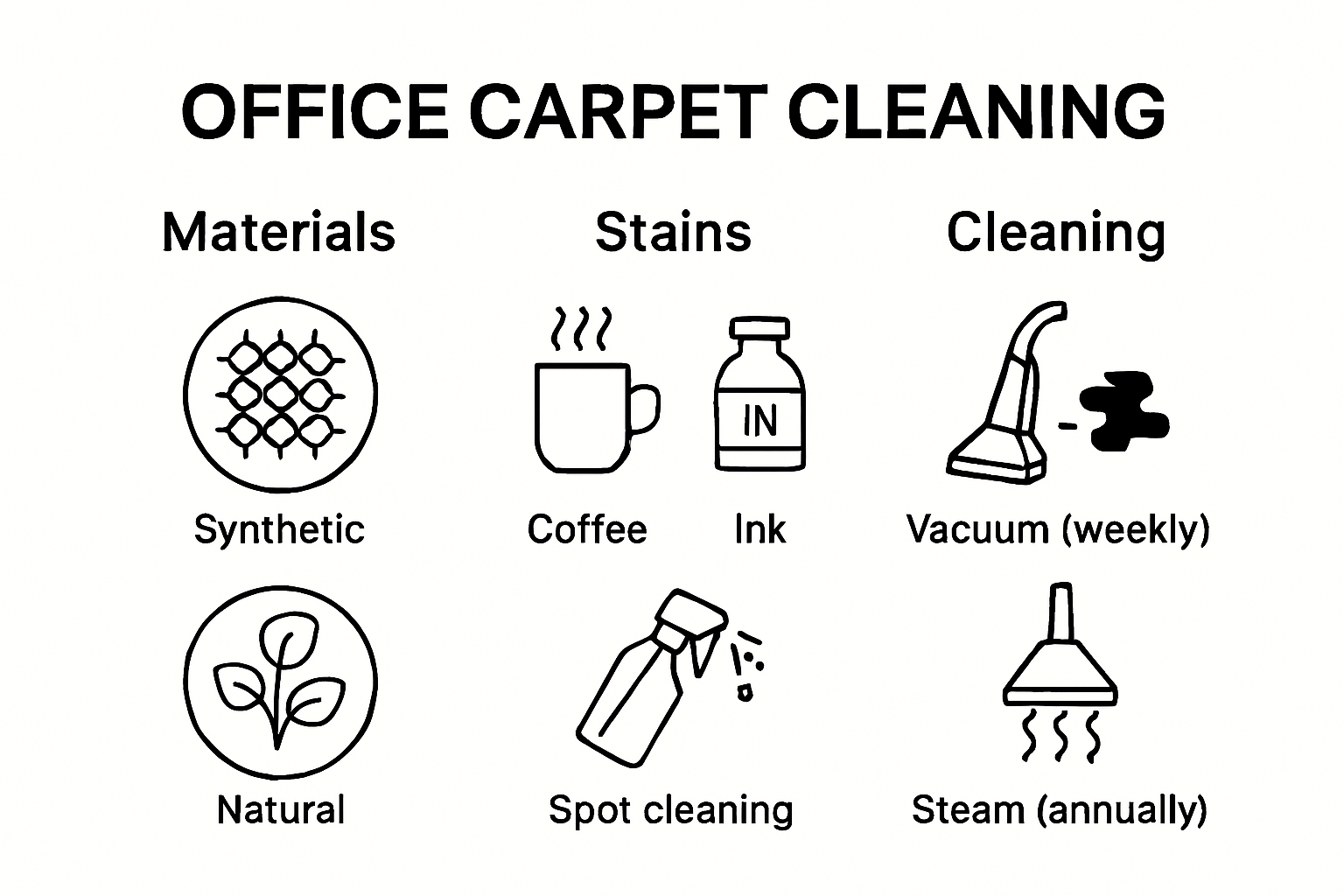
Next, address specific stain treatments. Different carpet materials and stain types require unique approaches. Use targeted cleaning solutions for specific marks like coffee, ink, or mud. Apply solutions sparingly and blot rather than rub to prevent fibre damage. For challenging stains, consider professional spot treatment techniques.
Professional Deep Cleaning Techniques
After initial preparation and spot treatment, implement deep cleaning methods. Steam cleaning or hot water extraction represents the most effective professional approach. This technique penetrates carpet fibres, removing accumulated dirt, bacteria, and allergens that standard vacuuming cannot eliminate.
Discover our comprehensive guide to professional carpet maintenance to understand nuanced cleaning strategies tailored to different office environments. Professional cleaning involves controlled moisture application, precise temperature management, and specialized equipment.
Complete the process with thorough drying protocols. Use industrial fans and dehumidifiers to prevent moisture retention, which can lead to mould growth. Ensure complete air circulation and maintain appropriate ambient temperature during the drying phase.
A meticulous office carpet cleaning checklist transforms routine maintenance into a strategic preservation process. By following these systematic steps, organisations can extend carpet lifespan, maintain professional aesthetics, and create healthier workplace environments.
Choosing Cleaning Methods for Every Need
Selecting the appropriate carpet cleaning method is crucial for maintaining office carpets effectively. Different carpet materials, usage patterns, and environmental conditions demand tailored cleaning approaches that preserve carpet integrity while ensuring optimal cleanliness.
Assessing Carpet Material and Condition
Every carpet presents unique cleaning requirements. According to the New York State Office of General Services, understanding carpet composition is the first critical step in selecting an appropriate cleaning technique. Synthetic fibres like nylon and polyester respond differently to cleaning methods compared to natural fibres such as wool or cotton.
Carefully evaluate carpet age, traffic patterns, and existing wear before determining a cleaning strategy. High traffic areas might require more aggressive cleaning techniques, while delicate or vintage carpets demand gentler approaches. Professional assessment can help identify the most suitable cleaning method that balances thorough cleaning with fabric preservation.
Specialized Cleaning Techniques
The Carpet and Rug Institute provides comprehensive guidance on commercial carpet maintenance, highlighting multiple cleaning techniques suited to different scenarios. Hot water extraction remains the gold standard for deep cleaning, effectively removing embedded dirt and sanitising carpet fibres. However, alternative methods like dry cleaning or encapsulation might be more appropriate for sensitive environments or carpets with moisture constraints.
Spot cleaning requires precision and targeted solutions. Different stains demand specific treatments consider ink marks, coffee spills, or organic substances each requires a unique approach. Learn about advanced carpet cleaning strategies to understand the nuanced techniques professionals employ.
Equipment and Professional Considerations
Weber State University’s cleaning protocols emphasise the importance of using appropriate equipment. Industrial grade vacuum cleaners with HEPA filtration, professional extraction machines, and specialised cleaning solutions are essential for comprehensive carpet maintenance.
Professional cleaning services bring expertise in selecting and implementing the most effective cleaning method. They can assess carpet condition, recommend appropriate techniques, and execute cleaning with minimal disruption to workplace operations. Consider factors like drying time, potential business interruption, and long term carpet preservation when selecting a cleaning approach.
Choosing the right cleaning method is not merely about removing visible dirt but about protecting your workplace investment. By understanding your specific carpet’s characteristics and employing targeted cleaning techniques, you can maintain a clean, professional, and hygienic office environment.
Tips for Maintaining Cleaner Carpets Longer
Prolonging the life and appearance of office carpets requires strategic maintenance beyond periodic professional cleaning. Implementing proactive care strategies can significantly reduce wear, preserve aesthetic quality, and minimise long term replacement costs.
Preventative Maintenance Strategies
Prevention represents the most effective carpet maintenance approach. According to the Carpet and Rug Institute, establishing comprehensive preventative protocols can dramatically extend carpet lifespan. Installing high quality entry mats at all building entrances serves as the first line of defence, capturing approximately 80% of dirt and moisture before it reaches interior carpets.
Encourage workplace policies that minimise carpet contamination. Implement shoe cleaning stations, designate indoor footwear, and create clear guidelines about food and drink consumption in carpeted areas. These simple strategies can substantially reduce potential staining and degradation of carpet fibres.
Daily and Periodic Cleaning Routines
The Tennant Company’s D.I.R.T. carpet care routine provides an excellent framework for systematic maintenance. Daily vacuuming remains crucial, targeting high traffic zones and using commercial grade equipment with HEPA filtration. This removes loose dirt before it becomes embedded in carpet fibres.
Interim cleaning techniques like encapsulation or dry compound treatments can refresh carpets between deep cleaning sessions. These methods remove surface contaminants without saturating carpet backing, preventing potential moisture related damage. Discover comprehensive carpet maintenance techniques to develop a tailored approach for your specific office environment.
Professional Care and Long Term Preservation
Professional insights from ‘School Planning and Management’ emphasise the importance of prompt stain treatment and professional assessment. Develop a systematic approach to addressing spills immediately using appropriate cleaning solutions. Avoid rubbing stains, which can spread contaminants and damage carpet fibres.
Schedule professional deep cleaning every 12 to 18 months, depending on traffic intensity. Professional services can provide specialised treatments that restore carpet appearance and protect against future degradation. They can also identify early signs of wear, helping organisations budget for potential replacements more effectively.
Maintaining clean carpets is an ongoing process that requires commitment, strategy, and proactive management. By implementing these comprehensive maintenance techniques, organisations can ensure their carpets remain aesthetically pleasing, hygienic, and functional for years to come.

Frequently Asked Questions
What are the benefits of regular carpet cleaning in an office?
Regular carpet cleaning improves indoor air quality, removes allergens, extends carpet lifespan, and enhances the aesthetic appeal of the workplace, contributing to a healthier work environment and overall employee productivity.
How often should office carpets be professionally cleaned?
It is recommended to have professional deep cleaning of office carpets every 12 to 18 months to effectively remove dirt and allergens, preventing long-term damage and reducing the need for premature replacements.
What cleaning methods are suitable for different carpet types?
The cleaning method depends on the carpet material; for synthetic fibres, hot water extraction is effective, while natural fibres may require gentler methods like dry cleaning or encapsulation to avoid damage.
What can be done to maintain cleaner carpets for longer?
To maintain cleaner carpets longer, implement preventative strategies such as using entry mats, establishing workplace policies to minimise spills, conducting daily vacuuming with HEPA filters, and scheduling periodic professional cleanings.
Take the Stress Out of Office Carpet Cleaning in the Yarra Valley
Creating a healthier, more productive workplace is not just about ticking off a cleaning checklist. It is about tackling the build-up of allergens, stains, and grime that can quietly undermine staff wellbeing and the look of your workspace. If you are finding it hard to keep up with industry best practices or want to avoid expensive early replacements, it is time to get expert help. Reliable deep cleaning and regular maintenance will protect both your investment and your team’s health.
Let us help you raise the bar for office hygiene and presentation. With Yarra Valley Carpet Cleaning, you get local specialists who deliver commercial deep cleans on your schedule, using safe products and advanced techniques. Ready to implement the complete carpet care routine your workplace deserves? Explore more solutions in our Articles section or get in touch through our website today. Book now to secure a cleaner, healthier office and make a smart choice for your business future.
Recommended
- Deep Cleaning Carpets at Home: 2025 Guide for Yarra Valley – Yarra Valley Carpet Cleaning
- Office Carpet Cleaning Frequency: Best Practices for 2025 – Yarra Valley Carpet Cleaning
- Spring Cleaning Carpet Checklist 2025 for Yarra Valley Homes – Yarra Valley Carpet Cleaning
- Move Out Carpet Cleaning Guide for Homes and Businesses – Yarra Valley Carpet Cleaning