
TL;DR:
- Steam cleaning effectively reduces bacteria but poses burn and surface damage risks if misused.
- Use caution on unsealed wood, painted surfaces, and ensure surfaces are fully dry before children re-enter.
- Always inspect devices, follow safety routines, and consider professional cleaning for safer results.
Steam cleaning has earned a glowing reputation among parents wanting a chemical-free home. It sounds like the perfect solution: blast germs away with nothing but heat, and your floors and fabrics are safe for little ones to roll around on. But the reality is more nuanced than the marketing suggests. While steam cleaning genuinely reduces chemical exposure and kills a remarkable percentage of bacteria, it also carries real risks that many families overlook. Burns, surface damage, and even mould are all possible when steam is used incorrectly. This guide cuts through the noise and gives you clear, practical guidance on making steam cleaning work safely in a home with young children.
Table of Contents
- How steam cleaning works and why it appeals to families
- Essential safety facts: Steam cleaning and young children
- Which surfaces and items are steam safe and which are not?
- Practical tips to make steam cleaning safer for families
- Our perspective: The honest reality of steam cleaning with children at home
- Professional help for safer, healthier steam cleaning
- Frequently asked questions
Key Takeaways
| Point | Details |
|---|---|
| Chemical-free hygiene | Steam cleaning offers deep sanitisation without chemical residue, reducing allergy and irritation risks for children. |
| Burn and injury risk | Always keep kids away from active steam cleaners and ensure surfaces are cool before contact. |
| Material limitations | Not all surfaces are steam safe; avoid unsealed, delicate, or electronic items to prevent damage. |
| Safe cleaning routine | Let rooms air out and surfaces dry fully before children return after steam cleaning. |
How steam cleaning works and why it appeals to families
Steam cleaning uses superheated water vapour, typically at temperatures above 100°C, to loosen dirt, kill pathogens, and lift grime from surfaces. There are no soaps, solvents, or synthetic fragrances involved. The appeal for families is obvious: fewer chemicals means fewer residues left behind on the floors your toddler is touching with their hands, knees, and occasionally their mouth.
Traditional detergent cleaning can leave behind surfactant residue, fragrance compounds, and sometimes preservatives that linger on carpets and hard floors long after you’ve mopped. For children with sensitive skin, respiratory conditions like asthma, or allergies, those residues can be genuinely irritating. Steam sidesteps most of that concern entirely.
Experts in paediatric hygiene have taken note. Steam kills 99.9 to 99.99% of microbes on toys and surfaces with direct exposure, and it is preferred in paediatric guidelines over chemical sanitisers for everyday home use. That’s a compelling figure for any parent trying to reduce their child’s germ load without reaching for a bottle of bleach.
The chemical-free sanitisation benefits are especially meaningful in homes where babies are crawling on carpets and mouthing soft toys regularly. Steam cleaning, when done right, ticks a lot of boxes.
Here’s a quick comparison of how steam stacks up against traditional chemical cleaning:
| Feature | Steam cleaning | Chemical cleaning |
|---|---|---|
| Bacteria removal | Up to 99.99% with direct heat | Varies by product |
| Chemical residue | None when dry | Can linger on surfaces |
| Allergy risk | Low (no fragrance or surfactants) | Moderate to high |
| Suitable surfaces | Tiles, sealed floors, fabrics | Most hard surfaces |
| Child re-entry time | Once cool and dry | Can take longer to air out |
The key differences between the two methods come down to a few practical points:
- Steam leaves no toxic residue once surfaces are dry and cool
- Chemical cleaners may require rinsing to remove residue from floors
- Steam cannot be diluted or made weaker, so surface suitability matters more
- Chemical cleaners offer more flexibility across material types
For family carpet cleaning tips that go beyond just steam, it’s worth understanding both methods before committing to one.
“Steam is increasingly recommended in child health settings precisely because it sanitises without introducing new chemical hazards into the home environment.”
Essential safety facts: Steam cleaning and young children
Here is where things get serious. Steam is not inherently gentle. It is superheated water vapour that exits the nozzle at temperatures that can cause significant injury in seconds.
Burns from hot steam, above 100°C, can cause second and third-degree injuries to children’s skin very quickly. This is not a minor risk. Children are naturally curious, and a steam cleaner left unattended or used near a toddler is a genuine hazard.
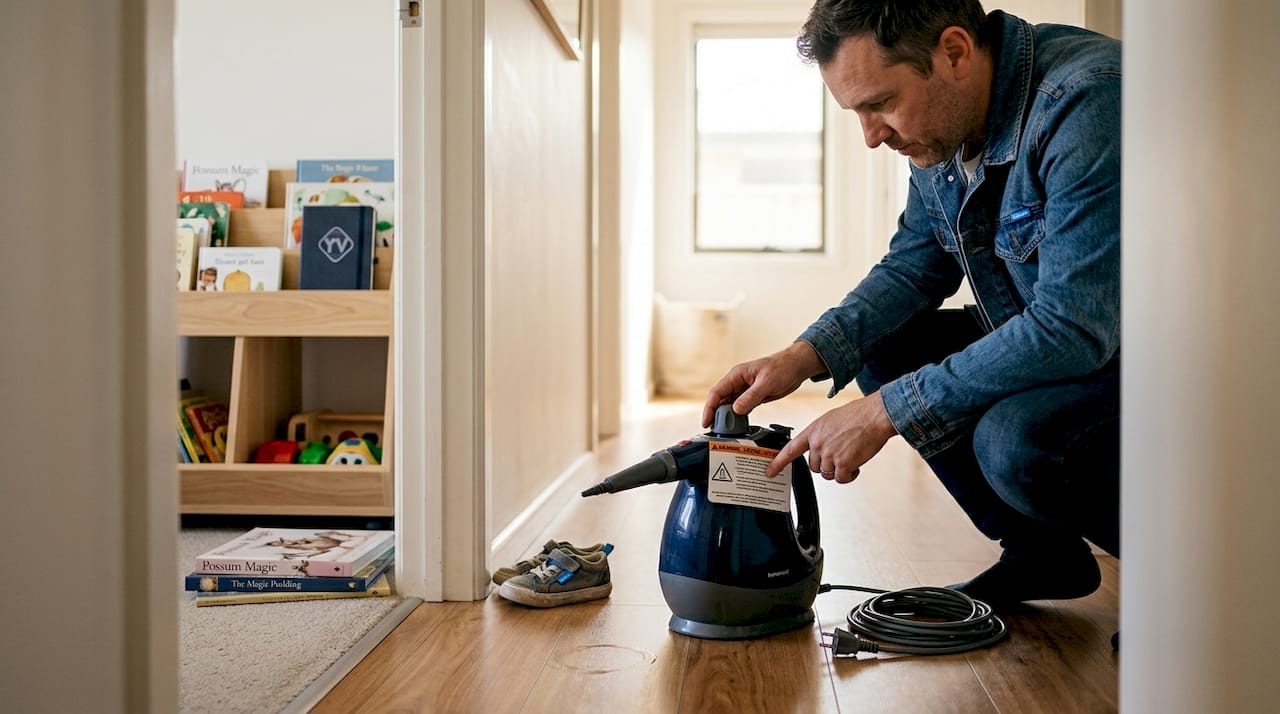
Device quality matters enormously too. In 2026, a significant recall highlighted just how real this danger is. Bissell recalled over 1.7 million Steam Shot OmniReach steam cleaners after attachments were found to detach during use, expelling hot steam and water unexpectedly. There were 206 reported incidents and 161 burn injuries. That is not a fringe issue.
Common injury risks associated with steam cleaner misuse include:
- Direct steam contact burns from nozzles or hose joints
- Scalding from hot water released during attachment changes
- Trip hazards from cords and hoses in busy family areas
- Burn injuries from children touching recently cleaned, still-hot surfaces
- Device malfunction from worn seals or recalled components
The burn risks and safe use of steam cleaners are well-documented, yet many parents assume that because steam cleaning is “natural,” it is automatically safe. That assumption needs challenging.
For a broader look at the safest carpet cleaning methods for homes with young children, it is worth comparing your options before you start.
Pro Tip: Before purchasing or using any steam cleaner, search the product name on your country’s product safety recall database. A quick five-minute check could prevent a serious injury.
Which surfaces and items are steam safe and which are not?
Steam cleaning is not a universal solution. Applying it to the wrong surface can warp timber, peel paint, or leave carpets damp enough to grow mould.
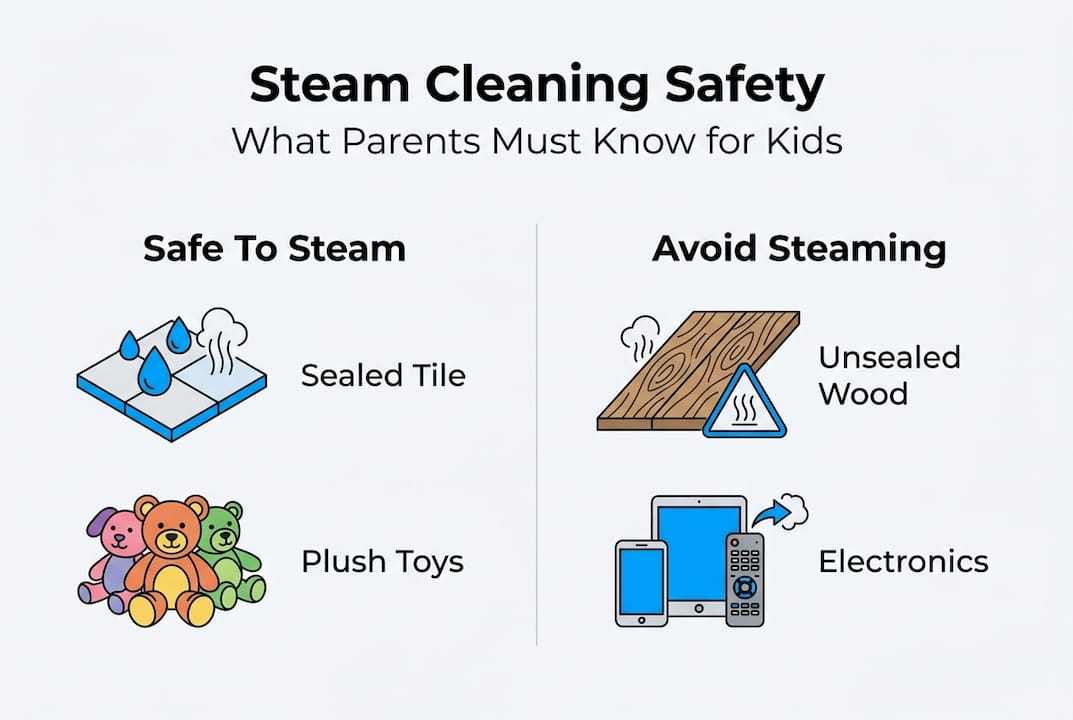
Unsealed wood, laminate, stone, painted or waxed surfaces, and certain vinyl should never be steam cleaned. The combination of heat and moisture causes warping, staining, and peeling on these materials, and damp carpets that don’t dry quickly enough can develop mould underneath, right where your child plays.
Here’s a practical surface guide for family homes:
| Surface | Steam safe? | Notes |
|---|---|---|
| Ceramic or porcelain tiles | Yes | Excellent results |
| Sealed hardwood floors | With caution | Limit moisture, dry quickly |
| Unsealed timber or laminate | No | Risk of warping and mould |
| Carpets and rugs | Yes, with care | Must dry fully and quickly |
| Painted walls or skirting boards | No | Paint can peel or blister |
| Soft toys (heat-tolerant fabrics) | Yes | Check manufacturer label first |
| Electronics or wiring | No | Serious safety hazard |
Safe items for steam include sealed tile floors, cotton and polyester fabrics, and most hard plastic toys. Items you should avoid include:
- Unsealed timber furniture and floors
- Waxed or polished surfaces
- Anything with delicate embroidery or glued components
- Painted wooden toys without heat-resistant coatings
- Electronics, cords, and battery compartments
For a deeper look at how steam cleaning surfaces works across different materials, it helps to understand what heat and moisture actually do to each one. And if you’re weighing your options, the steam vs shampoo cleaning comparison is worth reading before your next carpet clean.
For soft plush toys, a garment steamer held at a safe distance is a gentler alternative to a direct steam mop attachment. It sanitises without saturating the fabric.
Pro Tip: Always test steam on a hidden patch of any surface before doing a full clean. A small inconspicuous corner tells you everything you need to know before committing to the whole floor or item.
Also consider the toy and surface safety guidelines from reputable sources before steaming children’s items.
Practical tips to make steam cleaning safer for families
Knowing what to clean is only half the story. How you clean matters just as much, especially when young children share the space.
The main risks during steam cleaning are burns during use, surface damage from misapplication, and moisture issues from poor ventilation. None of these are inevitable. All of them are preventable with a clear routine.
Follow these steps for a safer steam clean session:
- Clear the room completely. Remove children, pets, and any items not being cleaned before you start.
- Inspect the device. Check hoses, seals, and attachments for wear or damage before each use.
- Use the correct attachment. Match the nozzle or pad to the surface type to avoid over-saturating or overheating.
- Move slowly and steadily. Rushing leaves surfaces wetter than necessary, increasing drying time and mould risk.
- Ventilate immediately. Open windows and turn on fans as soon as you finish to speed up drying.
- Allow full cooling and drying. Wait until surfaces are genuinely cool and dry before children re-enter the space.
Supportive habits to build around steam cleaning:
- Wear heat-resistant gloves and closed-toe shoes during every session
- Schedule steam cleans during school hours, nap times, or when children are out of the house
- Inspect the device for faults every month, not just when something seems wrong
- Keep a log of the device’s purchase date and check recall lists regularly
Pro Tip: Steam clean when kids are completely out of the home, and set a timer as a reminder not to let them back in until surfaces are cool and dry. Thirty to sixty minutes is usually enough for most surfaces.
For more structured advice, the family-friendly cleaning practices page offers solid guidance for households with young children, and the childcare carpet cleaning guide applies many of the same principles to home environments.
Our perspective: The honest reality of steam cleaning with children at home
We’ve seen a clear pattern with families who come to us after a DIY steam cleaning mishap. The issue is almost never ignorance. It is over-confidence. Parents read “chemical-free” and assume that means risk-free. It doesn’t.
Steam is a tool, and like any tool, the outcome depends entirely on how it’s used. The temperature that makes steam effective at killing bacteria is the same temperature that causes serious burns. That tension doesn’t disappear just because you’re using a premium device or following a YouTube tutorial.
What we’ve found is that families who do well with steam cleaning are the ones who treat it with the same respect they’d give a hot stove. They have a routine, they check their equipment regularly, and they don’t assume everything is fine just because nothing has gone wrong yet. Marketing claims about germ-killing percentages are real, but they only matter if the rest of the process is managed carefully.
Brands and device quality also vary wildly. The common steam cleaning misconceptions around “all steam cleaners are equally safe” are worth addressing before you buy. A recall list check takes five minutes and is one of the most practical safety habits a parent can build.
Professional help for safer, healthier steam cleaning
If you want complete peace of mind or are pressed for time, turning to professional support is a smart next step. At Yarra Valley Carpet Cleaning, we understand the specific needs of families with young children. Our team uses advanced steam cleaning equipment that is regularly maintained and checked, and we apply methods tailored to protect your surfaces while delivering genuinely hygienic results.
For parents across Lilydale, Mooroolbark, Croydon, and surrounds, our local carpet cleaning service takes the guesswork out of keeping your home clean and safe. After every professional clean, our carpet care after cleaning guide helps you maintain those results between visits. Get in touch with our friendly team to book a session that works around your family’s schedule.
Frequently asked questions
Is steam cleaning safe for babies crawling on the floor?
Yes, once floors are dry and cool, steam cleaning leaves no harmful residues. Steam kills up to 99.99% of microbes and leaves no chemical residue when used properly, making it a safe option for babies once the surface has fully cooled.
Can steam cleaning carpets cause mould or damp in kids’ rooms?
If carpets remain damp after steam cleaning, mould can develop underneath, especially in poorly ventilated rooms. Steam may cause mould if carpets stay wet, so always ensure good airflow and complete drying before children use the space again.
Are there any surfaces in children’s rooms you should never steam clean?
Avoid steam cleaning unsealed wood, laminate, painted or waxed surfaces, and anything electronic. Unsealed wood and laminate are particularly vulnerable to warping, staining, and peeling when exposed to heat and moisture.
How soon after steam cleaning can my child use the room again?
Wait until all surfaces are completely dry and cool, which typically takes 30 to 60 minutes. No harmful inhalation risk remains once surfaces are dry, but physical contact with hot surfaces before full cooling is still a burn risk.
Recommended
- Child Friendly Carpet Cleaning: Safe Solutions for Homes – Yarra Valley Carpet Cleaning
- Carpet Cleaning for Childcare Centres: Step-by-Step Guide – Yarra Valley Carpet Cleaning
- 7 Ways to Know Are Carpet Cleaning Chemicals Safe – Yarra Valley Carpet Cleaning
- How Steam Cleaning Works: A Practical Guide for Homes and Businesses – Yarra Valley Carpet Cleaning