
Everyday spills and muddy footprints are familiar challenges for homes and businesses across the Yarra Valley. Choosing eco-friendly carpet care solutions makes a real difference, keeping your floors fresh while protecting Australian air and water quality. This guide brings together practical, sustainable methods using plant-based products, natural disinfectants like vinegar, and smart vacuuming routines so you can achieve spotless results without harsh chemicals.
Table of Contents
- Step 1: Gather Essential Eco-Friendly Carpet Care Supplies
- Step 2: Vacuum Thoroughly To Remove Surface Debris
- Step 3: Treat Stains Using Natural Spot Solutions
- Step 4: Steam Clean Carpets For A Deep, Hygienic Finish
- Step 5: Check Carpet Freshness And Repeat As Needed
Quick Summary
| Key Point | Explanation |
|---|---|
| 1. Use eco-friendly cleaning supplies | Select biodegradable products like vinegar and bicarbonate to protect carpets and the environment. |
| 2. Vacuum thoroughly and regularly | Consistent vacuuming helps remove dirt buildup and extends your carpet’s lifespan, especially in high-traffic areas. |
| 3. Treat stains quickly with natural solutions | Blot stains immediately and use vinegar, bicarbonate, or cornflour for effective, environmentally-friendly stain removal. |
| 4. Steam clean carpets every 12-18 months | Deep cleaning with a steam cleaner removes embedded dirt and allergens, ensuring a hygienic living space. |
| 5. Regularly assess carpet condition | After cleaning, check for stains, odours, or dampness to maintain carpet health and plan future care. |
Step 1: Gather essential eco-friendly carpet care supplies
Prepping your arsenal for effective carpet care starts with selecting the right eco-friendly cleaning tools and solutions that protect both your carpets and the environment. When choosing supplies, you’ll want to focus on natural, biodegradable products that deliver powerful cleaning without harsh chemicals.
Your essential eco-friendly carpet cleaning kit should include:
- White vinegar: A natural disinfectant and deodoriser
- Bicarbonate of soda: Excellent for absorbing odours and light stains
- Microfibre cloths: Reusable and effective for gentle cleaning
- Spray bottles: For mixing and applying homemade cleaning solutions
- Sustainable cleaning products
To create your cleaning solution, mix one part white vinegar with three parts warm water in a spray bottle. This mixture effectively tackles most household carpet stains while remaining environmentally responsible. For tougher stains, you can add a small amount of mild, plant-based liquid soap.
Natural cleaning solutions protect your carpet fibres while minimising environmental impact.
When selecting commercial products, look for certifications indicating biodegradability and low environmental toxicity. Australian brands increasingly offer green-certified carpet cleaning solutions that perform exceptionally without compromising sustainability.
Pro tip: Always test any new cleaning solution on a small, inconspicuous carpet area to ensure colour fastness and prevent potential damage.
Step 2: Vacuum thoroughly to remove surface debris
Effective carpet maintenance begins with thorough vacuuming, a critical step in preserving your carpet’s appearance and longevity. Carpet cleaning experts recommend frequent vacuuming to prevent dirt buildup and extend your carpet’s lifespan.
To vacuum effectively, follow these key techniques:
- Move furniture: Create clear access to entire carpet surface
- Adjust vacuum height: Ensure direct contact with carpet fibers
- Vacuum slowly: Make multiple overlapping passes
- Use different directions: Vacuum against and along carpet pile
- Focus on high-traffic areas: Pay extra attention to entryways and hallways
Start by setting your vacuum to the appropriate height for your carpet type. Thick carpets require different settings compared to low-pile or commercial carpets. Systematic vacuuming means making multiple slow passes in different directions to dislodge embedded dirt and dust particles.
Consistent vacuuming is the most cost-effective way to maintain carpet quality and extend its lifespan.
Pay special attention to areas like entryways, hallways, and spaces around furniture where dirt accumulates quickly. For homes with pets or high foot traffic in suburbs like Lilydale or Mooroolbark, consider vacuuming more frequently to prevent deep-seated grime.
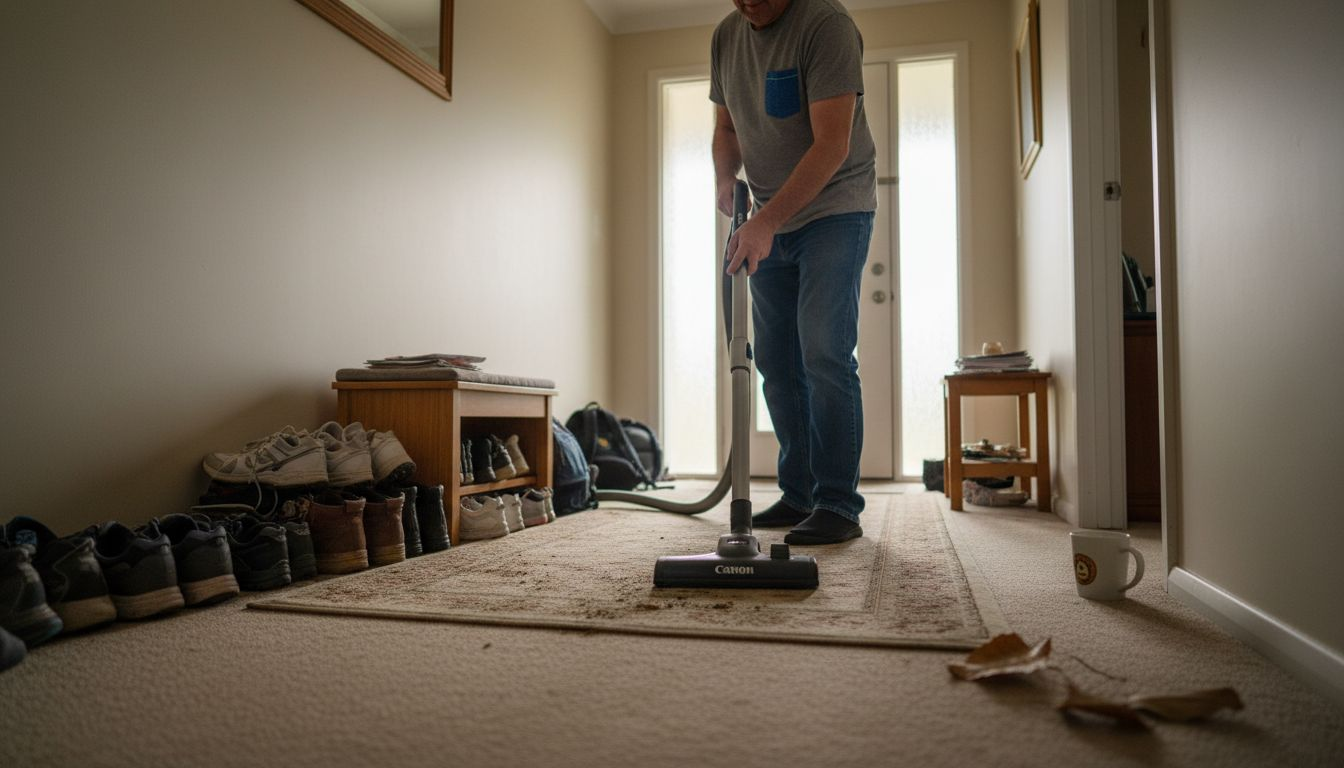
Pro tip: Invest in a vacuum with a rotating brush attachment to effectively agitate and lift dirt from deep within carpet fibers.
Step 3: Treat stains using natural spot solutions
Tackling carpet stains requires a gentle yet effective approach that preserves your carpet’s integrity while removing unwanted marks. Natural cleaning solutions offer powerful stain removal without harsh chemicals, making them ideal for environmentally conscious homeowners.
Your natural stain-fighting toolkit should include:
- Bicarbonate of soda: Absorbs odours and lifts light stains
- White vinegar: Breaks down fresh spills and disinfects
- Hydrogen peroxide: Tackles tougher organic stains
- Cornflour: Excellent for oil-based spot treatments
- Clean white cloths: For blotting and applying solutions
For most stains, start by blotting excess liquid with a clean white cloth. Avoid rubbing, which can push the stain deeper into carpet fibres. Create a simple solution by mixing equal parts white vinegar and water, applying it gently to the affected area.
Quick action is crucial – the sooner you treat a stain, the easier it is to remove.
Different stains require specific approaches. Coffee and red wine need immediate attention, while mud stains can be treated by allowing them to dry completely before vacuuming. For homes in suburbs like Lilydale and Mooroolbark with active families, keeping these natural solutions on hand can save your carpet from permanent damage.
Here’s a quick reference guide for handling common carpet stains naturally:
| Stain Type | Immediate Action | Best Natural Treatment |
|---|---|---|
| Coffee/Tea | Blot with cloth, act fast | Vinegar-water, then bicarb |
| Red Wine | Blot, sprinkle bicarb | Vinegar-water, repeat as needed |
| Mud | Let dry fully, vacuum | Bicarb, gentle brushing |
| Pet Accidents | Blot, remove solids | Vinegar-water, then bicarb |
| Oil/Grease | Blot, apply cornflour | Cornflour, then vacuum |
Pro tip: Always test any homemade cleaning solution on a small, hidden carpet area first to ensure it doesn’t cause discoloration.
Step 4: Steam clean carpets for a deep, hygienic finish
Restoring your carpet’s pristine condition requires a thorough steam cleaning that goes beyond surface-level maintenance. Deep carpet cleaning techniques can transform your home’s carpets, removing embedded dirt, allergens, and stubborn stains.
To steam clean effectively, you’ll need:
- Steam cleaner: Rent or purchase a quality machine
- Hot water: Clean, preferably filtered
- Carpet cleaning solution: Eco-friendly, low-foam formula
- Microfibre towels: For spot cleaning and drying
- Protective gloves: To handle hot water and cleaning solutions
Prepare your space by removing furniture and thoroughly vacuuming the carpet. Start in a corner and work systematically across the room, using slow, overlapping passes to ensure complete coverage. Move furniture carefully and clean underneath to prevent moisture damage.
Consistent steam cleaning prevents dirt buildup and extends your carpet’s lifespan.
For homes in active suburbs like Mooroolbark and Lilydale, steam cleaning every 12-18 months helps maintain carpet quality and indoor air hygiene. Pay extra attention to high-traffic areas and spots prone to spills and stains.
Pro tip: Allow carpets to dry completely by opening windows and using fans to prevent mould growth and musty odours.
Step 5: Check carpet freshness and repeat as needed
After completing your thorough carpet cleaning, the final step involves assessing your carpet’s overall condition and planning future maintenance. Regular carpet maintenance prevents long-term damage and keeps your flooring looking pristine.
Use these key assessment techniques:
- Visual inspection: Look for remaining stains or discoloured patches
- Smell test: Check for any lingering odours
- Touch assessment: Feel for any remaining dampness
- Light test: Examine carpet under different lighting conditions
- High-traffic area evaluation: Inspect zones with most wear
Rotate your furniture periodically to prevent uneven wear and distribute traffic patterns across the carpet. In busy households around suburbs like Mooroolbark and Lilydale, consider more frequent cleaning cycles for high-use areas.
Consistent monitoring helps maintain your carpet’s appearance and extends its overall lifespan.
Document your cleaning process, noting date of cleaning, products used, and any challenging stains. This helps track your carpet’s condition and plan future maintenance strategies tailored to your specific home environment.
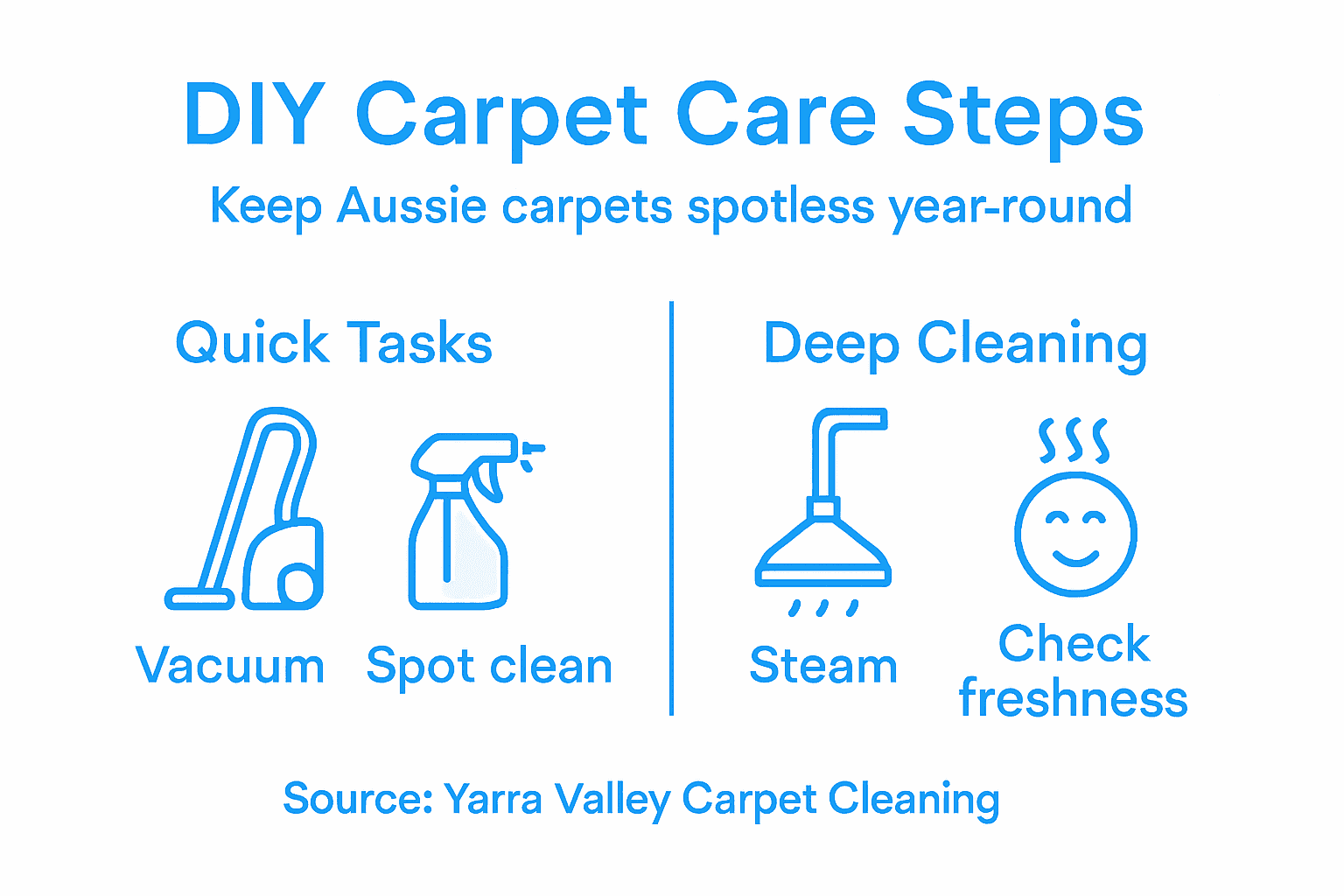
Compare the frequency of carpet care tasks for optimal results:
| Task | Recommended Frequency | Why It Matters |
|---|---|---|
| Vacuuming | 1-2 times per week | Prevents dirt build-up |
| Spot Cleaning | As soon as needed | Stops stains becoming permanent |
| Steam Cleaning | Every 12–18 months | Removes deep dirt/allergens |
| Carpet Assessment | After each major cleaning | Detects early wear or damage |
Pro tip: Keep a small sample of cleaning solution and cloth for quick touch-ups between deep cleaning sessions.
Elevate Your Carpet Care with Expert Support from Yarra Valley Carpet Cleaning
Keeping your carpets spotless in homes across Australia is rewarding but can be challenging. The article highlights common issues such as stubborn stains, odour removal, and the need for eco-friendly, effective treatments that protect your carpet fibres and the environment. Using natural solutions and regular vacuuming provides a strong foundation, yet deep cleaning and professional care are often needed to maintain lasting freshness and hygiene, especially in busy households in Lilydale and Mooroolbark.
If you want to go beyond DIY steps and ensure your carpets receive the care they deserve, trust the local expertise of Yarra Valley Carpet Cleaning. Our family-owned team uses advanced steam cleaning technology and eco-friendly solutions tailored for the unique needs of homes and businesses in the Yarra Valley. Learn more about our comprehensive offerings in the Uncategorized Archives and discover how professional treatment can remove deep-set dirt, stubborn stains, and lingering odours more effectively.
Don’t wait until stains become permanent or dirt compromises your indoor air quality. Take the next step for fresher, cleaner carpets by visiting Yarra Valley Carpet Cleaning today and schedule a deep clean that complements your regular DIY care routine.
Frequently Asked Questions
What are the essential eco-friendly supplies for DIY carpet care?
Start with natural cleaning tools like white vinegar, bicarbonate of soda, microfibre cloths, and eco-friendly cleaning products. Gather these items to create a dedicated carpet care kit that helps maintain both your carpets and the environment.
How often should I vacuum my carpets for effective maintenance?
Aim to vacuum your carpets at least once or twice a week to prevent dirt build-up and extend their lifespan. Make overlapping passes over high-traffic areas to ensure a thorough clean.
What natural methods can I use to treat carpet stains at home?
Utilise simple solutions such as mixing equal parts white vinegar and water, or using bicarbonate of soda for absorption. Act quickly on spills and blot excess liquid with a clean cloth to avoid lasting damage.
How can I steam clean my carpets effectively?
To steam clean your carpets, ensure you have a quality steam cleaner and use hot, clean water. Move through the room in slow, overlapping passes to cover the entire surface, allowing the steam to loosen dirt and allergens effectively.
How do I assess the condition of my carpets after cleaning?
Perform a visual inspection for stains, check for lingering odours, and ensure the carpet is completely dry. Regularly assess your carpets every time you clean to monitor their condition and plan future maintenance.
What is the recommended frequency for deep cleaning carpets?
Deep clean your carpets every 12 to 18 months to remove embedded dirt and allergens. This helps maintain a fresh and hygienic environment, especially in homes with heavy foot traffic.
Recommended
- Family-Friendly Carpet Cleaning Tips for Safe and Fresh Homes 2025 – Yarra Valley Carpet Cleaning
- Deep Cleaning Carpets at Home: 2025 Guide for Yarra Valley – Yarra Valley Carpet Cleaning
- How Often Clean Carpets: Guide for Yarra Valley Homes 2025 – Yarra Valley Carpet Cleaning
- Keeping Carpets Looking New: Essential Care Tips – Yarra Valley Carpet Cleaning