
TL;DR:
- Attempting DIY stain removal with household items is effective only on fresh, water-based stains on durable fabrics within 24 hours. Misapplication or using improper techniques can cause permanent damage, mold, or residual odours, especially on delicate materials. Professional stain removal offers safer, deeper cleaning using specialised equipment and chemistry, preserving fabric integrity and ensuring complete odour and allergen elimination.
Reaching for the dish soap or white vinegar the moment something spills onto your carpet feels like second nature. But that instinct, as well-intentioned as it is, can quietly turn a manageable stain into a permanent one. The wrong cleaning product on the wrong fabric can cause shrinkage, set the stain deeper, leave behind a watermark, or create the kind of lingering odour that no amount of airing out will fix. For Yarra Valley homeowners who’ve invested in quality carpets and upholstery, knowing when to roll up your sleeves and when to call in the professionals isn’t just helpful. It’s essential.
Table of Contents
- When should you try DIY stain removal?
- Risks and limits of DIY stain removal
- What professional stain removal offers
- DIY vs professional stain removal: Side-by-side comparison
- What most home stain removal advice leaves out
- Get help or go further: Your Yarra Valley stain removal next steps
- Frequently asked questions
Key Takeaways
| Point | Details |
|---|---|
| DIY is for fresh stains | Home methods work best for just-spilled liquids on durable fabrics if you act quickly. |
| Know DIY risks | Homemade solutions and over-wetting can cause fabric damage, mould, or permanent marks. |
| Call pros for tough stains | Professional help is safest for old, deep, or valuable materials, especially to avoid hidden damage. |
| Cost vs long-term value | DIY saves on quick fixes but professional cleaning often protects your investment in the long run. |
When should you try DIY stain removal?
DIY stain removal genuinely works in the right circumstances. The key is knowing exactly what those circumstances look like before you act.
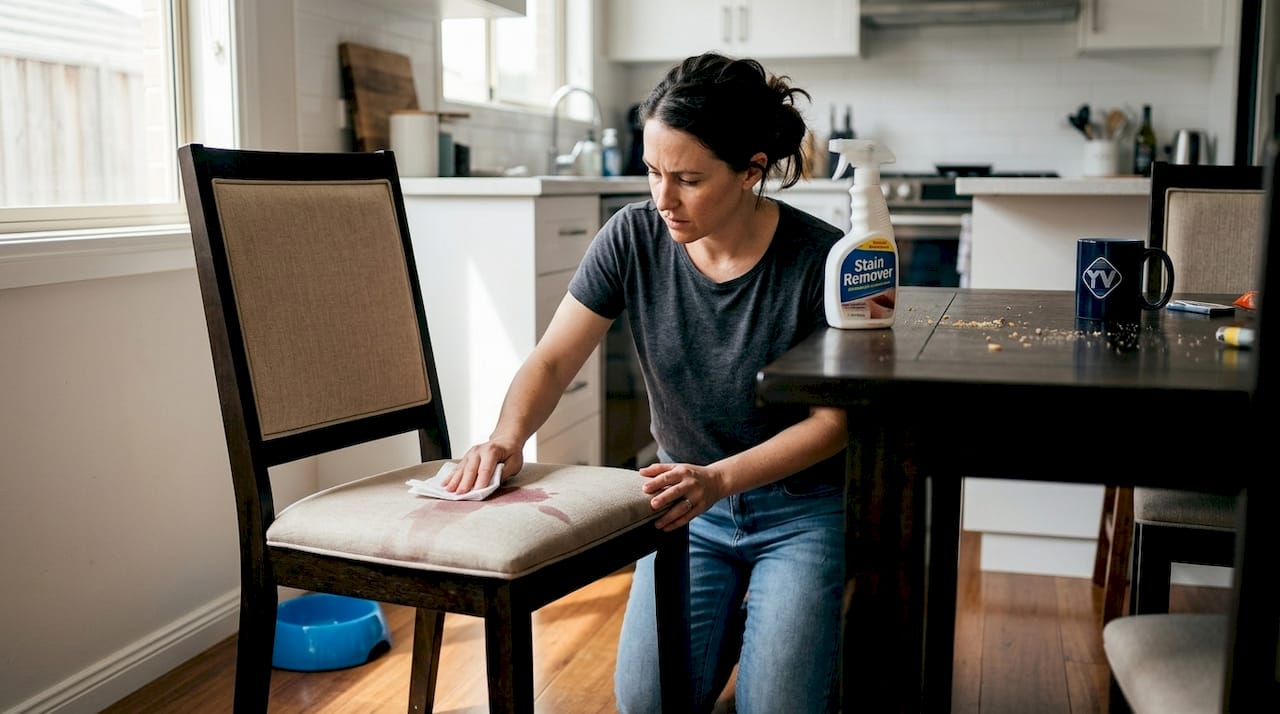
DIY stain removal uses household items like vinegar, dish soap, and baking soda effectively on fresh, water-based stains sitting on durable fabrics such as cotton or polyester, provided you act within 24 hours. That window matters enormously. A coffee spill treated within the first hour is a very different beast from one that’s been sitting overnight and soaking into the fibres.
Stains that typically respond well to DIY treatment:
- Fresh juice, soft drink, or cordial spills
- Coffee or tea (caught early, on synthetic carpet)
- Mud (once fully dried, before brushing)
- Light food stains on cotton cushion covers
- Water-based paint while still wet
The tools you’ll likely already have at home are genuinely useful here. A clean white cloth for blotting, cold water, a small amount of washing-up liquid, and bicarbonate of soda can handle a surprising amount of damage if used correctly. The method matters too. Always blot from the outside of the stain inward, never scrub, and use as little liquid as possible to avoid over-wetting the fabric.
Pro Tip: Before applying any cleaning solution, test it on a hidden area of the fabric, such as beneath a cushion or at the back of the carpet, and wait five minutes to check for any colour change or damage.
“The most common DIY mistake isn’t using the wrong product — it’s using too much of it. Over-wetting a fabric leaves moisture trapped beneath the surface, which leads to resoiling and mould far quicker than people expect.”
For guidance on tackling upholstery specifically, the advice on removing upholstery stains covers many common scenarios in practical detail. If you’d like a more structured approach, the DIY upholstery cleaning steps guide walks through the process from blotting to drying.
DIY is a poor fit for old or set stains, deeply embedded grime, oily or protein-based stains (like pet accidents or blood), and any delicate fabric such as wool, silk, velvet, or vintage textiles. On those materials, even well-meaning amateur treatment can cause irreversible harm.
Risks and limits of DIY stain removal
While tackling new stains yourself seems simple enough, it’s just as important to understand what can go wrong if DIY methods are misapplied.
DIY risks include fabric damage from incorrect pH levels, such as vinegar on silk, water rings on upholstery, incomplete moisture extraction leading to resoiling or mould, and results that are limited to superficial surface stains rather than deeply embedded contamination.
Common DIY mistakes seen in Yarra Valley homes:
- Applying undiluted vinegar to wool rugs, which breaks down the protein fibres
- Scrubbing vigorously instead of blotting, which spreads the stain and damages the pile
- Using hot water on protein-based stains like blood or egg, which cooks the proteins into the fibres and sets them permanently
- Over-wetting upholstered sofas or armchairs, leaving moisture trapped inside the cushion core
- Using coloured cloths or printed paper towel, which can transfer dye onto the stain area
The consequences of these mistakes range from minor cosmetic issues, like a faint water ring, to serious structural damage, including mould growth within the padding or permanent colour loss. In homes with children or pets, incomplete stain removal also means lingering bacteria and allergens remain in the carpet or upholstery long after the visible mark has faded.
Pro Tip: If you can’t immediately identify the stain type or the fabric content label has worn off, stop. An incorrect approach can permanently set the stain and make professional restoration far more difficult and costly.
“We regularly receive calls from homeowners who’ve done everything right by online guides and still made things worse. That’s not because the guides are entirely wrong — it’s because those guides can’t see the fabric, smell the stain, or assess the damage the way a trained eye can.”
The risks associated with well-meaning but misguided attempts are real and documented. Understanding the full picture of DIY cleaning risks is worthwhile reading before you attempt any home treatment beyond a simple blot and rinse.
Even when DIY doesn’t cause active damage, it frequently falls short in terms of hygiene. Surface cleaning might lift the visible stain but leave behind pet urine salts, coffee tannins, or food oils that attract new dirt within days. That’s why treated patches often look darker or dirtier than the surrounding carpet within a fortnight.
What professional stain removal offers
Given the pitfalls of home treatments, many Yarra Valley homeowners want to know what genuine advantages professionals deliver and when to make the call.
Professionals excel in restoration for valuables, delicates, and challenging stain types, using specialised chemistry and equipment that prevents lasting damage and addresses the root cause rather than just the surface appearance.
The difference comes down to three things: chemistry, equipment, and experience. Professional-grade cleaning solutions are pH-balanced for specific fabric types and formulated to break down specific stain categories, whether that’s enzymatic treatments for biological stains, solvent-based agents for oils and grease, or oxidising agents for deeply set discolouration. These aren’t products you’ll find at the supermarket.
Key advantages of professional stain removal:
- Truck-mounted or high-powered portable steam extraction that removes moisture completely, preventing mould
- Fabric identification and stain chemistry assessment before any treatment begins
- Access to commercial-grade spotting agents tailored to stain type
- Elimination of odours at the source, not just masking them
- Extended life for carpets and upholstery through correct technique
- Reduced health risks by removing allergens, bacteria, and mould spores
Worth knowing: Many stains labelled “permanent” by homeowners are successfully treated by professionals. The word “permanent” usually means the stain has been set by a previous DIY attempt, not that it’s truly irreversible.
For a closer look at how trained technicians approach difficult jobs, the detail on professional stain removal techniques is genuinely illuminating. For those dealing with stains that have been sitting for a while, the guide on removing old carpet stains explains how professionals approach aged or set-in marks.
Professional cleaning is especially valuable in high-traffic areas, homes with pets or young children, ahead of property sales, and for any fabric that carries manufacturer warranty conditions. Some carpet and upholstery warranties are actually voided by improper at-home cleaning, which is another consideration Yarra Valley homeowners with new installations should keep firmly in mind.
DIY vs professional stain removal: Side-by-side comparison
With both DIY and professional solutions in mind, you’ll want clear criteria to pick the right tool for each scenario.
DIY suits quick, low-risk fresh stains on synthetics when you’re looking to save cost and act fast, while professionals prevent long-term issues through specialised technology and chemistry, making them the right call for valuables, delicates, and complex or aged stains.
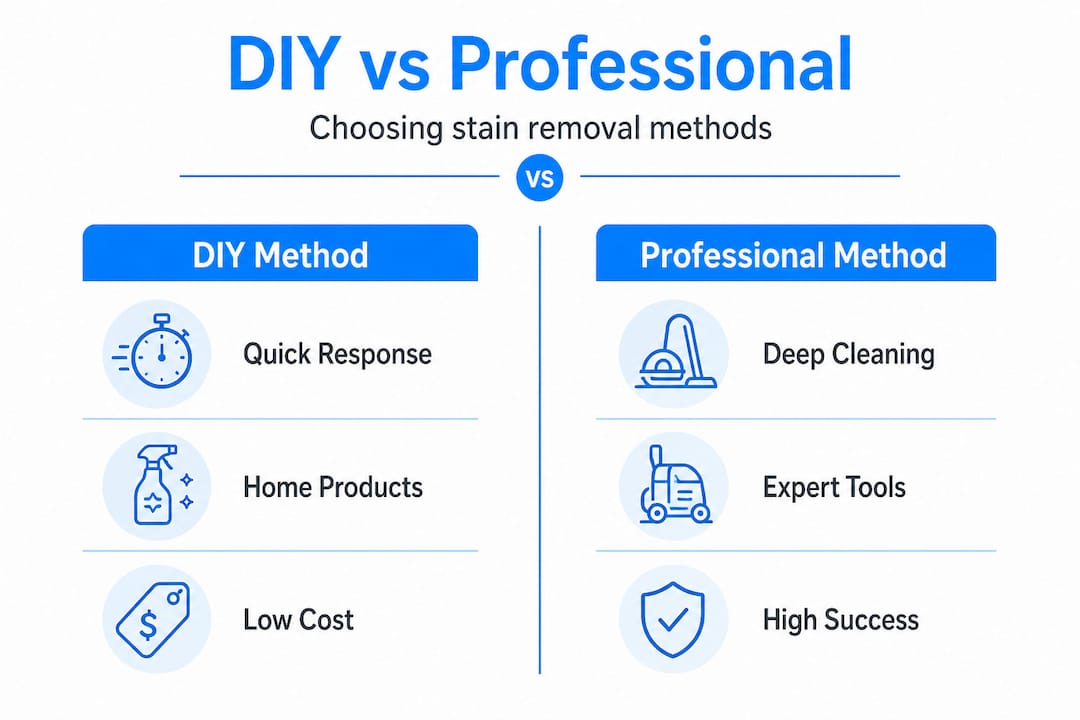
| Factor | DIY | Professional |
|---|---|---|
| Cost | Low upfront (household items) | Moderate to higher upfront |
| Long-term value | Risk of repeat costs if stain returns | Prevents costly re-treatment or replacement |
| Effort | Immediate but may need multiple attempts | Requires booking, minimal owner effort |
| Results depth | Surface cleaning only | Deep extraction including sub-layers |
| Fabric safety | Risk of damage on delicates | Assessed and treated correctly |
| Odour removal | Often incomplete | Full elimination at source |
| Mould prevention | High risk if over-wet | Extracted moisture leaves fabric dry |
| Best for | Fresh water-based stains on synthetics | Old, oily, protein stains; delicates; high-value items |
Decision checklist: Choosing the right approach
- Is the stain fresh (under 24 hours old)? If yes, DIY may be appropriate.
- Is the fabric cotton, polyester, or another clearly labelled synthetic? If yes, DIY is lower risk.
- Is the stain water-based (juice, tea, soft drink)? If yes, gentle blotting and dish soap may work.
- Is the stain on wool, silk, velvet, or a delicate vintage piece? Call a professional immediately.
- Has the stain been there more than a day or two? Consider professional treatment.
- Is there any odour associated with the stain (pet accident, vomit, mildew)? Call a professional.
- Has a previous cleaning attempt failed or made things look worse? Stop all DIY and seek professional advice.
For a broader look at effective approaches, the best ways to remove carpet stains covers both methods across a range of stain types. Acting quickly is always better, and understanding the prompt stain removal benefits shows why the first 30 minutes are the most critical window of all.
What most home stain removal advice leaves out
Having compared every angle, here are some hard-won lessons from inside the industry that most cleaning guides won’t tell you.
The vast majority of online stain removal advice is written around best-case scenarios. It assumes you know what the stain is made of, you know your fabric type, the stain is fresh, and you have the right tools ready. In reality, most stain emergencies don’t tick all those boxes.
What we see regularly in Yarra Valley homes is this: a homeowner follows a popular online tutorial to the letter, uses the right products, blots instead of scrubs, and still ends up with a bigger problem than they started with. That’s not a reflection of their effort. It’s a reflection of the fact that fabric behaves differently based on its age, construction, dye type, previous treatments, and the specific chemistry of the stain. No generic guide accounts for all of that.
The advice that actually matters most isn’t “how to remove a stain” but rather “how to assess whether you should attempt to remove it yourself.” The questions to ask first are: What is this stain made of? What is this fabric? What is the replacement cost of this item if I damage it? Those three questions will guide you better than any recipe using vinegar and bicarb.
The other thing most advice ignores is the warranty issue. Many quality carpet and upholstery manufacturers include clauses that specify only qualified technicians should carry out stain treatments. Using DIY methods, even carefully, can void those protections entirely. That’s a significant financial risk for something that felt like a money-saving decision.
The hidden cost of failed DIY attempts is also consistently underestimated. The carpet cleaning risks specific to our region are worth understanding before you act.
Pro Tip: Take a clear photo of the stain before you touch it. Note the time it occurred, what caused it, and what the fabric is made from. If you call a professional, this information speeds up assessment considerably and often leads to better results.
The real value of professional cleaning isn’t just in the outcome. It’s in the peace of mind of knowing your carpet, rug, or sofa has been treated correctly, completely, and without risk to its integrity or your family’s health.
Get help or go further: Your Yarra Valley stain removal next steps
With practical knowledge in hand, here’s how to take the next step, whether you’re ready to tackle stains yourself or want expert assistance from a team that knows Yarra Valley homes inside and out.
At Yarra Valley Carpet Cleaning, we work with homeowners across Lilydale, Mooroolbark, Croydon, Healesville, Mount Evelyn, Yarra Glen, and beyond every day. We see the full range of stain scenarios, from the straightforward to the seemingly hopeless, and our experienced team uses advanced, eco-friendly solutions to restore carpets and upholstery safely and effectively. If you’re dealing with a stain that’s giving you trouble or you simply want expert eyes on a problem before attempting anything, exploring our expert stain removal services is the right first move. You can also head straight to book carpet cleaning for a fast, local response. For upholstery specifically, our upholstery cleaning guide is a practical next read.
Frequently asked questions
Can I use vinegar on all stains and fabrics?
No. Vinegar damages silk, wool, and many upholstery types due to its acidic pH, so always confirm the fabric type and spot test in a hidden area before applying any solution.
How long should I wait before calling a professional if DIY doesn’t work?
Don’t wait. If a stain remains after your first careful attempt or the item is valuable, consult a professional immediately to prevent the stain from setting permanently or the fabric suffering further damage.
Is it ever risky to use water on upholstery stains?
Absolutely. Applying too much water can cause mould and water marks to form inside the cushion or fabric layers, particularly when the material cannot dry out completely between treatments.
Are professional stain removal methods safe for kids and pets?
Yes. Professionals use targeted, residue-free solutions and extract them thoroughly during the cleaning process, leaving your home clean and safe for everyone in the household, including young children and animals.
Will DIY stain removal save money in the long run?
For simple, fresh stains on synthetic fabrics, DIY is genuinely cost-effective. For serious or aged stains, professional treatment almost always saves money compared to the cost of replacing damaged carpet or upholstery after a failed home attempt.
Recommended
- Professional Stain Removal Techniques for Homes and Businesses – Yarra Valley Carpet Cleaning
- Why prompt carpet stain removal protects your home – Yarra Valley Carpet Cleaning
- DIY upholstery cleaning workflow: Simple steps for spotless results – Yarra Valley Carpet Cleaning
- Removing Old Carpet Stains: Step-by-Step Cleaning Guide – Yarra Valley Carpet Cleaning