
TL;DR:
- DIY carpet cleaning often results in mould, residue, and potential damage, risking warranty voidance.
- Improper techniques can cause health issues like mould growth, chemical exposure, and allergies.
- Professional carpet cleaning ensures deep, safe, and damage-free results, outweighing DIY cost savings.
Most Yarra Valley homeowners assume that hiring a machine from the local hardware store or grabbing a bottle of supermarket spray will leave their carpets looking fresh and clean. The reality is often quite different. What starts as a simple weekend job can quickly turn into a costly repair, a mould problem, or a voided carpet warranty. The risks are rarely obvious until the damage is already done. This article walks you through exactly what can go wrong with DIY carpet cleaning, why it happens, and how to protect your home and your family before you make a decision you might regret.
Table of Contents
- Understanding DIY carpet cleaning methods
- Hidden risks that can damage your carpets
- Health and safety concerns in the home
- Is DIY carpet cleaning really saving you money?
- Minimising risks: Expert tips for safer DIY cleaning
- The uncomfortable truth about DIY carpet cleaning
- Get professional results, risk-free
- Frequently asked questions
Key Takeaways
| Point | Details |
|---|---|
| DIY has hidden risks | Many risks such as mould, residue, or carpet damage may not be immediately obvious to homeowners. |
| Health can be impacted | DIY mistakes can lower indoor air quality and trigger allergies, especially if carpets are left damp. |
| Cost savings are often exaggerated | Unseen costs and repeat cleaning can quickly outweigh the price of professional services. |
| Safe practices are crucial | Following expert advice and knowing when to call a professional reduces risks dramatically. |
Understanding DIY carpet cleaning methods
Before weighing up the risks, it helps to understand what most Yarra Valley homeowners are actually doing when they clean their carpets themselves. DIY and professional cleaning options cover a wide range, from renting a machine at the supermarket to using home remedies like bicarb soda and vinegar. Each approach has a different intended purpose and a different set of limitations.
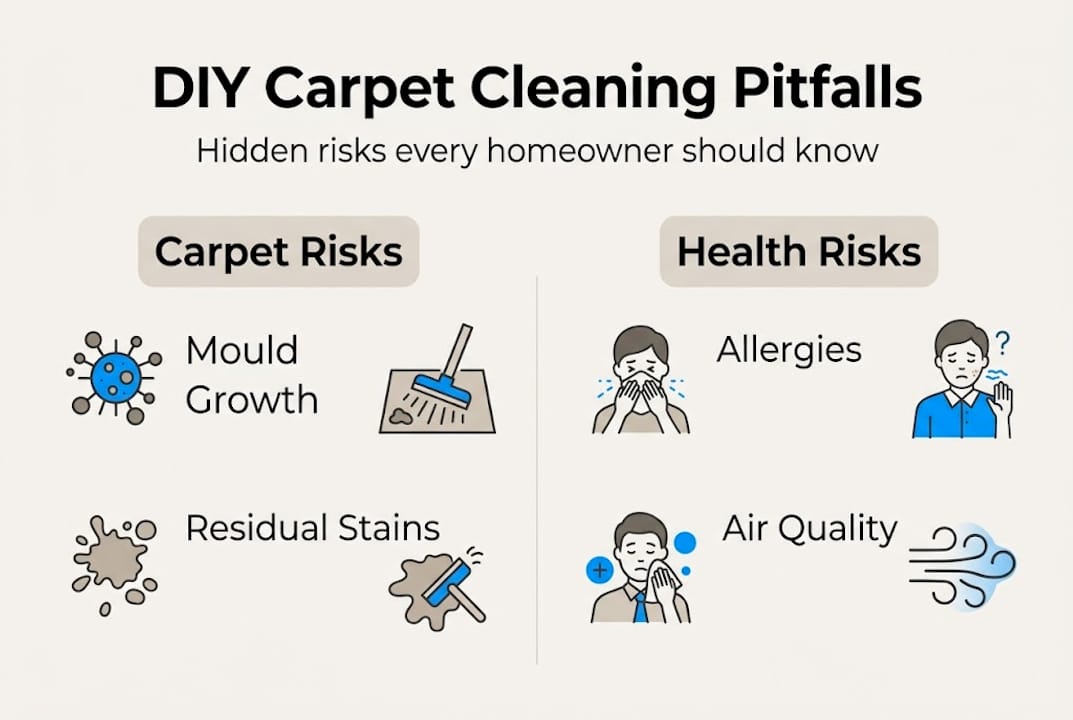
Common DIY methods include renting machines, supermarket sprays, and home remedies, and each one suits a different type of task.
| Method | Best suited for | Key limitation |
|---|---|---|
| Hired carpet machine | Large area surface cleans | Low suction power, overwetting risk |
| Home steam cleaner | Small spot treatments | Limited heat output, slow drying |
| Supermarket sprays | Fresh surface stains | Chemical residue, not deep-cleaning |
| Bicarb and vinegar | Odour neutralising | No sanitising effect, can damage fibres |
| Dry powder products | Light refreshing | Does not remove embedded dirt |
Most people expect DIY cleaning to produce results close to what a professional delivers. That expectation is understandable, but it rarely matches reality. Choosing carpet cleaning methods that suit your carpet type and soil level makes a significant difference to the outcome.
Here are some of the most common limitations that affect DIY results:
- Machine power: Hired machines typically operate at a fraction of the suction and heat capacity of professional equipment, leaving carpets wetter for longer.
- Chemical residues: Many supermarket products leave a sticky film that actually attracts more dirt over time, making carpets look worse within weeks.
- Inconsistent drying: Without industrial-grade airflow, carpets can stay damp for 12 to 24 hours, creating ideal conditions for mould growth.
- Surface-only cleaning: Most DIY methods shift dirt from the surface but do not extract what is embedded deep in the carpet pile.
With this context, let’s dig into the specific risks these DIY approaches can create.
Hidden risks that can damage your carpets
The damage from a poor DIY clean is not always visible straight away. Sometimes it takes weeks before you notice the smell, the discolouration, or the change in texture. By then, the problem is already well established.
| Risk factor | DIY outcome | Professional outcome |
|---|---|---|
| Overwetting | Mould, fibre separation, subfloor damage | Controlled moisture, fast extraction |
| Soap residue | Sticky surface, rapid resoiling | Residue-free rinse process |
| Fibre wear | Matting, colour fading, pile damage | Appropriate technique per fibre type |
| Voided warranty | Manufacturer claim rejected | Certified methods protect warranty |
| Mould growth | Hidden under carpet, health risk | Proper drying prevents growth |
Improper cleaning can void carpet warranties and lead to irreparable damage, which is a risk most homeowners do not consider until it is too late. Carpet manufacturers often specify approved cleaning methods in their warranty documentation, and a DIY clean using the wrong product or technique can immediately void that protection.
Even a single overwetting incident can cause mould to develop beneath the carpet within 24 to 48 hours, often without any visible sign on the surface until the problem is severe.
Incorrect water usage can cause mould and mildew, which spreads quickly through the underlay and into the subfloor if left untreated. The carpet maintenance value of your flooring drops sharply the moment mould takes hold, and remediation costs can far exceed what you saved by going the DIY route.
Pro Tip: Always patch test any cleaning solution on a hidden section of carpet, such as inside a wardrobe, before applying it to a visible area. Wait 30 minutes and check for colour change or fibre damage before proceeding.
Carpet damage is not the only risk. There are also real health concerns that often go unnoticed.
Health and safety concerns in the home
When a carpet cleaning job goes wrong, the consequences are not just cosmetic. There are genuine health and safety risks that affect everyone in the home, particularly children, elderly family members, and anyone with respiratory conditions.
Here are the core health risks associated with improper DIY carpet cleaning:
- Chemical residue exposure: Leftover cleaning products that are not fully rinsed out can irritate skin, eyes, and airways, especially in young children who spend time on the floor.
- Mould and mildew growth: Damp carpets that do not dry properly become breeding grounds for mould spores, which circulate through the air every time someone walks across the carpet.
- Worsened allergies and asthma: Improper residue removal and overuse of chemicals can worsen allergies and asthma, particularly in households that already struggle with indoor air quality.
- Slippery surfaces: Wet or damp carpets create a slip hazard, especially on stairs or in high-traffic areas.
- Bacterial growth: Carpets that are cleaned but not properly sanitised can harbour bacteria, particularly after pet accidents or food spills.
The impact on air quality inside your home is directly linked to how well your carpets are maintained and dried. Studies suggest that poorly maintained carpets can hold up to four times their weight in dirt, dust, and allergens, all of which become airborne with foot traffic.
For families with young children or pets, eco-friendly cleaning methods offer a much safer alternative to harsh supermarket chemicals, reducing the risk of residue-related health issues significantly.
Given these health concerns, it is worth asking whether DIY cleaning is even cost-effective in the long run.
Is DIY carpet cleaning really saving you money?
The appeal of DIY is almost always about saving money. But when you add up the real costs, the numbers often tell a different story.
| Cost category | DIY estimate | Professional service |
|---|---|---|
| Machine hire (per day) | $60 to $90 | Included in service |
| Cleaning products | $20 to $50 | Included in service |
| Your time (hours) | 4 to 8 hours | None |
| Repeat clean (if needed) | Additional $60 to $90 | Rarely needed |
| Repair costs (if damaged) | $200 to $1,000+ | Covered by professional guarantee |
DIY emergencies and repeat cleaning often lead to higher total costs than hiring a professional, especially once you factor in the time spent and the risk of having to call someone in anyway.
Here are the most common situations that force homeowners to repeat a clean or call in professional help:
- Carpets that smell worse after cleaning due to trapped moisture
- Stains that reappear within days because the source was not fully removed
- Colour bleeding caused by using the wrong product on a particular fibre type
- Matted or crushed pile that does not recover after a hired machine passes over it
- Mould discovered under the carpet weeks after a DIY clean
Consider this example. A homeowner in Mooroolbark hires a machine to clean a large living area before a family gathering. The carpet looks clean initially, but within three days a musty smell develops. They hire the machine again. The smell persists. A professional is called in, mould is found in the underlay, and the total cost of remediation and underlay replacement far exceeds what a professional clean would have cost in the first place. The safest carpet cleaning methods would have prevented the problem entirely.
Now that you understand the risks and financial realities of DIY, let’s look at what actually works best in practice.
Minimising risks: Expert tips for safer DIY cleaning
If you are determined to clean your carpets yourself, there are ways to reduce the risks significantly. The key is preparation, restraint, and knowing your limits.
Follow these steps to make your DIY clean as safe as possible:
- Vacuum thoroughly first: Remove as much loose dirt and debris as possible before introducing any moisture. This prevents dirt from turning into mud when wet.
- Use the right solution: Only use products clearly labelled as safe for your specific carpet material. Wool, nylon, and polyester all respond differently to cleaning agents.
- Avoid overwetting: Apply moisture sparingly. If the carpet feels saturated, you have used too much. Less is genuinely more when it comes to water.
- Ventilate the room: Open windows and use fans to speed up drying. The goal is to have the carpet dry within four to six hours.
- Patch test every time: Even products you have used before can react differently on different carpet sections or after previous cleaning treatments.
- Know when to stop: If a stain is not lifting after two attempts, continuing will only risk damaging the fibre. That is the moment to call a professional.
Expert-recommended safe practices for cleaning can reduce most common DIY risks, but they cannot eliminate them entirely when the equipment or technique falls short of professional standard.
Pro Tip: Only choose products clearly marked as safe for your carpet material. If the label does not specify carpet type compatibility, do not use it.
For households with young children, child-safe carpet cleaning methods are worth reviewing before you choose any product, as many standard supermarket cleaners contain ingredients that are not suitable for homes with babies or toddlers.
With these expert tips in hand, it is time for our verdict on why many homeowners should think twice about DIY.
The uncomfortable truth about DIY carpet cleaning
We have seen the aftermath of many DIY carpet cleaning attempts across the Yarra Valley, and the pattern is remarkably consistent. The homeowner saves $150 on a professional clean, spends a Saturday doing the job themselves, and then calls us three weeks later because something has gone wrong. The real cost is never just the dollars. It is the time, the stress, and sometimes the health impact on the family.
The savings myth breaks down the moment something goes wrong, and in our experience, something goes wrong more often than not. Not because homeowners are careless, but because the equipment and products available to consumers simply are not designed to deliver professional results. They are designed to look like they might.
The hard-won lesson we share with every customer is this: small mistakes in carpet cleaning compound quickly. A little too much water becomes mould. A slightly wrong product becomes a permanent stain. A missed patch becomes a warranty dispute. Why local professionals matter is not just about results. It is about accountability, equipment, and knowing that if something does go wrong, it will be made right.
DIY cleaning makes sense for very light maintenance between professional visits. It rarely makes sense as a replacement for them.
Get professional results, risk-free
Every risk covered in this article, from mould and residue to voided warranties and health concerns, is completely avoidable when you choose a professional service. At Yarra Valley Carpet Cleaning, we use advanced steam cleaning equipment and eco-friendly products that extract dirt from deep within the pile, dry quickly, and leave no harmful residue behind. Our team services homes across Lilydale, Mooroolbark, Chirnside Park, Healesville, and beyond. If you are ready to protect your carpets and your family, explore Yarra Valley carpet cleaning services near you, or read our guide on carpet care after professional cleaning to keep your results lasting longer.
Frequently asked questions
What is the most common mistake with DIY carpet cleaning?
Overwetting the carpet or using too much cleaning product is the most frequent error, often leading to mould and residue build-up beneath the surface that is difficult to fix without professional help.
Can DIY carpet cleaning void my warranty?
Yes, using incorrect methods or solutions may void your carpet manufacturer’s warranty. DIY mistakes can void warranties when the cleaning method does not align with the manufacturer’s approved care instructions.
What health risks are associated with DIY carpet cleaning?
DIY carpet cleaning can worsen allergies, asthma, and increase your family’s exposure to leftover chemicals or airborne mould spores. Residue and mould can worsen allergies and air quality throughout the home.
How can I make DIY carpet cleaning safer if I still want to do it?
Choose the right products for your carpet type, avoid over-wetting, ventilate the room well, and always test on a small hidden spot first. Following safe practices reduces the most common DIY risks significantly.
Recommended
- DIY carpet cleaning myths: Facts every Yarra Valley home needs – Yarra Valley Carpet Cleaning
- Why Remove Carpet Stains – Impact on Yarra Valley Homes – Yarra Valley Carpet Cleaning
- 7 Common Carpet Cleaning Mistakes Yarra Valley Locals Make – Yarra Valley Carpet Cleaning
- Why regular carpet cleaning matters for Yarra Valley homes – Yarra Valley Carpet Cleaning