
Your carpet might look perfectly fine, but looks can be deceiving. Most Australians wait until they spot a visible stain before reaching for the cleaning products, yet carpets can hold up to 1 lb of dirt per square yard without showing a single mark. That hidden buildup includes dust mites, allergens, pet dander, and bacteria that no amount of vacuuming will fully shift. This guide breaks down the most damaging DIY carpet cleaning myths, explains what really happens when things go wrong, and gives you practical tools to make smarter decisions for your home or business in the Yarra Valley.
Table of Contents
- Top DIY carpet cleaning myths you need to stop believing
- What really happens when you use too much water in DIY carpet cleaning
- Invisible dirt: Why waiting for stains can damage your carpet
- DIY vs professional cleaning: Does it really save money (and your carpets)?
- Routine care habits for healthier, longer-lasting carpets
- Need expert help? Yarra Valley Carpet Cleaning has you covered
- Frequently asked questions
Key Takeaways
| Point | Details |
|---|---|
| Hidden dirt is everywhere | Carpets can trap large amounts of dirt and allergens long before any stains are visible. |
| Over-wetting is risky | Using too much water when cleaning can cause mould, shrinkage, and long drying times. |
| Routine care matters | Vacuuming and spot checks are essential for keeping your carpet healthy between professional cleans. |
| DIY isn’t always cheaper | Professional carpet cleaning can prevent costly mistakes and make your carpets last longer. |
| Pro cleaning recommended | Experts advise getting carpets professionally cleaned every 12 to 18 months for best results. |
Top DIY carpet cleaning myths you need to stop believing
There are some surprisingly stubborn carpet cleaning myths circulating in Australian households, and believing them can cost you more than you’d expect. Let’s look at the ones doing the most damage.
Myth 1: Carpets only need cleaning when visibly dirty.
This is the big one. Because carpet fibres trap particles deep below the surface, your carpet can be harbouring significant contamination while looking completely presentable. The Carpet and Rug Institute recommends professional cleaning every 12 to 18 months regardless of appearance, precisely because of this hidden buildup.
Myth 2: More water means a cleaner carpet.
It feels logical, but it’s wrong. Flooding carpet fibres with water doesn’t lift more dirt; it pushes grime deeper and creates conditions for mould and mildew. Professional equipment is designed to extract moisture efficiently, something most household machines simply can’t match.
Myth 3: Any household product will remove stains.
Some stains respond well to home remedies. Others, like red wine, pet urine, or certain food dyes, require specific treatments. Using the wrong product can permanently set a stain or bleach the fibres, turning a manageable problem into a costly one.
Myth 4: DIY cleaning is always cheaper than professional services.
Once you factor in equipment hire, cleaning products, your time, and the risk of mistakes, the savings shrink fast. Our myth-busting guide breaks down the real numbers in detail.
Here’s a quick summary of the myths versus reality:
- Myth: Clean-looking carpets don’t need attention. Reality: Hidden allergens and soil are present long before stains appear.
- Myth: Scrubbing harder removes stains faster. Reality: Scrubbing spreads the stain and damages fibres.
- Myth: Baking soda fixes odours permanently. Reality: It masks smells temporarily without addressing the source.
- Myth: Renting a machine gives professional-level results. Reality: Hire machines lack the extraction power of commercial equipment.
“Carpets can hold significant amounts of soil, dust, and allergens invisibly. The Carpet and Rug Institute recommends professional cleaning every 12 to 18 months to maintain carpet health and indoor air quality.” — Carpet and Rug Institute
What really happens when you use too much water in DIY carpet cleaning
Now that we’ve exposed the myths, let’s look more closely at a sneaky hazard: water overload.
Over-wetting happens when too much water is applied during cleaning and not enough is extracted afterwards. It’s one of the most common DIY mistakes, and the consequences go well beyond a damp smell. According to Surface Care Pros, over-wetting causes mould growth, fibre shrinkage, and dangerously slow drying times that most homeowners don’t anticipate.
Here’s what you’re actually risking when water isn’t managed properly:
- Mould and mildew growth beneath the carpet and in the underlay, which can take hold within 24 to 48 hours in humid conditions
- Carpet shrinkage, where natural fibres contract as they dry unevenly, causing rippling or permanent distortion
- Delamination, where the carpet backing separates from the fibres due to prolonged moisture exposure
- Slow drying, which in a Yarra Valley winter can mean carpets staying damp for days, worsening air quality
- Residue buildup, where cleaning solution left behind attracts more dirt faster than before
The fix isn’t complicated, but it does require discipline. Use the minimum amount of water needed, make multiple extraction passes with your machine, and always ensure good ventilation during and after cleaning. Open windows, run fans, and avoid walking on the carpet until it’s fully dry.
Pro Tip: If you’re hiring a machine, run an extra extraction pass with no cleaning solution at the end. This removes residual product and pulls out more moisture, cutting drying time significantly.
For a detailed comparison of what DIY cleaning vs professionals actually delivers in terms of moisture management and results, it’s worth reading before you book a hire machine.
Invisible dirt: Why waiting for stains can damage your carpet
Beyond visible stains, let’s uncover what really ends up in your carpet fibres over time.
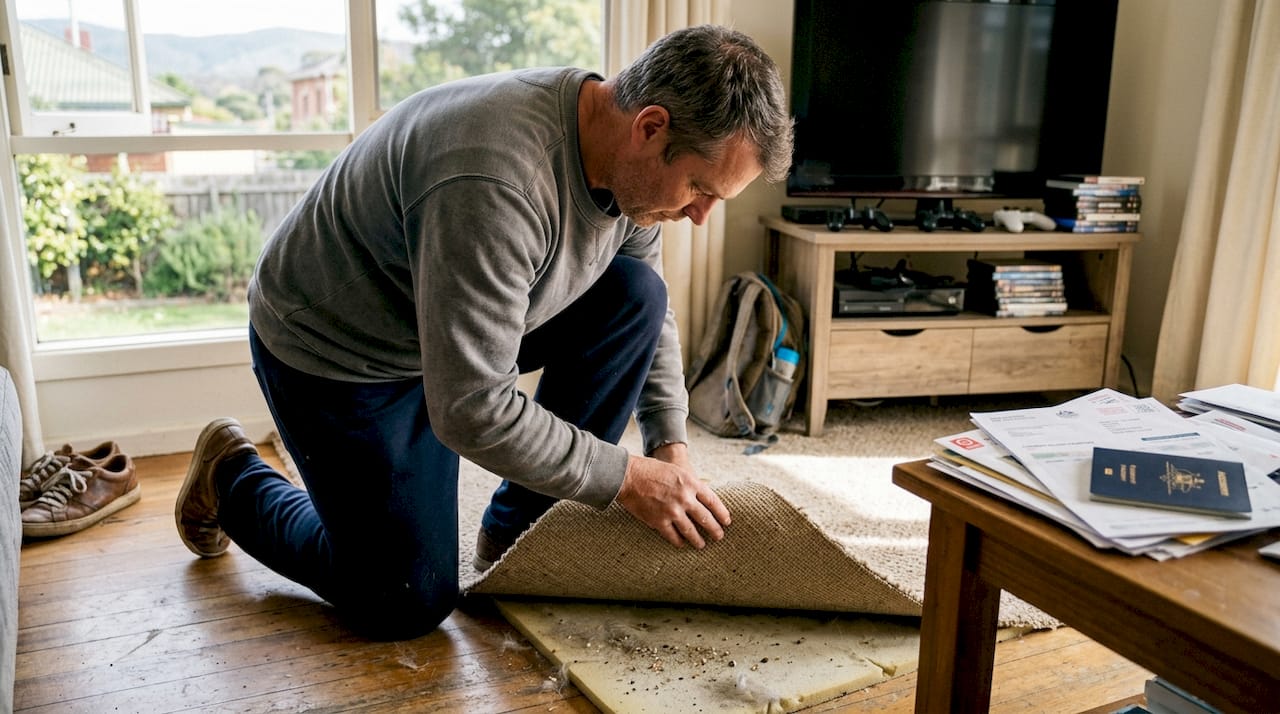
A carpet in a typical household acts like a giant air filter. It traps dust, pollen, pet hair, skin cells, and soil particles that float through your home every day. The problem is that this filtration system eventually becomes saturated. When that happens, it stops trapping particles and starts releasing them back into the air you breathe.
The Carpet and Rug Institute recommends regular vacuuming combined with professional cleaning every 12 to 18 months to keep carpets functioning as effective filters rather than pollution sources.
| Time since last clean | Estimated dirt and allergen buildup | Impact on carpet and air quality |
|---|---|---|
| 0 to 3 months | Low to moderate | Minimal, regular vacuuming sufficient |
| 3 to 6 months | Moderate | Allergen levels rising, fibres beginning to dull |
| 6 to 12 months | High | Noticeable odours, reduced air quality |
| 12 to 18 months | Very high | Fibre damage risk, significant allergen load |
| 18+ months | Severe | Potential permanent staining and fibre wear |
Your carpet might be telling you it needs attention even without obvious stains. Watch for these hidden signs:
- Persistent musty or stale odours that don’t clear with ventilation
- Increased sneezing, itchy eyes, or allergy flare-ups indoors
- Carpet appearing flat, dull, or grey in high-traffic areas
- Visible matting or crushing of fibres near doorways and hallways
- Pets scratching or avoiding certain areas of the floor
Following a cleaning schedule guide tailored to your household size and lifestyle makes a real difference in catching these issues early.
DIY vs professional cleaning: Does it really save money (and your carpets)?
With hidden dirt and ongoing risks, is doing it yourself really the most cost-effective approach?
Let’s walk through what a typical DIY carpet clean actually involves:
- Vacuum thoroughly before starting (often skipped, which reduces results)
- Pre-treat stains with appropriate products
- Hire or set up a cleaning machine and mix solution correctly
- Clean in overlapping passes, working backwards towards the door
- Extract as much moisture as possible with additional dry passes
- Allow full drying time, typically 6 to 12 hours minimum
- Vacuum again once dry to restore fibre texture
Now compare that process with what a professional delivers:
| Factor | DIY cleaning | Professional cleaning |
|---|---|---|
| Equipment power | Low to moderate extraction | High-powered commercial extraction |
| Drying time | 6 to 24 hours | 2 to 6 hours |
| Stain removal | Partial, risk of setting stains | Targeted treatment with professional products |
| Allergen removal | Surface level only | Deep extraction of embedded allergens |
| Risk of damage | Moderate (over-wetting, shrinkage) | Very low |
| Cost (upfront) | Lower | Moderate |
| Long-term cost | Higher if mistakes occur | Lower due to carpet longevity |
The Carpet and Rug Institute is clear that regular professional cleaning extends carpet life and maintains fibre integrity in ways that DIY methods cannot replicate. For a full breakdown of DIY vs professional outcomes specific to Yarra Valley homes, the comparison is eye-opening.
Pro Tip: If your carpet is still under manufacturer warranty, check the fine print. Many warranties require documented professional cleaning at regular intervals. DIY cleaning alone may void your coverage.
The hidden costs of DIY mistakes add up fast. Mould remediation can run into hundreds of dollars. Carpet replacement in a standard living room can cost thousands. Tips for keeping your carpets new between professional visits help protect that investment.
Routine care habits for healthier, longer-lasting carpets
Whether you lean DIY or professional, simple routines are your best tool for keeping carpets and your air fresh.
The foundation of good carpet care isn’t a single deep clean once a year. It’s consistent, small habits that prevent buildup from becoming a problem in the first place. The official CRI guidelines are clear: regular vacuuming combined with professional cleaning is the most effective combination for maintaining carpet health and indoor air quality.
Here’s what a solid routine looks like in practice:
- Vacuum high-traffic areas at least twice a week and lower-traffic rooms weekly. Use a vacuum with a HEPA filter to capture fine particles rather than recirculating them.
- Act on spills immediately. Blot, never scrub. Work from the outside of the spill inward to avoid spreading it. The longer a spill sits, the harder it becomes to remove.
- Rotate furniture periodically to redistribute foot traffic and prevent permanent crushing in specific spots.
- Use door mats at every entry point to reduce the volume of soil tracked onto carpet in the first place.
- Monitor indoor humidity, particularly in winter. Aim for 40 to 60 percent relative humidity to discourage mould and dust mite activity.
For more detail on carpet maintenance tips that work specifically for Yarra Valley conditions, including seasonal humidity changes, there’s plenty of local guidance available.
Pro Tip: Create a simple seasonal carpet care checklist: vacuum filters cleaned, high-traffic areas spot-checked, professional clean booked for spring or autumn, and humidity levels noted. Fifteen minutes of planning saves hours of remediation.
Good indoor habits also have a direct impact on the air you breathe. The connection between air quality and carpets is stronger than most people realise, particularly for households with young children, elderly residents, or anyone with respiratory conditions.
Need expert help? Yarra Valley Carpet Cleaning has you covered
If this guide has made you rethink your approach to carpet care, you’re not alone. Many Yarra Valley homeowners and business owners start with DIY and quickly realise that professional results are worth the investment. At Yarra Valley Carpet Cleaning, we offer deep steam cleaning, stain and odour removal, and commercial cleans across Lilydale, Mooroolbark, Healesville, Croydon, and the wider region. Whether you need a one-off annual deep clean or ongoing maintenance support, our local carpet cleaning team is ready to help. Check out our before and after results to see what a professional clean actually delivers, and read our after-cleaning care tips to keep your carpets looking their best between visits.
Frequently asked questions
How often should I really clean my carpet if it looks clean?
Experts recommend a professional clean every 12 to 18 months even when carpets appear clean, because hidden dirt and allergens accumulate well before any visible signs appear.
What happens if I use too much water in DIY carpet cleaning?
Excess water causes mould, shrinkage, and slow drying that can permanently damage carpet fibres and backing, and professional equipment removes far more moisture than hire machines.
Are store-bought carpet cleaning products safe for all stains?
No. Some stains require specialised treatments, and using the wrong product can set the stain permanently or bleach the carpet fibres, making the problem worse.
Does regular vacuuming remove the need for professional cleaning?
Vacuuming removes surface debris but cannot extract deep-seated allergens and residues embedded in the fibres, so professional cleaning remains essential for true carpet health.
Can professional cleaning extend the life of my carpet?
Yes. Regular professional cleaning maintains fibre structure, prevents premature wear from abrasive soil particles, and protects your carpet investment over the long term.
Recommended
- Carpet cleaning vs DIY: which suits Yarra Valley homes – Yarra Valley Carpet Cleaning
- 7 Top Carpet Cleaning Myths Every Aussie Should Know – Yarra Valley Carpet Cleaning
- Is Carpet Cleaning Worth It? Complete Guide Australia – Yarra Valley Carpet Cleaning
- 7 Common Carpet Cleaning Mistakes Yarra Valley Locals Make – Yarra Valley Carpet Cleaning
- 7 Common HVAC Myths Every Homeowner Should Know – HVAC Service and Repair | Louisville, KY | Project Heating & Cooling