
Upholstery stains can turn a brand-new sofa into an expensive headache in minutes and it happens more often than you think. Research shows that spills are responsible for over 80 percent of stains on lounge furniture each year. But what shocks most people is that using the wrong cleaning method can actually make the damage worse. Acting fast with the right approach is the real secret to saving your furniture and keeping it looking fresh way longer than you thought possible.
Table of Contents
- Types of Common Upholstery Stains
- Step-by-Step Stain Removal Methods
- Safe Cleaning Solutions for Every Fabric
- Prevention Tips for Busy Homes and Businesses
Quick Summary
| Takeaway | Explanation |
|---|---|
| Act Quickly on Stains | Immediate blotting can prevent stains from becoming permanent. Use gentle blotting techniques to absorb spills without spreading them further. |
| Use Fabric-Coded Cleaners | Always check fabric cleaning codes before using any cleaning solution. These codes inform you which cleaning methods are safe for your upholstery. |
| Consider Professional Help for Stubborn Stains | Complex stains on delicate fabrics often require professional treatment. Professional cleaners have specialized tools and techniques for effective stain removal. |
| Implement Regular Maintenance Routines | Regular vacuuming and protective sprays can prevent stains and extend upholstery life. Consistent upkeep minimizes deep-set stains and keeps furniture looking fresh. |
| Choose Stain-Resistant Fabrics | Selecting darker colours and tightly woven fabrics can reduce stain visibility. This proactive choice can protect your furniture from everyday wear and tear. |
Types of Common Upholstery Stains
Upholstery stains can transform a pristine piece of furniture into an unsightly mess within moments. Understanding the different types of stains helps homeowners tackle cleaning challenges more effectively and preserve their valuable furniture. Explore our comprehensive upholstery cleaning methods to protect your investment.
Beverage and Liquid Stains
Beverage spills represent some of the most frequent upholstery challenges. Coffee, tea, wine, and soft drinks can quickly penetrate fabric fibres, leaving stubborn marks. According to research from professional cleaning experts, these liquid stains are particularly tricky because they spread rapidly and can set permanently if not addressed immediately.
Coffee stains often create dark, brownish marks that can be challenging to remove. Red wine stains are notorious for their deep pigmentation and potential to cause permanent discolouration. Soft drinks containing sugars can leave sticky residues that attract additional dirt and grime, compounding the cleaning difficulty.
Food and Organic Stains
Food stains present another significant challenge for upholstery maintenance. Research indicates that households with children and pets are especially prone to these types of stains. Spaghetti sauce, chocolate, greasy food residues, and other organic materials can quickly become embedded in fabric fibres.
Oil-based food stains are particularly problematic because they not only discolour the fabric but can also create lasting grease marks. Chocolate stains can melt into fabric, creating complex cleaning scenarios that require specialized treatment. Tomato-based sauces contain pigments that can permanently stain light-coloured upholstery if not addressed promptly.
Pet and Bodily Fluid Stains
Pet accidents and bodily fluid stains represent some of the most challenging upholstery cleaning scenarios. Urine, blood, and other organic fluids can cause significant damage if not treated correctly. These stains not only create visible marks but can also introduce odours and potential bacterial growth.
Pet urine stains are especially problematic because they contain uric acid that can break down fabric fibres and create lasting damage. The stains can penetrate deep into upholstery padding, making complete removal extremely difficult. Additionally, these stains often require specialized cleaning techniques to neutralize odours and prevent future marking behaviour.
Understanding these common upholstery stain types empowers homeowners to respond quickly and effectively. Prompt action, appropriate cleaning techniques, and professional intervention when necessary can help preserve the beauty and longevity of your furniture.
Below is a table that summarises the main types of common upholstery stains, their main sources, and associated challenges for quick reference.
| Stain Type | Common Sources | Main Challenges |
|---|---|---|
| Beverage & Liquid Stains | Coffee, Tea, Wine, Soft Drinks | Rapid spreading, deep pigmentation |
| Food & Organic Stains | Spaghetti Sauce, Chocolate, Greasy Residues | Grease marks, difficult pigments |
| Pet & Bodily Fluid Stains | Urine, Blood, Other Bodily Fluids | Odour, bacterial growth, deep absorption |
Step-by-Step Stain Removal Methods
Effective upholstery stain removal requires a systematic approach and careful technique. Understanding the right methods can mean the difference between preserving your furniture and permanently damaging delicate fabrics. Learn more about our professional cleaning techniques to protect your valuable furniture.
Immediate Response Techniques
The first few minutes after a stain occurs are critical for successful removal. According to cleaning experts at the Institute of Fabric Care, quick and appropriate action can prevent permanent damage. Always start by blotting the stain gently with a clean white cloth or paper towel. Avoid rubbing, which can spread the stain and push it deeper into the fabric fibres.
For liquid spills, use a dabbing motion to absorb as much of the substance as possible. Work from the outside of the stain towards the centre to prevent spreading. Keep a clean section of the cloth or paper towel facing the stain to ensure maximum absorption. When blotting, apply gentle pressure without pushing the stain further into the fabric.
Specific Cleaning Solutions
Different stains require targeted cleaning approaches. Professional cleaning research suggests using specific solutions based on the type of stain. For water-based stains like coffee or tea, create a mild cleaning solution using warm water and a small amount of gentle dish soap. Mix one teaspoon of clear dish soap with one cup of lukewarm water.
For oil-based stains, use a solution of white vinegar and water. Mix equal parts of white vinegar and water in a spray bottle. Grease stains often require a specially formulated degreasing agent that can break down oil molecules without damaging the fabric. Always test any cleaning solution on a small, inconspicuous area first to ensure it does not cause discolouration or damage.
Professional Treatment Considerations
Some stains are too complex for home treatment and require professional intervention. Delicate fabrics like silk, wool, or antique upholstery demand specialized cleaning techniques. Stains involving blood, urine, or other organic materials can be particularly challenging and may require professional sanitisation to prevent bacterial growth and permanent damage.
Professional cleaners have access to advanced cleaning technologies and specialized solutions that can remove stubborn stains without compromising fabric integrity. They can also identify the specific fabric type and apply the most appropriate cleaning method. For valuable or delicate furniture pieces, consulting a professional cleaning service is often the safest and most effective approach.
By understanding these step-by-step stain removal methods, homeowners can increase their chances of successfully treating upholstery stains. Remember that patience, gentle techniques, and prompt action are key to maintaining the beauty and longevity of your furniture.
Safe Cleaning Solutions for Every Fabric
Choosing the right cleaning solution is crucial for maintaining the integrity and appearance of different upholstery fabrics. Understanding fabric-specific cleaning techniques can prevent permanent damage and extend the life of your furniture. Discover our comprehensive fabric care guide to protect your valuable furnishings.
Understanding Fabric Cleaning Codes
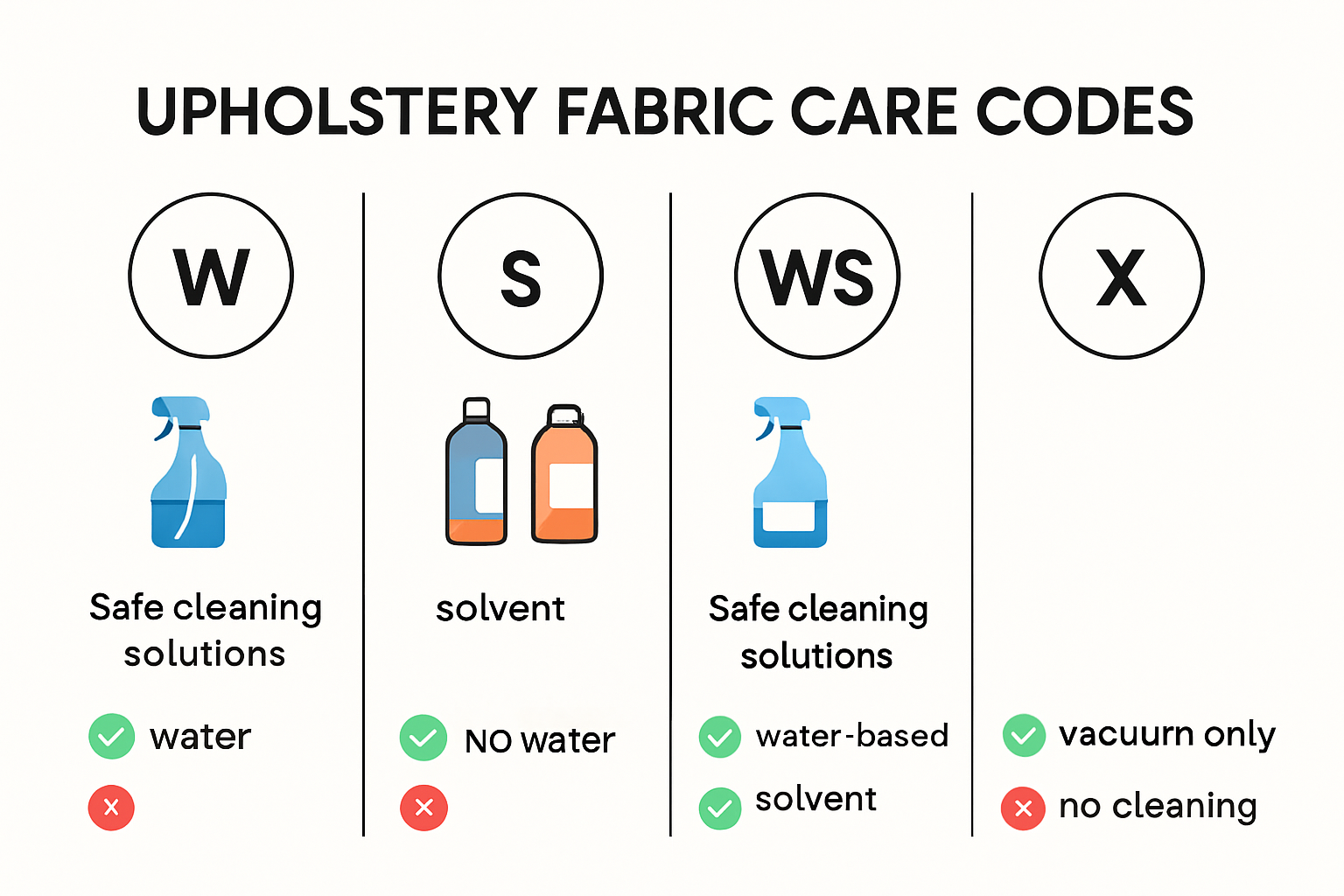
Fabric manufacturers typically provide cleaning codes that indicate the most appropriate cleaning methods. According to research from the University of Illinois Extension, these codes are critical for selecting safe cleaning solutions. The most common codes include:
- W: Water-based cleaning solutions are safe
- S: Solvent-based cleaners only
- WS: Both water and solvent-based cleaners can be used
- X: Professional cleaning or vacuuming only
Before applying any cleaning solution, always check the manufacturer’s label and test the solution on a small, hidden area to ensure it does not cause discolouration or damage.
To help you quickly identify what cleaning methods are safe for your upholstery, refer to this summary table of common fabric cleaning codes and their meanings.
| Code | Approved Cleaning Method | Notes |
|---|---|---|
| W | Water-based solutions | Safe to use water and mild detergents |
| S | Solvent-based solutions | Use only non-water-based solvents |
| WS | Water or solvent-based solutions | Either method is acceptable; test first |
| X | Professional/vacuum only | Do not use any self-applied cleaners or liquids |
Natural and Eco-Friendly Cleaning Solutions
Researchers at New Mexico State University recommend several green cleaning methods that are safe for most fabric types. White vinegar mixed with water creates an effective and gentle cleaning solution for many upholstery materials. A mixture of one part white vinegar to three parts water can help remove light stains and neutralize odours without harsh chemicals.
For delicate fabrics, a mild solution of clear dish soap and lukewarm water can be effective. Use only a small amount of soap and avoid creating excessive suds. Blot the fabric gently with the solution using a clean white cloth, working from the outside of the stain towards the centre to prevent spreading.
Professional Fabric Care Techniques
Certain fabrics require specialized care that goes beyond home cleaning methods. Holsag fabric care guidelines emphasize the importance of professional treatment for complex fabric types like silk, wool, and antique upholstery. Professional cleaners have access to advanced cleaning technologies and can identify the specific fabric composition to apply the most appropriate cleaning method.
Some delicate fabrics may require dry cleaning or specialized solvent-based treatments. Leather and suede upholstery, for instance, need unique cleaning approaches that differ significantly from standard fabric cleaning techniques. Attempting to clean these materials with inappropriate solutions can cause permanent damage.
When in doubt, consult a professional upholstery cleaning service. They can provide expert advice and treatment tailored to your specific fabric type, ensuring your furniture remains clean, fresh, and in optimal condition. Remember that preventative care and prompt attention to spills are key to maintaining the beauty and longevity of your upholstered furniture.
Prevention Tips for Busy Homes and Businesses
Preventing upholstery stains requires proactive strategies and smart lifestyle choices. Busy households and businesses can significantly reduce the risk of permanent fabric damage through thoughtful preparation and regular maintenance. Check out our family-friendly cleaning tips to protect your valuable furnishings.
Smart Fabric Protection Strategies
Research from the Center for Environmental Health suggests selecting fabrics strategically to minimize stain risks. Choose darker colours or patterns that naturally camouflage potential marks. Opt for thicker, tightly woven fabrics that resist liquid penetration and are easier to clean. Consider microfiber or synthetic blends that offer better stain resistance compared to delicate natural materials.
Implement protective measures like clear plastic covers for dining chairs or temporary protective throws during high-risk activities. In office environments, establish clear guidelines about eating and drinking near upholstered furniture. Create designated eating areas that reduce the likelihood of accidental spills on valuable seating.
Regular Maintenance Techniques
According to the University of Illinois Extension, consistent maintenance is crucial for preventing stain accumulation. Vacuum upholstered surfaces weekly using appropriate attachments to remove dust, dirt, and potential stain-causing particles. Rotate and flip cushions regularly to ensure even wear and prevent dirt from embedding deeply into fabric fibres.
In high-traffic areas like offices and family living rooms, consider implementing a no-shoes policy or provide protective shoe covers. Use fabric protector sprays specifically designed for your upholstery type, which create an invisible barrier against potential stains. These treatments can significantly enhance your furniture’s resistance to liquid absorption and make future cleaning easier.
Practical Household and Business Protocols
New Mexico State University researchers recommend establishing clear protocols for managing potential stain risks. In homes with children, create designated eating areas away from upholstered furniture. Use sippy cups with secure lids and teach children about careful food and drink handling.
For businesses, develop comprehensive guidelines for maintaining upholstered furniture. This might include training staff on immediate spill response, keeping cleaning supplies readily available, and scheduling regular professional cleaning. Consider using washable, removable chair covers in conference rooms and common areas to provide an additional layer of protection.
Remember that prevention is always more effective and cost-efficient than treating set-in stains. By implementing these strategic approaches, busy homes and businesses can maintain clean, attractive upholstery while minimizing the risk of permanent damage. Consistent care, smart fabric choices, and proactive maintenance are key to preserving the beauty and longevity of your furniture.

Frequently Asked Questions
What are the most common types of upholstery stains?
The most common types of upholstery stains include beverage and liquid stains (like coffee and wine), food and organic stains (such as spaghetti sauce and chocolate), and pet or bodily fluid stains (including urine and blood).
How can I remove coffee stains from upholstery?
To remove coffee stains, immediately blot the area with a clean cloth to absorb excess liquid. Then, mix one teaspoon of clear dish soap with one cup of lukewarm water and gently blot the stain with the solution. Always test on a small inconspicuous area first.
What should I do if a stain won’t come out?
If a stain remains stubborn after initial cleaning attempts, consider seeking professional cleaning services. Professionals have access to advanced techniques and solutions tailored for difficult stains and delicate fabrics.
How can I prevent upholstery stains in my home?
Prevent upholstery stains by choosing darker, tightly woven fabrics, using protective covers during high-risk activities, implementing regular maintenance like vacuuming, and establishing rules for eating and drinking near upholstered furniture.
Say Goodbye to Stressful Upholstery Stains—Restore Your Couch with Help from Local Experts
If you have ever watched a coffee spill turn your favourite sofa into a source of stress, you know how quickly stains can set in and ruin the look of your living room. This guide explains why quick action, smart stain removal, and the right cleaning products are crucial for protecting your upholstery. But when stubborn food spills, pet messes, or mystery marks just won’t come out, frustration quickly builds and DIY tricks often fall short.
Don’t let permanent stains take over your furniture. The Yarra Valley Carpet Cleaning team is here to make those worries a thing of the past. We specialise in deep steam cleaning, stain removal, and safe fabric care for lounges and chairs in homes and workplaces across Yarra Valley. If you are tired of battling tricky marks or just want peace of mind, explore our full upholstery and carpet care solutions for fast, affordable results. Book your trusted local service now at Yarra Valley Carpet Cleaning and experience spotless furniture—no matter what life throws your way.
Recommended
- Upholstery Fabrics and Cleaning Guide 2025 for Yarra Valley – Yarra Valley Carpet Cleaning
- Upholstery Cleaning Methods for Yarra Valley Homes 2025 – Yarra Valley Carpet Cleaning
- Common Carpet Stains Removal Guide for Yarra Valley 2025 – Yarra Valley Carpet Cleaning
- What Is Upholstery Cleaning? Guide for Yarra Valley Homes 2025 – Yarra Valley Carpet Cleaning
- Painting Over Stained Cabinets: Easy Kitchen Upgrades 2025
- Cómo eliminar el olor a barniz en la impresión UV – kolorguide