
TL;DR:
- Regular professional carpet cleaning improves air quality and reduces health risks.
- Deep cleaning every 6 to 18 months addresses embedded allergens and bacteria.
- Prompt spill response and zone-specific cleaning prevent mold and recurring stains.
Most business owners in the Yarra Valley assume that regular vacuuming keeps their office carpets clean enough. It is a reasonable assumption, but it misses the bigger picture by a wide margin. Carpet fibres act like a filter, trapping allergens, bacteria, dust mites, and chemical residues deep below the surface where a standard vacuum simply cannot reach. What sits in those fibres directly affects the air your staff breathe every day. Research shows that clean carpets boost productivity by up to 30%, which means your floor covering is doing far more than you think. This article covers what makes workplace carpets dirty, how often to clean them, and exactly what to do when things go wrong.
Table of Contents
- Why clean carpets matter for workplace health
- Common sources of workplace carpet contamination
- Best practices: Frequency and methods for healthy carpets
- How to respond to spills, stains, and problem areas
- Why routine carpet cleaning is the secret to a healthier, more productive office
- Professional Yarra Valley carpet cleaning: Your next step to a healthier workplace
- Frequently asked questions
Key Takeaways
| Point | Details |
|---|---|
| Clean carpets boost health | Regular carpet cleaning removes pathogens, improves air quality, and lowers sick days in workplaces. |
| Proper routines save money | Scheduled vacuuming and deep cleans extend carpet life and reduce replacement costs. |
| Spill response is vital | Immediate spot-cleaning prevents stains and maintains a healthier office environment. |
| Tailored solutions matter | Every workplace should match cleaning frequency and method to its traffic and risk areas. |
Why clean carpets matter for workplace health
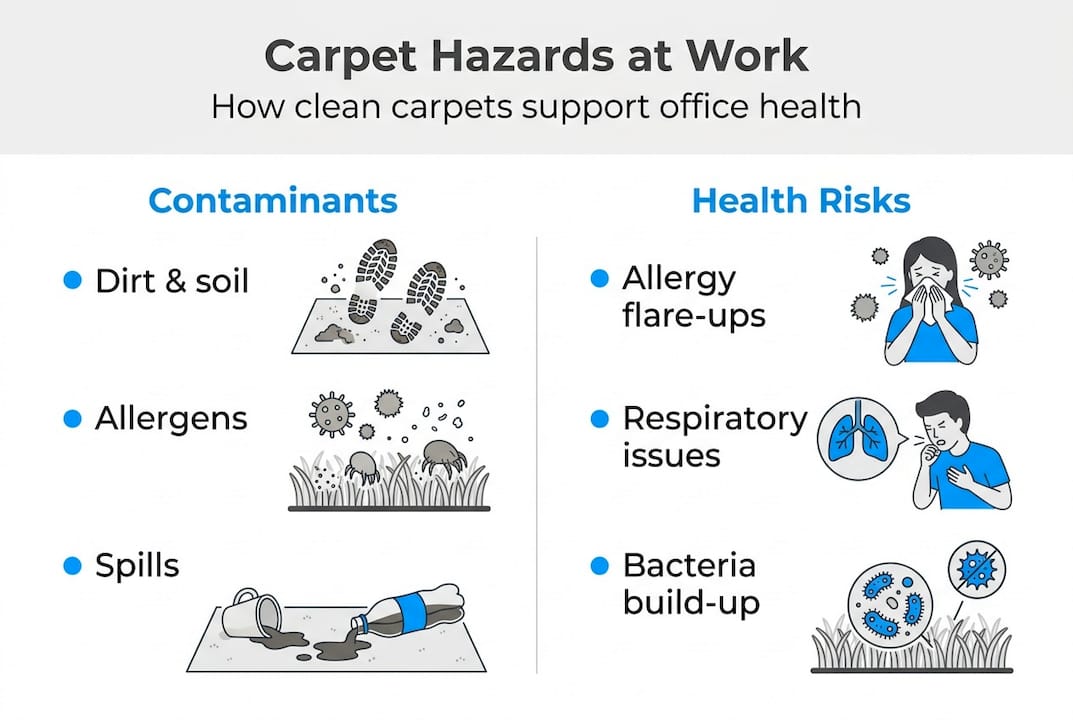
Carpet is one of the most effective air filters in any building. Every time someone walks across it, the carpet releases trapped particles back into the breathing zone. Dust, pollen, pet dander brought in on clothing, mould spores, and even viral particles can all accumulate in carpet fibres over time. The health and image impact of neglected carpets extends well beyond aesthetics.
Dirty carpets are directly linked to higher rates of illness and absenteeism among staff. When allergens and pathogens are continuously stirred into the air, respiratory complaints increase, sick days rise, and productivity falls. The connection is not theoretical. It is measurable and consistent across office environments of all sizes.
“Regular professional cleaning can extend carpet lifespan by up to 50%, saving businesses 30 to 50% on replacement costs, while also reducing odours and pathogens that affect staff health.”
The benefits of a clean carpet go beyond fewer sick days. Odours are one of the first things clients and visitors notice when they walk into your premises. A carpet that smells fresh signals a well-managed operation. One that carries the faint smell of old spills or damp does the opposite. The carpet cleaning and air quality connection is particularly significant for staff who spend eight or more hours in the same space.
Here is what clean carpets consistently deliver in a workplace setting:
- Reduced allergen load in the breathing zone
- Fewer airborne pathogens circulating through the office
- Lower incidence of respiratory complaints and allergy flare-ups
- Improved staff morale through a visibly clean environment
- A more professional impression for clients and visitors
- Extended carpet lifespan, reducing capital replacement costs
The CDC advises regular vacuuming combined with professional cleaning as a core part of maintaining indoor cleanliness and health. For Yarra Valley businesses, this is not optional maintenance. It is a direct investment in your team.
Common sources of workplace carpet contamination
Understanding what actually ends up in your carpet helps you prioritise the right response. Office carpets face a unique combination of contaminants that residential carpets rarely encounter at the same scale.
Foot traffic is the most obvious source. Soil, grit, pollen, and outdoor pollutants are tracked in constantly, particularly at entry points. In the Yarra Valley, where many businesses sit close to parks, gardens, and rural areas, seasonal pollen loads can be significant. Every person who walks through the door brings a little of the outside world with them.
Food and beverage spills are the second major source. Break rooms, meeting areas, and workstations all see regular spills. Even small amounts of liquid that are not fully dried create the conditions for mould and bacterial growth. As moisture and spills accumulate in carpet fibres, they become breeding grounds for mould and bacteria that are invisible to the naked eye but very real in their effects.
Here is a breakdown of the most common workplace carpet contaminants:
- Soil and grit tracked in from outside
- Pollen and outdoor allergens
- Dust mites and their waste particles
- Food and beverage residues
- Chemical residues from cleaning products
- Mould spores from moisture events
- Bacteria and viruses from foot traffic and contact surfaces
Some areas of your workplace carry much higher contamination risk than others. The table below shows typical risk levels by zone.
| Workplace zone | Contamination risk | Key contaminants |
|---|---|---|
| Main entry and reception | Very high | Soil, pollen, grit, moisture |
| Break room and kitchen | High | Food residues, moisture, mould |
| Meeting rooms | Medium | Dust, spills, foot traffic |
| Open plan office | Medium | Dust mites, allergens, general soiling |
| Private offices | Lower | Dust, general soiling |
For office carpet sanitation steps that address each of these zones specifically, it pays to work with a local team who understands the seasonal and environmental factors that affect Yarra Valley workplaces.
Best practices: Frequency and methods for healthy carpets
Knowing how often to clean and which method to use makes a significant difference to both health outcomes and carpet longevity. There is a clear distinction between what vacuuming achieves and what professional deep cleaning delivers.
Vacuuming removes surface-level debris: the visible grit, loose fibres, and recently deposited dust. It is essential and should happen daily in high-traffic zones and two to three times per week in standard areas. But vacuuming does not remove compacted soils, embedded allergens, or biological contaminants that have worked their way deep into the pile.
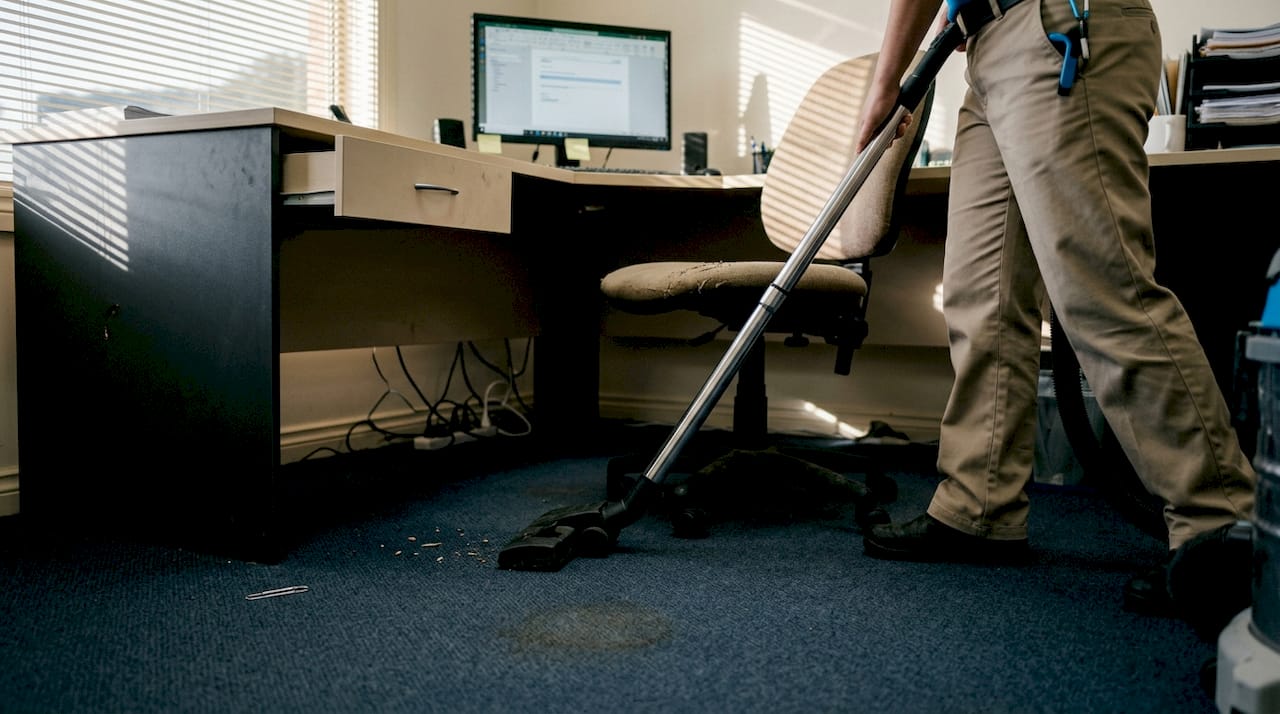
Professional deep cleaning, particularly hot water extraction (commonly called steam cleaning), reaches those deeper layers. It breaks down compacted soils, kills bacteria and dust mites, and removes allergens that vacuuming simply cannot touch. The recommended cleaning frequency is a professional deep clean every 6 to 18 months depending on traffic levels, with carpets dried within 72 hours to prevent mould growth.
Here is a practical cleaning schedule for most Yarra Valley offices:
- Daily: Vacuum all high-traffic areas including entry points, corridors, and break rooms.
- Two to three times per week: Vacuum standard office areas and meeting rooms.
- Immediately: Address any spills or moisture events as they occur.
- Every 6 months: Schedule a professional deep clean for high-traffic zones.
- Every 12 to 18 months: Professional deep clean for lower-traffic areas.
The CDC recommends cleaning that follows professional standards such as the IICRC S100, which sets the benchmark for effective and safe carpet care.
For a detailed look at office carpet cleaning frequency matched to your specific workplace type, or to understand the full process behind steam cleaning for offices, it helps to consult with a professional who can assess your actual traffic patterns.
Pro Tip: Place heavy-duty entrance matting at all external entry points. Studies show that a good entry mat system captures up to 80% of incoming soil before it reaches your carpet, dramatically reducing the cleaning burden on the rest of the floor.
| Cleaning method | What it removes | Frequency |
|---|---|---|
| Vacuuming | Surface debris, loose dust | Daily to 3x weekly |
| Spot cleaning | Fresh spills and stains | As needed |
| Professional deep clean | Embedded soils, allergens, bacteria | Every 6 to 18 months |
How to respond to spills, stains, and problem areas
Even with the best preventative routine, spills happen. How your team responds in the first few minutes determines whether a spill becomes a permanent stain or a minor inconvenience.
The CDC and IICRC recommend prompt spot-cleaning to avoid deeper contamination and staining. Acting fast is the single most important factor. The longer a spill sits, the deeper it penetrates, and the more likely it is to attract bacteria or set permanently.
Here is the correct response sequence for any workplace spill:
- Act immediately. Do not wait for cleaning staff if the spill just occurred.
- Blot the spill with a clean white cloth. Work from the outside of the spill inward to avoid spreading it.
- Never rub. Rubbing pushes the liquid deeper into the fibres and spreads the stain.
- Apply a small amount of mild cleaning solution (water and a drop of dish soap works for most spills).
- Blot again with a fresh cloth until the area is as dry as possible.
- Allow the area to air dry fully. Use a fan if needed to speed up drying.
- If the stain persists or the spill involved something strongly coloured or biological, call a professional.
For practical office carpet cleaning tips that cover a wider range of stain types, it is worth bookmarking a reliable resource for your facilities team.
Recurring trouble zones deserve special attention. If the same area keeps getting stained or stays damp, that signals a structural issue: a leaking pipe, poor ventilation, or a workflow problem that needs to be addressed. Recurring moisture is the fastest path to mould. Review your carpet maintenance essentials regularly to catch these patterns early.
Pro Tip: Keep a basic spill response kit in your break room and near any high-risk areas. It should include clean white cloths, a small spray bottle of mild cleaning solution, and a portable fan. Having the right tools on hand means faster response and better outcomes every time.
Why routine carpet cleaning is the secret to a healthier, more productive office
Here is something most facilities guides will not tell you directly: vacuuming addresses only about 20% of the health hazards living in your carpet. The other 80% sits below the surface, accumulating quietly between professional cleans. Most managers do not realise this until a staff member raises a persistent allergy complaint or a client comments on an odour.
The real value of consistent professional cleaning is cumulative. Each clean builds on the last. Carpets that are maintained on a regular schedule stay cleaner between cleans, dry faster, and last significantly longer. The businesses we work with across the Yarra Valley that commit to a proper cleaning schedule consistently report fewer sick days, lower staff turnover, and a noticeably more positive workplace atmosphere.
Deferring professional cleans to save money is a false economy. The cost of replacing a carpet prematurely, combined with the productivity losses from higher absenteeism, far exceeds the cost of regular maintenance. Carpet cleaning and productivity are more closely linked than most managers realise, and the businesses that treat carpet care as a health investment rather than a cleaning expense are the ones that see the difference in their bottom line.
Professional Yarra Valley carpet cleaning: Your next step to a healthier workplace
At Yarra Valley Carpet Cleaning, we work with businesses across Lilydale, Mooroolbark, Healesville, Chirnside Park, and the wider Yarra Valley to deliver commercial carpet cleaning that is genuinely tailored to workplace needs. Our deep steam cleaning process removes what vacuuming leaves behind, and our eco-friendly products are safe for staff and clients alike. If you are ready to improve air quality, reduce sick days, and give your workplace a fresher feel, we are here to help. Find a local solution through our carpet cleaning near me page, read our carpet care after cleaning guide to protect your results, or learn exactly what our commercial steam cleaning process involves before you book.
Frequently asked questions
How often should office carpets be professionally cleaned?
Carpets should be professionally deep cleaned every 6 to 18 months, depending on foot traffic levels and the nature of your workplace activities.
What is the fastest way to remove a stain from office carpet?
Blot the spill immediately with a clean cloth, apply a mild cleaning solution, and avoid rubbing; for stubborn stains, prompt spot-cleaning followed by a professional call is the safest approach.
Can clean carpets actually reduce sick days in the office?
Yes. Regular cleaning reduces pathogens and allergens in carpet fibres, and clean carpets boost productivity by up to 30% while measurably lowering staff illness and absenteeism.
Does carpet cleaning improve air quality in the workplace?
Absolutely. Proper cleaning removes dust, allergens, and pollutants trapped in carpet fibres, and the air quality benefits are particularly significant for staff who spend long hours in the same indoor environment.
Recommended
- Clean office carpets regularly to boost health and productivity – Yarra Valley Carpet Cleaning
- Benefits of Professional Carpet Cleaning for Yarra Valley Homes & Businesses 2025 – Yarra Valley Carpet Cleaning
- Industrial Carpet Cleaning for Yarra Valley Workplaces – Yarra Valley Carpet Cleaning
- Commercial Carpet Steam Cleaning- Yarra Valley Carpet Cleaning
- Why after-hours HVAC cleaning boosts air quality