
Your carpets might be harbouring more than you think. Research shows carpets hold 12 times more dust than hard floors, creating a hidden reservoir of allergens that affects your home’s air quality every day. Understanding how effective carpet cleaning transforms your indoor environment helps you protect your family’s health and create a genuinely comfortable living space.
Table of Contents
- Understanding How Carpets Affect Indoor Air Quality
- Health Risks Of Poorly Maintained Carpets
- Benefits Of Professional Carpet Cleaning On Indoor Air Quality
- Common Misconceptions About Carpet Cleaning And Air Quality
- Comparing Carpet Cleaning Methods For Air Quality Improvement
- Recommendations For Carpet Cleaning Frequency To Maintain Air Quality
- Putting It All Together: Practical Steps For Yarra Valley Homes
- Learn More About Expert Carpet Cleaning Services In Yarra Valley
- Frequently Asked Questions
Key takeaways
| Point | Details |
|---|---|
| Carpet pollutant trap | Carpets trap dust, allergens, pet dander, and microbes that degrade indoor air quality when disturbed. |
| Health consequences | Poorly maintained carpets increase respiratory symptoms by 35% through mould and allergen accumulation. |
| Professional cleaning impact | Deep steam cleaning removes 90% of dust mite allergens and cuts VOC levels by 50%. |
| Cleaning frequency matters | Biannual professional cleaning reduces respiratory complaints by 40% in typical homes. |
| Method effectiveness varies | Steam cleaning outperforms vacuuming and dry cleaning for deep allergen removal and air quality improvement. |
Understanding how carpets affect indoor air quality
Carpets function as massive filters in your home, continuously trapping airborne particles that would otherwise settle on hard surfaces. Every step across your carpet releases these captured contaminants back into the breathing zone, creating an invisible cycle of indoor air pollution.
The sheer volume of pollutants carpets collect is staggering. Carpets hold up to 12 times more dust than hard flooring, making them the largest reservoir of indoor contaminants in most homes. This accumulation includes pollen grains, pet dander, dust mite faeces, bacteria, and even tracked-in pesticides from outdoor environments.
Common carpet contaminants include:
- Dust mites and their allergenic waste products
- Pollen particles from plants and grasses
- Pet dander and saliva proteins
- Mould spores in humid conditions
- Bacteria and viruses from foot traffic
- Chemical residues from cleaning products
Foot traffic creates a pumping action that forces trapped particles back into the air you breathe. This resuspension effect means your carpet continuously contributes to poor indoor air quality between cleanings. Understanding the air quality and carpets guide reveals why regular deep cleaning is essential rather than optional.
The fibres themselves create an ideal environment for particle retention. Carpet pile acts like velcro, capturing microscopic particles that escape other cleaning methods. This explains why surface cleaning rarely addresses the deeper air quality issues lurking within your flooring.
Health risks of poorly maintained carpets
Neglected carpets become breeding grounds for organisms that directly threaten respiratory health. Humidity levels above 60% transform carpets into microbial incubators where mould spores and bacteria thrive in the warm, damp fibres.
Research demonstrates that mould in carpets increases respiratory symptoms by 35%, affecting asthma sufferers and allergy-prone individuals most severely. The Yarra Valley’s temperate climate with periodic rainfall creates ideal conditions for this microbial growth when carpets aren’t properly maintained.
Vulnerable populations face amplified risks:
- Children playing on floors inhale concentrated allergen doses
- Elderly residents with compromised immune systems
- Asthma sufferers experiencing triggered attacks
- Allergy-sensitive individuals facing daily symptoms
- Pets that spend extensive time on carpet surfaces
Dust mites present a particularly insidious problem. These microscopic creatures feed on dead skin cells trapped in carpet fibres, producing waste particles that are among the most potent indoor allergens. A single gram of carpet dust can contain thousands of dust mites and hundreds of thousands of allergen particles.
Bacterial contamination adds another layer of concern. Carpets near entryways accumulate bacteria from shoes, including potentially harmful species from outdoor environments. Without regular professional cleaning, these populations multiply and spread throughout your home.
The impact of clean carpets on health becomes obvious when you consider these accumulated exposures. Chronic low-level allergen exposure creates inflammation that worsens over time, leading to sensitisation even in people without previous allergy histories. Understanding health risks dirty carpets pose helps motivate proper maintenance schedules.
Benefits of professional carpet cleaning on indoor air quality
Professional deep cleaning delivers dramatic improvements that surface-level maintenance cannot match. The transformation in air quality after thorough carpet cleaning often surprises homeowners who’ve grown accustomed to their baseline indoor environment.
The evidence speaks clearly: steam cleaning reduces dust mite allergens by 90%, whilst eco-friendly methods cut chemical residues by 80%. These aren’t marginal improvements but fundamental shifts in your home’s air quality profile.
Key air quality improvements include:
- Removal of deeply embedded allergen particles
- Elimination of dust mite populations and waste
- Extraction of trapped mould spores
- Reduction of bacterial colonies
- Decreased volatile organic compounds (VOCs) by 50%
- Lower overall particulate matter in breathing zones
The heat and extraction power of professional steam cleaning reaches contamination layers that vacuuming never touches. Water heated to optimal temperatures kills dust mites and denatures allergenic proteins, whilst powerful suction removes the neutralised contaminants before they can recontaminate your air.
Eco-friendly cleaning solutions provide additional benefits for sensitive occupants. Green products eliminate the chemical residue problem that traditional cleaners create, where harsh detergents themselves become indoor air pollutants. The benefits of carpet cleaning guide details these advantages.
Pro Tip: Schedule professional cleaning during mild weather when you can ventilate your home thoroughly. This accelerates drying and maximises the air quality improvement by flushing out loosened particles.
Consistent professional maintenance creates compounding health benefits. Regular cleaning prevents the deep allergen accumulation that makes remediation progressively harder. The professional carpet cleaning benefits extend beyond immediate air quality to long-term respiratory health protection for everyone in your household.
Common misconceptions about carpet cleaning and air quality
Several persistent myths prevent homeowners from taking effective action on carpet-related air quality issues. Debunking these misconceptions helps you make informed decisions about your cleaning schedule and methods.
The biggest misconception is that regular vacuuming alone maintains healthy carpets. Reality check: vacuuming removes only 20-30% of allergens trapped in carpet fibres. The remaining 70-80% continues degrading your air quality regardless of how often you vacuum.
Common false beliefs include:
- “My carpet looks clean, so it must be clean” (visual appearance reveals nothing about allergen loads)
- “Dry cleaning is just as effective as steam cleaning” (dry methods remove up to 60% surface dust but miss deep allergens)
- “New carpets don’t need professional cleaning” (new carpets off-gas VOCs and trap construction dust)
- “Frequent vacuuming eliminates professional cleaning needs” (surface and deep cleaning serve different purposes)
- “Carpet cleaning is only necessary for stain removal” (air quality benefits far exceed cosmetic improvements)
The dry cleaning versus steam cleaning debate deserves particular attention. Whilst dry methods offer faster drying times and convenience, they cannot match steam cleaning’s deep allergen extraction capability. Dry cleaning removes surface contaminants effectively but leaves deeper layers untouched.
Another dangerous myth suggests that chemical-heavy cleaning products work better than eco-friendly alternatives. Modern green cleaning technologies match or exceed traditional chemicals’ effectiveness whilst avoiding the indoor air pollution those harsh products create. Why regular carpet cleaning matters becomes clear when you understand these distinctions.
The misconception that carpet cleaning causes more problems than it solves stems from experiences with improper techniques. Over-wetting carpets or inadequate extraction does create mould risk, but professional services using correct methods prevent these issues entirely.
Comparing carpet cleaning methods for air quality improvement
Understanding the strengths and limitations of different cleaning approaches helps you select the optimal method for your air quality goals. Not all cleaning methods deliver equal results for allergen reduction and indoor air improvement.
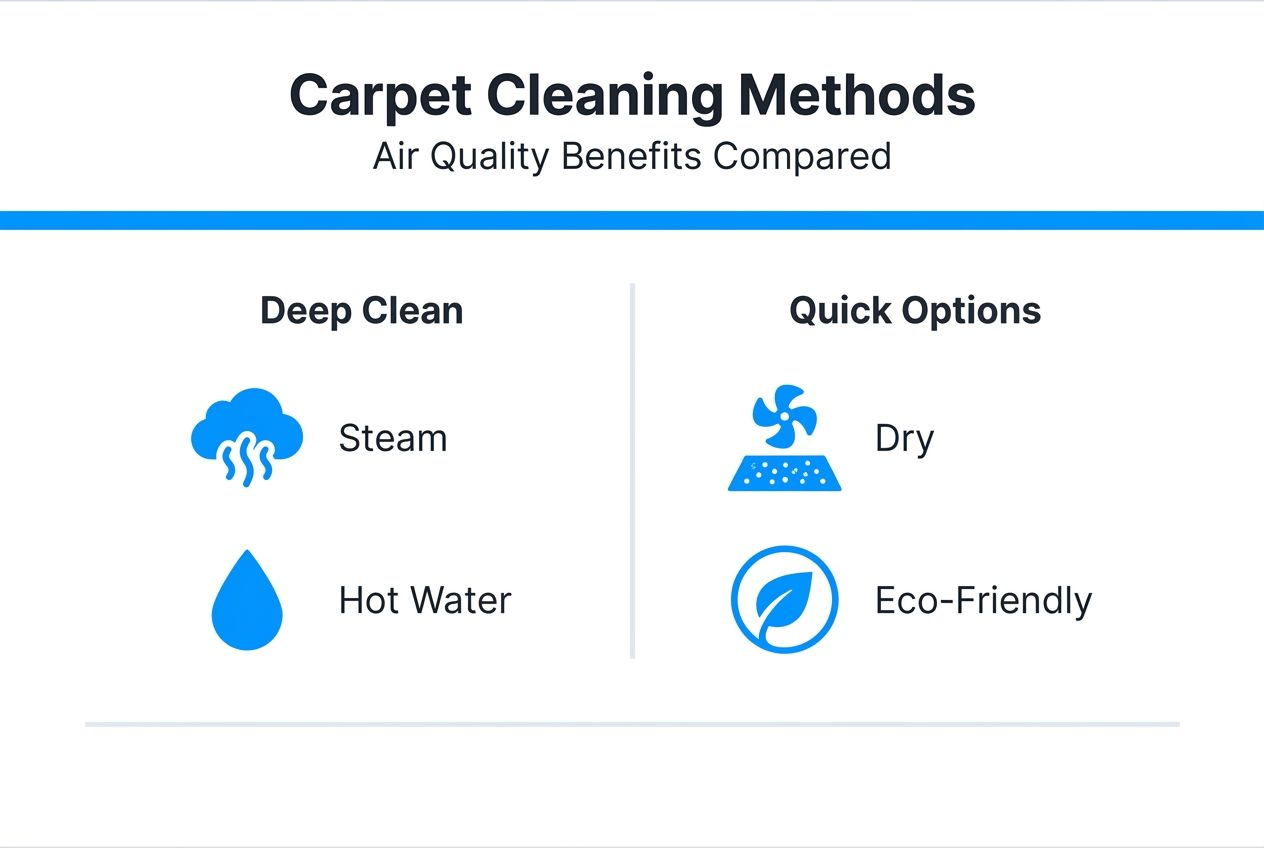
| Method | Allergen Removal | Chemical Residue | Drying Time | Best For |
|---|---|---|---|---|
| Steam cleaning | 90%+ deep allergens | Minimal with eco products | 6-12 hours | Comprehensive air quality improvement |
| Dry cleaning | 60% surface dust | Moderate | 1-2 hours | Quick refreshes between deep cleans |
| Eco-friendly steam | 90%+ deep allergens | 80% less than traditional | 6-12 hours | Sensitive occupants, children, pets |
| Vacuuming only | 20-30% surface allergens | None | Immediate | Daily maintenance only |
Steam cleaning removes over 90% of dust mite allergens by penetrating deep into carpet fibres where contamination accumulates. The combination of heat, cleaning solution, and powerful extraction creates a triple-action approach that other methods cannot replicate.
Dry cleaning offers legitimate advantages in specific situations. Commercial spaces requiring minimal downtime benefit from the rapid drying. Light maintenance cleaning between professional steam sessions can extend the benefits of deep cleaning.
Eco-friendly products have revolutionised carpet cleaning effectiveness. Modern green formulations match traditional chemical cleaners’ performance whilst eliminating toxic residues that themselves pollute indoor air. This makes eco-friendly steam cleaning the gold standard for health-conscious households.
Pro Tip: Combine methods strategically rather than relying on a single approach. Regular vacuuming with HEPA filtration, periodic dry cleaning for maintenance, and biannual professional steam cleaning creates layered protection for optimal air quality.
The carpet cleaning for asthma sufferers demonstrates why method selection matters. Steam cleaning’s superior allergen removal directly correlates with reduced symptom frequency for respiratory-sensitive occupants. Understanding the importance of regular carpet cleaning means choosing methods that deliver measurable health improvements.
Recommendations for carpet cleaning frequency to maintain air quality
Timing your professional cleaning schedule optimally ensures sustained air quality benefits rather than temporary improvements. Evidence-based frequency guidelines help you maintain the health advantages that proper carpet care delivers.
Research shows biannual professional cleaning correlates with 40% fewer respiratory complaints, establishing twice-yearly cleaning as the baseline for most homes. However, your specific situation may warrant more frequent attention.
Factors requiring increased cleaning frequency:
- High humidity environments where mould risk increases
- Homes with pets that shed dander and track outdoor contaminants
- Households with allergy or asthma sufferers needing reduced allergen exposure
- High foot traffic areas accumulating contaminants faster
- Presence of young children playing on floor surfaces
- Visible soil or odour indicating contamination buildup
Yarra Valley’s climate presents specific considerations. The region’s temperate conditions with periodic rainfall create humidity spikes that promote microbial growth in carpets. Homes without adequate ventilation or climate control may need quarterly professional cleaning rather than the standard biannual schedule.
Spring and autumn represent ideal cleaning times for most homes. Spring cleaning removes winter moisture accumulation and mould spores before allergy season peaks. Autumn cleaning prepares carpets for the enclosed conditions of winter when indoor air quality matters most.
Pro Tip: Don’t wait until carpets look dirty to schedule cleaning. Allergen loads build long before visual soil appears, meaning air quality degrades well before aesthetic concerns arise.
Consistent scheduling prevents the deep contamination that makes remediation progressively harder. Regular cleaning maintains a baseline cleanliness that’s easier and less expensive to sustain than intermittent crisis interventions. Understanding the importance of regular carpet cleaning helps you commit to a maintenance schedule that protects your investment and your health.
Putting it all together: practical steps for Yarra Valley homes
Translating knowledge into action requires a clear implementation plan tailored to local conditions. Yarra Valley homeowners face specific challenges that inform effective carpet cleaning strategies for optimal indoor air quality.
Start by assessing your current situation honestly. Walk through your home noting carpet age, condition, and high-traffic patterns. Consider household factors like pets, children, or respiratory-sensitive occupants that elevate air quality priorities.
Your action plan should include:
- Schedule professional deep steam cleaning twice yearly minimum
- Increase to quarterly cleaning during humid seasons or for sensitive households
- Implement weekly vacuuming with HEPA-filtered equipment between professional services
- Monitor indoor humidity levels, maintaining below 60% to prevent mould growth
- Use dehumidifiers during damp periods common in Yarra Valley
- Choose certified eco-friendly cleaning products to avoid chemical residue buildup
- Focus extra attention on entryways where outdoor contaminants concentrate
The Yarra Valley’s regional characteristics demand specific adaptations. Local humidity patterns during spring and winter require vigilant moisture management to prevent the mould growth that thrives in damp carpets. Working with local carpet cleaning services ensures your technicians understand these regional challenges.
Pro Tip: Keep a simple maintenance log noting cleaning dates, methods used, and any air quality changes you notice. This documentation helps you optimise your schedule and provides valuable information if respiratory issues arise.
Invest in prevention between professional cleanings. Remove shoes at entry points to reduce tracked-in contaminants. Address spills immediately to prevent moisture penetration that invites mould. Use entrance mats both outside and inside doorways to capture particles before they reach main carpet areas.
The eco-friendly carpet cleaning solutions available through local specialists combine effective cleaning with environmental responsibility. Green products protect both your indoor air quality and the broader Yarra Valley environment you value.
Learn more about expert carpet cleaning services in Yarra Valley
Protecting your family’s health through improved indoor air quality starts with professional carpet care tailored to local conditions. Yarra Valley Carpet Cleaning specialises in deep steam cleaning using eco-friendly products that eliminate allergens whilst protecting your home environment.
Our experienced team understands the specific challenges Yarra Valley homes face, from humidity management to seasonal allergen control. We deliver measurable air quality improvements through proven cleaning methods backed by industry research. Whether you’re managing respiratory sensitivities or simply want a healthier home, professional cleaning makes a documentable difference.
Discover carpet cleaning near me to connect with local specialists serving your area. Explore our eco-friendly carpet cleaning solutions that prioritise both effectiveness and safety. Learn carpet care after cleaning tips to extend the benefits between professional services and maintain the healthier environment you’ve created.
Frequently asked questions
What is the best carpet cleaning method to improve indoor air quality?
Professional steam cleaning delivers the most comprehensive air quality improvement by removing over 90% of deeply embedded allergens that other methods miss. Eco-friendly steam cleaning adds the benefit of eliminating chemical residues that traditional products leave behind, making it ideal for homes with children, pets, or respiratory-sensitive occupants. Carpet cleaning for asthma sufferers particularly benefits from this approach.
How often should carpets be professionally cleaned in humid climates?
Yarra Valley homes should schedule professional cleaning at least twice yearly as a baseline, with biannual cleaning reducing respiratory complaints by 40% in research studies. However, humid climate conditions often warrant quarterly cleaning to control mould and microbial growth that thrives in damp carpets. Increase frequency if you notice musty odours or visible moisture issues. Regular attention through importance of regular carpet cleaning prevents the deep contamination that compromises air quality.
Can vacuuming alone improve indoor air quality by keeping carpets clean?
Vacuuming removes only about 20-30% of embedded allergens, making it insufficient for meaningful air quality improvement despite being essential for surface maintenance. Professional deep cleaning is necessary to extract the 70-80% of contaminants that vacuuming cannot reach, regardless of how frequently you vacuum. Understanding why regular carpet cleaning matters helps you recognise that surface and deep cleaning serve complementary but distinct purposes in maintaining healthy indoor air.
Recommended
- Air Quality and Carpets: Complete Guide for Homes – Yarra Valley Carpet Cleaning
- The Essential Guide to Health Benefits Carpet Cleaning – Yarra Valley Carpet Cleaning
- Impact of Clean Carpets on Health Explained – Yarra Valley Carpet Cleaning
- Effective Carpet Cleaning for Asthma Relief – Yarra Valley Carpet Cleaning
- Revitalise Your Home: The Benefits of Professional Carpet Cleaning in Essex – Bansals Cleaning