
Most people think a spill on the carpet is no big deal until you notice that ugly patch just will not budge. That quick splash of red wine can do more than ruin your Friday night. Here is the twist. Some stains can permanently alter the structure of your carpet within minutes, turning a small accident into a lasting problem that no regular cleaner can fix.
Table of Contents
- What Are Stains And How Do They Form?
- Why Do Some Stains Become Permanent?
- The Role Of Materials In Stain Permanence
- How Stain Removal Methods Affect Permanence
- Real-World Implications Of Permanent Stains
Quick Summary
| Takeaway | Explanation |
|---|---|
| Act quickly to prevent stains | Immediate action can stop stains from deeply embedding into surfaces, making removal easier. |
| Know your materials for better care | Understanding the porosity and composition of your surfaces helps in selecting cleaning methods effectively. |
| Different stains require specific techniques | Not all stains react the same; targeted methods can significantly improve removal success. |
| Professional help is often essential | For complex or stubborn stains, professional techniques can prevent permanent damage to valuable items. |
| Permanent stains have broader impacts | In addition to aesthetics, they can incur replacement costs and affect psychological well-being. |
What Are Stains and How Do They Form?
Stains represent complex interactions between substances that penetrate and alter the molecular structure of surfaces, creating visible discolouration and potential permanent damage. Understanding their formation requires examining how different materials interact at a microscopic level.
The Chemical Composition of Stains
At their core, stains develop when external substances infiltrate porous surfaces, creating chemical bonds that disrupt original material properties. For residents in Lilydale and surrounding Yarra Valley areas, recognising these interactions can help prevent long-term damage to carpets, upholstery, and other household surfaces.
Key factors influencing stain formation include:
- Molecular Structure: Different substances have unique chemical properties that determine their ability to penetrate surfaces
- Surface Porosity: More absorbent materials like carpet fibres are more susceptible to permanent staining
- Temperature and Timing: Rapid intervention can prevent deeper molecular penetration
How Substances Transform into Stubborn Stains
When a liquid or substance encounters a surface, multiple mechanisms contribute to stain development. Organic substances like coffee, wine, or food contain pigments and tannins that quickly bond with fabric or carpet fibres. Research from the International Cleaning Science Association indicates that protein-based and oil-based substances create particularly challenging stain scenarios.
For Mooroolbark and Chirnside Park homeowners, understanding these dynamics means recognising that not all stains are created equal. Some substances, like red wine or beetroot juice, contain intense pigments that rapidly interact with surface materials, creating potentially permanent discolouration within minutes.
Quick response and professional carpet cleaning techniques can significantly reduce the likelihood of permanent staining by interrupting these complex chemical interactions before they become deeply embedded.
Why Do Some Stains Become Permanent?
Stains transform into permanent marks through complex interactions between substances, surface materials, and environmental conditions. Understanding these mechanisms helps residents in the Yarra Valley protect their valuable carpets and upholstery from irreversible damage.
Molecular Bonding and Surface Penetration
When substances penetrate porous materials, they create molecular bonds that alter the original surface structure. Some materials, particularly natural fibres like wool and cotton found in carpets across Mooroolbark and Lilydale, are more susceptible to deep staining due to their intricate, absorbent molecular composition.
Critical factors contributing to permanent stain formation include:
- Chemical Reactivity: Substances with high pigment concentration or acidic properties
- Protein and Tannin Content: Organic materials with complex molecular structures
- Time and Temperature: Longer exposure and heat accelerate molecular bonding
Types of Substances Most Likely to Create Permanent Stains
Research from the Institute of Material Science reveals that certain substances are more prone to creating irreversible discolouration. Red wine, beetroot, turmeric, and certain ink types contain intense pigments that rapidly interact with surface materials, creating chemical transformations that are challenging to reverse.
In Chirnside Park and surrounding areas, understanding these dynamics is crucial. Protein-based and oil-based substances can quickly penetrate fibres, creating deep-set stains that standard cleaning methods struggle to remove.
Professional stain removal techniques become essential when dealing with complex staining scenarios, as specialised treatments can interrupt molecular bonding before permanent damage occurs.
The key to preventing permanent stains lies in immediate, targeted intervention and understanding the unique chemical properties of different substances and surfaces.
Below is a table highlighting the main categories of substances likely to cause permanent stains, along with the reasons for their stubbornness and typical household examples.
| Stain Type | Why It Becomes Permanent | Common Household Examples |
|---|---|---|
| Pigment-based | Intense colour molecules bond tightly | Red wine, beetroot, ink |
| Protein-based | Complex molecular structure, sets with heat | Blood, egg, dairy |
| Oil-based | Bonds with fibres, hard to dissolve | Grease, makeup, butter |
| Tannin-based | Natural compounds bind to fabric | Tea, coffee, some fruits |
| Acidic | Alters material at a chemical level | Fruit juice, some cleaning agents |
The Role of Materials in Stain Permanence
The inherent properties of different materials dramatically influence their vulnerability to staining, with each surface presenting unique challenges in preventing permanent discolouration. Understanding these material characteristics helps homeowners in Lilydale and surrounding Yarra Valley regions protect their valuable surfaces effectively.
Material Porosity and Absorption Dynamics
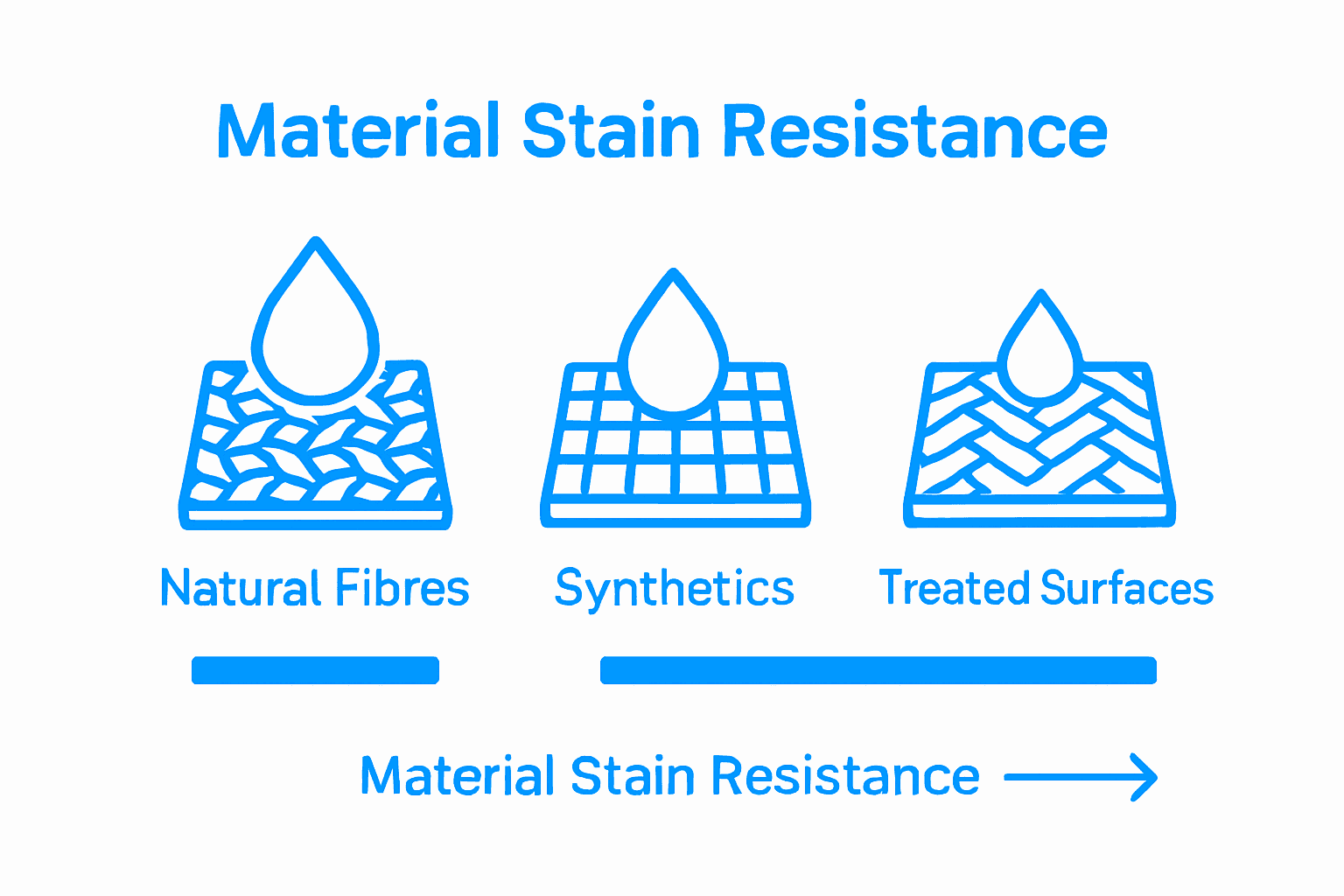
Materials can be classified into three primary categories based on their stain resistance: highly porous, semi-porous, and non-porous surfaces. Natural fibres like wool, cotton, and silk found in carpets across Mooroolbark and Croydon are particularly susceptible to deep staining due to their complex molecular structures.
Key material characteristics affecting stain permanence include:
- Fibre Structure: Tightly woven versus loosely constructed materials
- Chemical Composition: Natural versus synthetic material properties
- Surface Treatment: Presence of protective coatings or sealants
Chemical Interactions Between Materials and Staining Substances
Research from Materials Science Engineering demonstrates that different materials interact uniquely with staining substances. Protein-based and organic materials create more complex molecular bonds, increasing the likelihood of permanent discolouration.
Synthetic materials like polyester and nylon, commonly used in modern carpets throughout Chirnside Park, offer better stain resistance due to their less absorbent molecular structure. These materials create a more challenging environment for stains to penetrate and bond permanently.
Coffee stain removal techniques vary significantly depending on the underlying material, highlighting the importance of understanding surface composition before attempting cleaning.
The interplay between material properties and staining substances creates a complex chemical landscape where immediate intervention and specialised treatment become crucial in preventing permanent damage.
To help clarify which materials are most vulnerable to staining and why, the following table compares surface types, their characteristics and their susceptibility to permanent stains.
| Material Type | Key Characteristics | Stain Susceptibility | Example Surfaces |
|---|---|---|---|
| Wool/Cotton (Natural Fibres) | Highly porous, complex molecular structure | High – absorbs and bonds pigments quickly | Carpets, upholstery in Lilydale homes |
| Silk | Very porous, delicate structure | High – prone to permanent marks | Rugs, decorative fabric |
| Polyester/Nylon (Synthetic Fibres) | Less porous, tightly woven | Lower – resists deep absorption | Modern carpets in Chirnside Park |
| Leather | Semi-porous, natural oils present | Moderate – can absorb oily stains | Furniture, upholstery |
| Hard Surfaces (e.g., tile, sealed wood) | Non-porous, protective coatings | Low – stains mostly surface-level | Floors, kitchen benchtops |
How Stain Removal Methods Affect Permanence
Stain removal techniques represent a critical intervention strategy that can dramatically influence whether a stain becomes permanent or successfully eliminated. For residents in the Yarra Valley, understanding the science behind effective stain removal is crucial in protecting valuable surfaces and household materials.
Chemical Intervention and Molecular Disruption
Successful stain removal depends on interrupting molecular bonding before substances permanently embed into surface structures. Different cleaning approaches target specific types of stains, requiring nuanced understanding of chemical interactions. Households in Lilydale and Mooroolbark can benefit from recognising that not all cleaning methods are universally effective.
Key considerations in stain removal methodology include:
- Chemical Compatibility: Matching cleaning agents to specific stain compositions
- Mechanical Action: Appropriate techniques like blotting versus rubbing
- Temperature Sensitivity: Understanding how heat impacts stain molecular structures
Precision Techniques in Stain Elimination
Research from the University of New South Wales Chemistry Department reveals that rapid, targeted interventions can prevent permanent staining by disrupting chemical bonds before they fully integrate with surface materials. Protein-based and organic stains require different approaches compared to oil-based or synthetic substance stains.
In Chirnside Park and surrounding areas, homeowners must understand that improper cleaning techniques can inadvertently set stains deeper into materials. Aggressive scrubbing, using incorrect solvents, or applying excessive heat can transform a potentially removable stain into a permanent mark.
Professional stain removal techniques become essential when dealing with complex or delicate materials, as specialised knowledge prevents unintended damage during the cleaning process.
The fundamental principle remains consistent: immediate, informed intervention using appropriate methods provides the best opportunity to prevent permanent staining.

Real-World Implications of Permanent Stains
Permanent stains extend far beyond aesthetic concerns, presenting complex economic, psychological, and practical challenges for homeowners, businesses, and individuals across the Yarra Valley. Understanding these broader implications helps residents appreciate the significance of proactive stain prevention and management.
Economic and Replacement Costs
Permanent stains can lead to substantial financial consequences, particularly in residential and commercial settings. Carpets, upholstery, and other surfaces with irreversible discolouration often require complete replacement, representing significant unexpected expenses for households in Lilydale, Mooroolbark, and surrounding regions.
Significant economic impacts include:
- Furniture Replacement: High-cost items rendered unusable
- Property Value Reduction: Visible stains diminishing aesthetic appeal
- Professional Cleaning Expenses: Multiple intervention attempts
Psychological and Social Perceptions
Research in Aesthetic Psychology reveals that visible permanent stains can negatively impact personal and professional perceptions. In business environments throughout Chirnside Park, stained surfaces might communicate neglect or reduced professional standards, potentially influencing client impressions and professional relationships.
For residential spaces, permanent stains can create emotional stress, reducing homeowners’ satisfaction and comfort within their living environments. The psychological burden of managing or concealing these blemishes extends beyond mere visual inconvenience.
Professional stain removal techniques become crucial not just for surface restoration, but for maintaining psychological well-being and preserving social and professional image.
Beyond immediate visual impact, permanent stains represent complex intersections of material science, personal aesthetics, and broader social perceptions, underscoring the importance of preventative care and expert intervention.
Stop Permanent Stains Before They Happen – Professional Help Is Here
Understanding how stains form and why some become permanent can be worrying, especially when you realise how quickly a spill can turn into a lasting problem. The article highlights that materials like wool or cotton, found in homes throughout Lilydale, Mooroolbark and Chirnside Park, are especially at risk. This means regular cleaning methods are often not enough. By the time a mark sets in, thousands of dollars’ worth of carpets and furniture might be at stake. Instead of risking permanent stain damage, consider a proven solution that goes beyond surface cleaning.
Do not let a small spill create permanent regret. With Yarra Valley Carpet Cleaning, you gain local expertise in advanced stain removal for all types of fibres and stains, including tough cases mentioned in the article like wine, coffee or protein-based marks. Our professional stain removal techniques interrupt the chemical process before deep damage happens. Protect your investment and restore peace of mind now. Visit Yarra Valley Carpet Cleaning today and book your expert carpet or upholstery clean before another stain becomes permanent.
Frequently Asked Questions
Can all stains become permanent?
Not all stains will become permanent; factors such as the type of substance, surface material, and the speed of intervention play crucial roles in determining whether a stain can be removed or becomes irreversible.
What types of substances are most likely to create permanent stains?
Substances with high pigment concentrations, like red wine, beetroot, and certain inks, are more likely to cause permanent staining due to their ability to bond deeply with porous materials.
How can I prevent stains from becoming permanent?
Immediate and targeted intervention is essential. Blotting rather than rubbing, using the right cleaning agents, and addressing spills promptly can help prevent stains from penetrating and becoming permanent.
Are there specific cleaning techniques that work better for different types of stains?
Yes, different stains require specific cleaning approaches. For example, protein-based stains may respond better to enzyme cleaners, while oil-based stains might require solvents tailored for grease removal.
Recommended
- Common Carpet Stains Removal Guide for Yarra Valley 2025 – Yarra Valley Carpet Cleaning
- How to Remove Coffee Stains: Easy Steps for Yarra Valley Homes in 2025 – Yarra Valley Carpet Cleaning
- Professional Stain Removal Techniques for Homes and Businesses – Yarra Valley Carpet Cleaning
- Removing Coffee Stains Carpet: Easy Solutions for Yarra Valley – Yarra Valley Carpet Cleaning