
TL;DR:
- Carpets trap dust mites, allergens, bacteria, and mold invisible to the eye. Regular professional cleaning and good habits reduce health risks. Ongoing maintenance is essential for a healthier home environment.
Your carpet might look perfectly fine after a quick vacuum, but appearances can be deceiving. Beneath the surface, fibres trap an extraordinary mix of dust mites, pet allergens, bacteria, and mould spores that no amount of visual inspection will reveal. In fact, carpets can harbour dust mites, pet allergens, bacteria, and mould even when they appear spotless. For Yarra Valley homeowners, where seasonal pollen and pet ownership are part of everyday life, understanding what actually makes carpets unhygienic is the first step toward protecting your family’s health. This guide covers the real causes, the genuine health risks, and the practical steps you can take right now.
Table of Contents
- What causes carpets to become unhygienic?
- Hidden dangers: How carpets impact your health
- Daily habits that make carpets dirtier
- Prevention and expert strategies for cleaner carpets
- A fresh perspective on carpet hygiene
- Connect with Yarra Valley’s carpet hygiene experts
- Frequently asked questions
Key Takeaways
| Point | Details |
|---|---|
| Carpets trap hidden germs | Even visually clean carpets can harbour bacteria, allergens, and mould. |
| Daily routines add contaminants | Activities like wearing shoes indoors and skipping clean-ups worsen carpet hygiene over time. |
| Health and air quality risks | Poor carpet hygiene often triggers allergies, asthma, and other health problems. |
| Professional care is essential | Regular expert cleaning combined with smart habits keeps your carpets healthy and fresh. |
What causes carpets to become unhygienic?
Carpets are essentially giant filters. Every day, they collect whatever enters your home, and unlike hard floors, they hold onto it. Carpets act as sinks for dust, bacteria, allergens, and household microbes, especially in high-traffic homes. The problem is that most of what accumulates is invisible to the naked eye.
The main sources of carpet contamination include:
- Outdoor shoes tracking in soil, pesticides, pollen, and bacteria from footpaths and gardens
- Pets depositing dander, fur, and outdoor debris directly into carpet fibres
- Food and drink spills creating moist environments where bacteria and mould thrive
- Dust particles settling from the air, including skin cells, pollen, and fine grit
- Moisture from humidity, wet shoes, or inadequate ventilation encouraging mould growth
To understand just how different visible dirt is from what actually lives in your carpet, consider this comparison:
| Contaminant type | Visible to the eye | Health risk level |
|---|---|---|
| Mud and soil | Yes | Low to moderate |
| Food crumbs | Yes | Moderate (attracts pests) |
| Dust mite waste | No | High (major allergen) |
| Mould spores | Rarely | High (respiratory risk) |
| Pet dander | Rarely | High (allergy trigger) |
| Bacteria colonies | No | Moderate to high |
In the Yarra Valley, local conditions add an extra layer of complexity. The region’s mix of bushland, farmland, and suburban living means homes are regularly exposed to high pollen counts, fine dust from gravel roads, and the kind of muddy boots that come with rural lifestyle. Homes with clean carpets and health as a priority tend to have significantly fewer airborne allergens circulating through their living spaces. Ignoring these sources does not just make your carpet look tired; it turns it into a reservoir of contaminants that affect every breath taken indoors.
Hidden dangers: How carpets impact your health
Once you understand what is living in your carpet, the health implications become hard to ignore. Poorly maintained carpets can trigger allergies, asthma, and respiratory illnesses, particularly in households that already deal with sensitivities.
Children are especially vulnerable. Young kids spend hours crawling, rolling, and playing directly on carpet surfaces, putting them in constant contact with whatever the fibres are harbouring. Homes with pets face a compounded risk, as animal dander is one of the most potent indoor allergens. Families with young children benefit greatly from child-safe carpet cleaning methods that remove contaminants without leaving harsh chemical residues behind.
The main health hazards from poorly maintained carpets include:
- Allergic rhinitis triggered by dust mite waste and pet dander
- Asthma flare-ups worsened by mould spores and fine particulate matter
- Skin irritation from contact with bacteria or chemical residues in fibres
- Eye and throat irritation caused by airborne particles disturbed during walking
- Fungal infections in rare but serious cases linked to persistent mould growth
Dust mites alone can number in the millions within a single square metre of carpet. Their waste particles are a leading cause of year-round allergic symptoms in Australian homes.
Pet owners face a particularly tricky situation. Even after pets are bathed and groomed, dander continues to shed and embed deep into carpet fibres. Carpet cleaning for pet owners requires specialised techniques that go beyond surface vacuuming to actually extract dander and neutralise odours at the fibre level. If anyone in your household sneezes more indoors than outdoors, or wakes up with a stuffy nose, your carpet may be the culprit.
Daily habits that make carpets dirtier
Here is a confronting truth: many homeowners are actively making their carpets worse without realising it. Everyday routines that seem harmless can dramatically accelerate the build-up of contaminants. Foot traffic, unremoved shoes, and infrequent vacuuming dramatically increase soil and bacteria levels in carpets.
The top five daily habits that worsen carpet hygiene:
- Wearing outdoor shoes inside — the single biggest source of tracked-in bacteria, pesticides, and soil
- Vacuuming infrequently — once a fortnight is not enough for high-traffic areas; weekly is the minimum
- Rubbing spills instead of blotting — rubbing pushes liquid deeper into fibres and spreads staining
- Skipping annual professional cleans — surface vacuuming never reaches the deep layers where mould and bacteria thrive
- Using too much water on DIY stain removal — over-wetting creates the perfect conditions for mould to take hold
These habits compound over time. A carpet that has never been professionally cleaned accumulates years of deep-seated contaminants that no home vacuum can address. The impact on carpet cleaning and air quality is measurable: homes with cleaner carpets consistently show lower levels of airborne particulates.
Pro Tip: Place a dedicated shoe rack and a firm doormat at every entry point. Asking family and guests to remove outdoor shoes before stepping onto carpet is the single most effective habit change you can make. It costs nothing and immediately reduces the volume of contaminants entering your carpet fibres every day.
Small behavioural changes like these, combined with a proper cleaning schedule, make a genuine difference to carpet hygiene over the long term.
Prevention and expert strategies for cleaner carpets
Now that the causes and risks are clear, practical solutions become much easier to apply. Keeping carpets hygienic is not about obsessive cleaning; it is about consistency and using the right method at the right time.
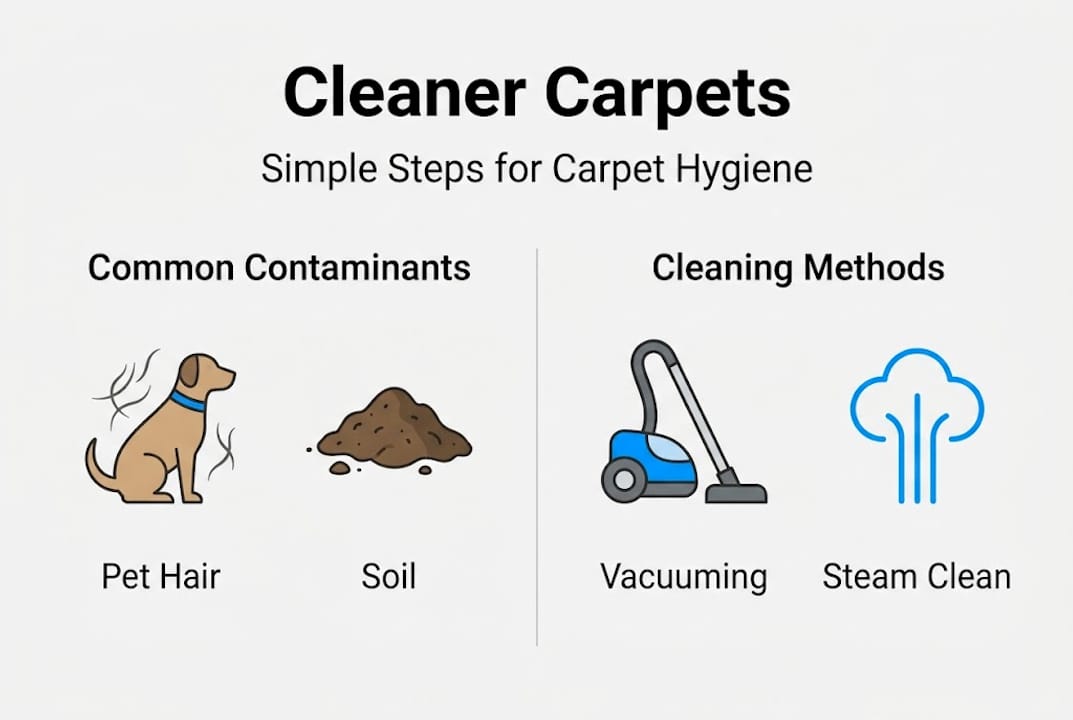
A combined approach of regular vacuuming and periodic professional cleaning maximises carpet hygiene far more effectively than either method alone. Here is how the main cleaning methods compare:
| Cleaning method | Removes surface dirt | Removes allergens | Removes bacteria and mould | Recommended frequency |
|---|---|---|---|---|
| Vacuuming | Yes | Partially | No | Weekly |
| DIY spot treatment | Partially | No | No | As needed |
| Professional steam clean | Yes | Yes | Yes | Every 12 months minimum |
For Yarra Valley households, the recommended schedule looks like this: vacuum high-traffic areas weekly using a HEPA filter vacuum, address spills immediately by blotting (never rubbing), and book a professional steam clean at least once a year, or every six months if you have pets or allergy sufferers at home.
Do’s and don’ts for hygienic carpets:
- Do vacuum in overlapping passes to capture more debris
- Do treat spills within minutes to prevent deep penetration
- Do use eco-friendly, residue-free cleaning products
- Don’t over-wet carpets during DIY cleaning
- Don’t delay professional cleaning until carpets look visibly dirty
- Don’t skip the health benefits of carpet cleaning that only a professional steam clean can deliver
Pro Tip: When choosing a local carpet cleaning service, look for a team that uses hot water extraction (steam cleaning), discloses their cleaning products, and offers a satisfaction guarantee. A trustworthy provider will always be happy to explain their process before they begin.
A fresh perspective on carpet hygiene
After years of working in Yarra Valley homes, one thing stands out clearly: the homeowners who struggle most with carpet hygiene are not the ones who clean least. They are often the ones who clean frequently but rely entirely on DIY methods, believing that effort alone is enough.
The uncomfortable reality is that even a diligent weekly vacuum only addresses the top layer of your carpet. Deep within the pile, contaminants accumulate undisturbed for months or years. No consumer vacuum, regardless of price, reaches the compacted debris at the base of carpet fibres. This is not a failure of effort; it is simply a limitation of the tool.
The Yarra Valley’s seasonal patterns make this worse. Autumn brings heavy leaf debris and mould spores. Spring floods homes with pollen. Summer means dry dust and tracked-in soil. Each season adds a new layer of challenge that routine vacuuming cannot fully counter.
The most effective approach treats carpet hygiene as a layered system: daily habits reduce what enters the carpet, weekly vacuuming manages the surface, and periodic professional cleaning resets the deep layers. Thinking of ongoing carpet care as an investment in household health rather than a cosmetic chore changes everything about how consistently you follow through.
Connect with Yarra Valley’s carpet hygiene experts
If this guide has made you think differently about what might be living in your carpet, we are here to help. At Yarra Valley Carpet Cleaning, we work with homeowners across Lilydale, Mooroolbark, Healesville, and beyond to deliver deep steam cleans that genuinely restore carpet hygiene. Whether you are ready to book or just want advice, find a local carpet cleaning professional near you to get started. After your clean, our carpet care tips after cleaning will help you maintain results for longer. Explore our full range of residential carpet cleaning services and take the first step toward a genuinely healthier home.
Frequently asked questions
How often should I professionally clean my carpets to maintain hygiene?
Aim for professional steam cleaning at least once every 12 months, or every six months if your home has pets, young children, or allergy sufferers. High-traffic areas may benefit from more frequent attention.
Are there common signs my carpet is unhygienic even if it looks clean?
Carpets trap odours and allergens even when they appear clean, so watch for musty smells, increased sneezing indoors, or persistent staining as early warning signs. These indicate contaminants have built up below the visible surface.
What’s the best way to reduce carpet germs between professional cleans?
Simple hygiene habits like vacuuming weekly with a HEPA filter vacuum, blotting spills immediately, and keeping outdoor shoes off carpeted areas significantly reduce contaminant build-up between professional cleans.
Recommended
- Why carpets trap allergens and how to stay healthy – Yarra Valley Carpet Cleaning
- Why office carpets get so dirty and how to manage it – Yarra Valley Carpet Cleaning
- Carpet cleaning’s role in air quality for healthier homes – Yarra Valley Carpet Cleaning
- Health Risks Dirty Carpets: Complete Guide Australia – Yarra Valley Carpet Cleaning
- How carpet cleaning improves health and indoor air quality