
A small water leak can turn your living room carpet into a nasty health hazard in just a few hours. Most people think tackling the mess is just a matter of drying things quickly. But waiting more than 24 to 48 hours before starting cleanup can lead to irreversible damage and dangerous mould growth. The difference between a saved carpet and one you need to rip up usually comes down to what you do first—and it is nowhere near as simple as grabbing a few towels.
Table of Contents
- Step 1: Assess Your Carpet’s Condition And Water Source
- Step 2: Gather Essential Cleaning Supplies And Equipment
- Step 3: Extract Excess Water From Carpets Thoroughly
- Step 4: Clean And Treat The Affected Areas On The Carpet
- Step 5: Dry The Carpets Completely For Optimal Results
- Step 6: Verify Carpet Restoration And Address Remaining Issues
Quick Summary
| Key Point | Explanation |
|---|---|
| 1. Assess water source and carpet condition | Identify if the water is clean or contaminated and inspect the carpet for signs of damage before starting any cleaning process. |
| 2. Gather professional-grade cleaning supplies | Use industrial-strength tools and antimicrobial solutions to effectively tackle water damage and prevent mould growth. |
| 3. Extract water thoroughly and quickly | Employ systematic water extraction techniques to prevent further damage and ensure the carpet is adequately dried within 24 to 48 hours. |
| 4. Clean with the right chemicals | Use diluted antimicrobial solutions to treat affected areas while ensuring no damage occurs to the carpet fibers. |
| 5. Verify restoration and check for issues | Conduct a thorough inspection using moisture meters and sensory checks to confirm the carpet is completely dry and free of lingering problems. |
Step 1: Assess Your Carpet’s Condition and Water Source
Water damage can transform your carpet from a comfortable floor covering into a potential health hazard within hours. The initial assessment is critical for determining whether professional intervention is necessary or if you can manage the cleaning process independently. Understanding the water source and your carpet’s current condition will guide your entire water damage cleaning strategy.
Begin by identifying the water’s origin. Not all water damage is equal. Clean water from burst pipes or rainwater leaks presents different challenges compared to contaminated water from sewage backups or flooding. In Mooroolbark and surrounding Yarra Valley regions, sudden weather events can quickly escalate water damage risks.
Carefully inspect your carpet’s material and backing. Natural fibres like wool are more susceptible to water damage and potential mould growth compared to synthetic materials. Look for visible signs of water penetration such as discolouration, dark spots, or a musty odour. Check the carpet’s backing and underlay by gently pressing in multiple areas. If water squeezes out or the area feels consistently damp, you’re dealing with significant moisture saturation.
Our comprehensive guide on carpet protection can provide additional insights into maintaining your carpet’s integrity after water exposure.
Key verification steps include:
- Check carpet edges and seams for water absorption
- Measure dampness using a moisture meter if available
- Assess the duration of water exposure
- Evaluate room temperature and humidity levels
Professional carpet cleaners in the Yarra Valley recommend acting within 24 to 48 hours to prevent irreversible damage. Delayed action increases the risk of structural deterioration, mould development, and potential health hazards for your family or workplace.
Step 2: Gather Essential Cleaning Supplies and Equipment
Successful water damage carpet cleaning requires strategic preparation and the right equipment. In the Yarra Valley, where humidity and variable weather conditions can complicate carpet restoration, having a comprehensive toolkit is crucial for effective water damage management.
Professional grade equipment makes a significant difference. Start by assembling industrial strength water extraction tools such as wet vacuums or specialised carpet water removal machines. These devices are far more powerful than standard household vacuum cleaners and can extract substantial moisture volumes quickly. Residential areas like Mooroolbark and Lilydale often experience unexpected water damage, so being prepared matters.
Your cleaning arsenal should include several key components. Chemical supplies are essential for neutralising potential bacterial growth and eliminating moisture related odours. Select cleaning solutions specifically designed for water damaged carpets with antimicrobial properties. Microfibre towels, protective rubber gloves, respirator masks, and sturdy plastic containers for potential carpet removal are equally important. Safety equipment is non negotiable when managing potentially contaminated water sources.
Explore our comprehensive guide to deep cleaning carpets for additional insights into professional carpet maintenance techniques.
Essential equipment checklist:
- Industrial wet vacuum cleaner
- Carpet extraction machine
- Antimicrobial carpet cleaning solution
- Microfibre towels
- Protective rubber gloves
- Respirator mask
- Plastic waste containers
- Moisture meter
- Fans for rapid drying
Remember that time is critical. The faster you begin water extraction and drying processes, the higher the likelihood of successfully salvaging your carpet and preventing long term damage.
The following table summarises all essential equipment and supplies needed for effective water-damaged carpet cleaning, helping you prepare properly before starting the restoration process.
| Equipment/Supply | Purpose | Notes/Specifications |
|---|---|---|
| Industrial wet vacuum cleaner | Extracts excess water quickly and efficiently | More powerful than household vacuums |
| Carpet extraction machine | Deep moisture extraction from carpet/base layers | For severe saturation cases |
| Antimicrobial carpet solution | Neutralises bacteria and prevents mould | Use as per manufacturer instructions |
| Microfibre towels | Absorbs surface moisture and assists spot cleaning | Gentle on carpet fibres |
| Protective rubber gloves | Safety against contaminants and chemicals | Non-negotiable for personal protection |
| Respirator mask | Protects from mould spores and chemical fumes | Especially important with contaminated water |
| Plastic waste containers | Safe disposal of contaminated materials | Use for underlay or heavily damaged sections |
| Moisture meter | Measures exact moisture levels in carpet/backing | Essential for accurate assessment |
| High-velocity fans | Rapidly circulates air for quick, even drying | Position at 45 degree angles for best effect |
| Professional carpet cleaning teams in the Yarra Valley recommend initiating cleaning procedures within 24 to 48 hours of water exposure to minimise potential structural and microbial complications. |
Step 3: Extract Excess Water from Carpets Thoroughly
Water extraction is the critical bridge between damage prevention and carpet restoration. In the Yarra Valley, where humidity can significantly impact drying times, understanding precise water removal techniques becomes paramount for preventing long term structural damage and mould growth.
Professional water extraction requires methodical and strategic approach. Begin by positioning your industrial wet vacuum at the carpet’s dampest areas, typically identified during your initial assessment. Work systematically from the room’s edges towards the centre, using overlapping extraction patterns to ensure comprehensive moisture removal. This technique prevents water migration and reduces potential secondary damage. In areas like Croydon and Lilydale, where sudden weather changes can complicate carpet restoration, precision matters.
Learn more about professional carpet extraction techniques to understand the nuanced approaches professionals employ. Different carpet materials respond uniquely to water extraction methods, making knowledge critical.
Pay special attention to carpet backing and underlay during extraction. These hidden areas often retain significant moisture, creating potential breeding grounds for mould and bacteria. Use multiple passes with your wet vacuum, applying consistent pressure to draw out maximum water volume. Tilting the extraction tool slightly can help access deeper moisture pockets, especially in thick or plush carpets common in residential settings.
Key water extraction verification steps include:
- Check extraction tool’s water collection reservoir
- Monitor carpet surface for visible wetness
- Use moisture meter to confirm extraction effectiveness
- Assess carpet backing for residual dampness
- Observe carpet colour and texture changes
Remember that thorough water extraction is not just about removing visible moisture. It’s about preventing potential structural damage, eliminating health risks, and preserving your carpet’s integrity. Professional carpet cleaning teams recommend complete extraction within 24 to 48 hours of water exposure to minimise long term complications.
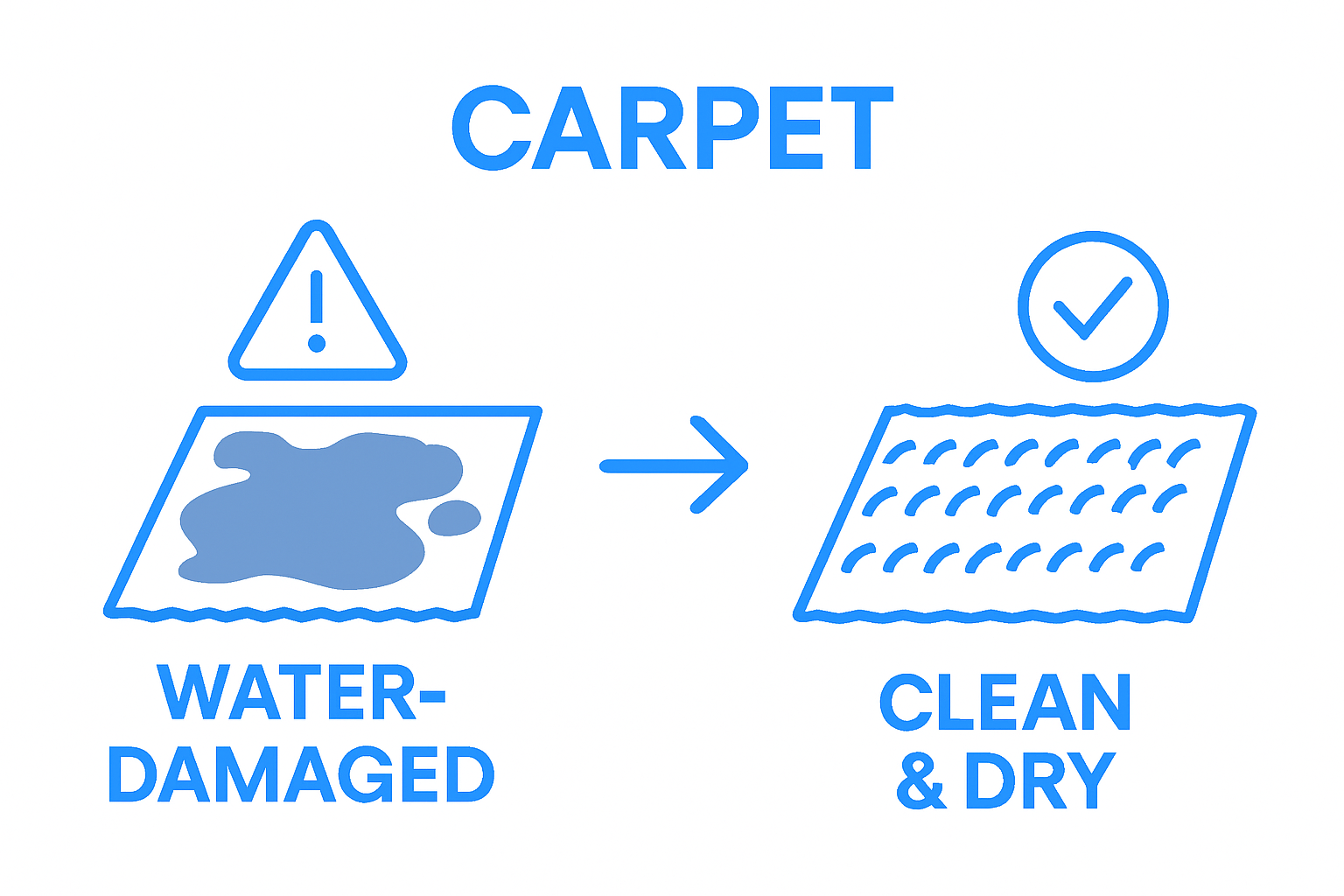
Step 4: Clean and Treat the Affected Areas on the Carpet
Carpet cleaning after water damage requires precision and strategic intervention. In the Yarra Valley, where environmental conditions can rapidly accelerate mould and bacterial growth, targeted treatment becomes crucial for preserving your carpet’s integrity and preventing potential health risks.
Chemical selection is your primary defence mechanism. Choose antimicrobial cleaning solutions specifically designed for water damaged carpets. These specialised solutions neutralise potential bacterial colonies and prevent mould spore development. Dilute the cleaning agent according to manufacturer instructions, understanding that concentration matters more than volume. In areas like Chirnside Park and Mooroolbark, where humidity levels can fluctuate, using the correct chemical strength becomes paramount.
Learn about advanced stain removal techniques to complement your water damage restoration process. Professional grade treatments often involve multiple application stages that address different contamination levels.
Apply your cleaning solution systematically, working from the carpet’s outer edges towards its centre. Use microfibre cloths or soft bristled brushes to gently work the solution into affected areas, avoiding aggressive scrubbing that might damage carpet fibres. Circular motion techniques help distribute cleaning agents more evenly, ensuring comprehensive coverage without creating additional carpet stress.
Key verification steps for effective carpet treatment include:
- Check for uniform cleaning solution absorption
- Monitor colour consistency across treated areas
- Assess surface texture for smoothness
- Verify no residual chemical odours remain
- Confirm no visible staining or discolouration
Remember that thorough cleaning is not just about removing visible contamination. It’s about creating a sanitised environment that prevents future microbial growth. Professional carpet cleaning teams recommend complete treatment within 48 to 72 hours of initial water exposure to minimise long term structural and health complications.
Step 5: Dry the Carpets Completely for Optimal Results
Comprehensive carpet drying represents the final and most critical phase of water damage restoration. In the Yarra Valley, where variable humidity levels can complicate moisture elimination, understanding strategic drying techniques becomes paramount for preventing long term structural damage and potential microbial growth.
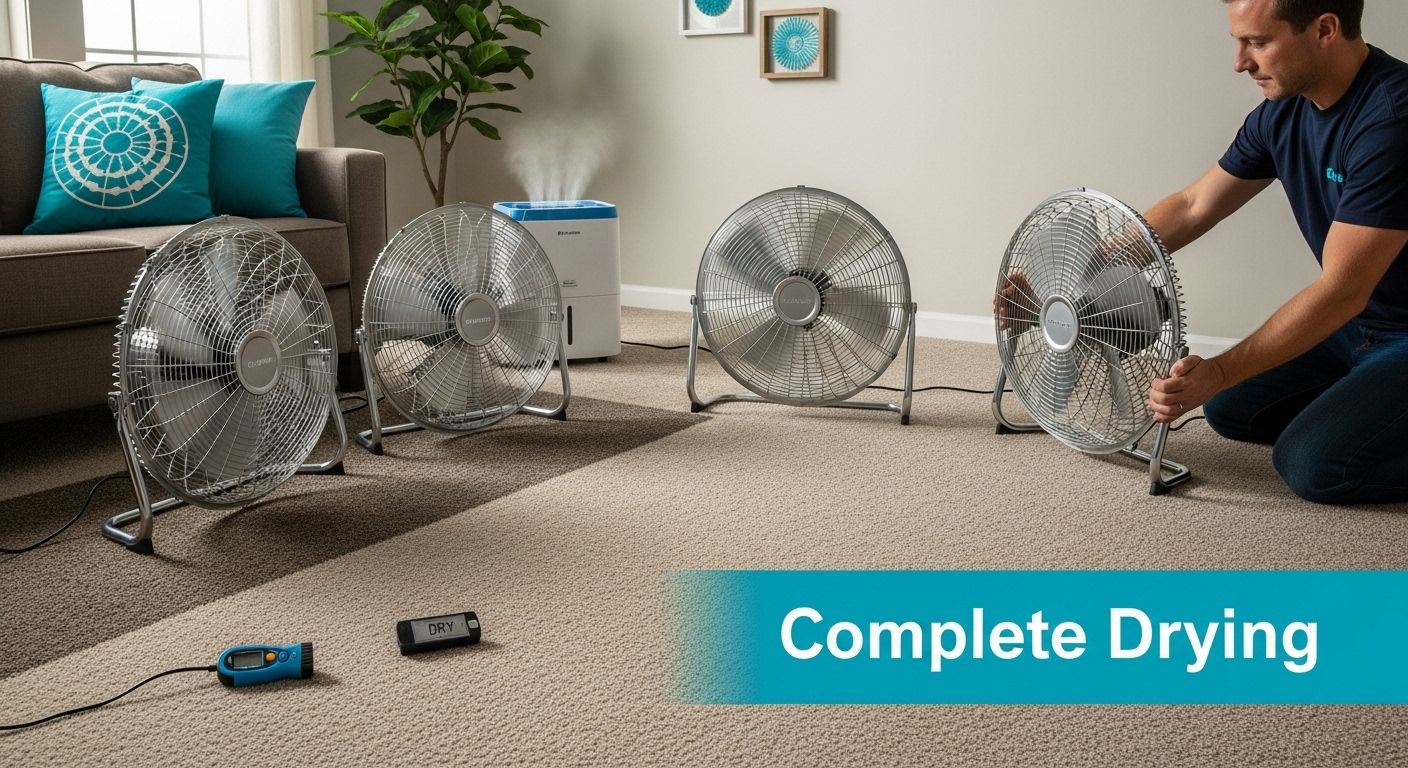
Airflow is your most powerful ally in carpet restoration. Position multiple high velocity fans strategically around the affected area, creating cross ventilation patterns that encourage rapid moisture evaporation. In residential zones like Lilydale and Mooroolbark, where indoor humidity can remain consistently high, strategic fan placement can dramatically reduce drying times. Angle fans at 45 degree positions to maximise air circulation across carpet surfaces and underlying materials.
Explore our comprehensive carpet protection guide to understand long term maintenance techniques beyond initial water damage recovery. Professional drying strategies extend far beyond simple air movement.
Consider incorporating dehumidifiers to extract atmospheric moisture, especially in enclosed spaces with limited natural ventilation. These devices work in concert with fans, actively removing water vapour and accelerating the drying process. Rotate fan positions every few hours to ensure uniform drying and prevent potential moisture pockets from developing in less accessible carpet regions.
Key carpet drying verification steps include:
- Check carpet backing for residual dampness
- Use moisture meter to confirm dryness levels
- Monitor room humidity with hygrometer
- Assess carpet colour and texture consistency
- Verify no musty odours remain
Remember that thorough drying is not merely about surface appearance. It’s about creating an environment that prevents future mould development and preserves your carpet’s structural integrity. Professional carpet cleaning teams recommend maintaining consistent airflow and monitoring moisture levels for 48 to 72 hours after initial water damage to ensure complete restoration.
Step 6: Verify Carpet Restoration and Address Remaining Issues
Carpet restoration culminates in a meticulous verification process that determines the success of your water damage recovery efforts. In the Yarra Valley, where environmental conditions can complicate carpet recovery, understanding comprehensive assessment techniques becomes crucial for long term carpet preservation.
Visual and sensory inspection forms the foundation of verification. Begin by examining the carpet under natural and artificial lighting, looking for subtle colour variations, texture inconsistencies, or remnant water stains. Run your hands across the carpet surface, feeling for any unusual dampness or textural changes that might indicate incomplete restoration. In areas like Mooroolbark and Lilydale, where humidity can mask underlying moisture issues, a thorough tactile examination is essential.
Discover advanced carpet maintenance strategies to complement your restoration efforts and ensure long term carpet health. Professional assessment goes beyond simple visual checks.
Utilise specialised moisture detection equipment to perform a scientific evaluation. Moisture meters provide precise readings that reveal hidden dampness in carpet backing and underlay. Pay special attention to areas near walls, beneath furniture, and in corners where moisture tends to accumulate. These zones often escape standard drying processes and can become potential breeding grounds for mould and bacterial growth.
Key verification steps for comprehensive carpet restoration include:
- Conduct moisture meter readings across multiple carpet zones
- Check for persistent odours indicating incomplete cleaning
- Examine carpet backing for residual dampness
- Verify colour and texture consistency
- Assess potential structural damage to underlying flooring
Remember that successful restoration is not just about immediate appearance. It involves creating a safe, clean environment that prevents future complications. Professional carpet cleaning teams recommend a follow up inspection 72 to 96 hours after initial restoration to ensure complete recovery and identify any potential emerging issues that might require additional intervention.
Below is a checklist table to help you verify each phase of the water damage carpet restoration process is completed thoroughly and nothing crucial is missed.
| Stage | Key Verification Step | What to Check For |
|---|---|---|
| Initial Assessment | Check with moisture meter | Determine extent of moisture |
| Water Extraction | Inspect extraction tool reservoir & carpet for wetness | Ensure minimal visible moisture left |
| Treatment/Cleaning | Monitor for colour consistency and odours | Uniform appearance and no chemical smells |
| Drying | Use moisture meter and hygrometer | Confirm carpet and room are truly dry |
| Final Inspection | Visual, tactile, and odour check | No stains, mustiness, or dampness |
| Follow-up | Conduct moisture meter readings in hidden zones | Hidden dampness and mould risk mitigated |
Transform Water Damaged Carpets with Local Expertise
Water damage can strike without warning, leaving your carpets at risk of mould, stains, and hidden odours. The steps in this guide highlight just how crucial fast and thorough action is for protecting your investment and maintaining a healthy space. Still, even with all the right efforts, challenges like deep moisture, persistent smells, and unseen damage can be overwhelming without specialised knowledge and tools.
Why risk lingering issues or the health of your home when local professionals are ready to help? The Yarra Valley Carpet Cleaning team understands the urgency and complexity behind water-damaged carpets across the region. Our family-owned service uses advanced equipment to deliver effective water extraction, deep steam cleaning, and antimicrobial treatments. Don’t let water emergencies jeopardise your comfort. Take action now and visit Yarra Valley Carpet Cleaning for reliable water damage solutions or browse our Uncategorized Resources for more knowledge. Your path to a spotless and healthier home starts with us – get in touch today and see the results for yourself.
Frequently Asked Questions
What should I do first when my carpet gets wet?
Assess the carpet’s condition and identify the water source. Clean water from a burst pipe is less dangerous than contaminated water. Check for visible water intrusion and moisture levels to determine the extent of the damage.
How can I effectively extract excess water from my carpet?
Use an industrial wet vacuum or carpet water removal machine to extract moisture. Start from the edges of the carpet and work towards the centre, using overlapping patterns to ensure thorough extraction.
What cleaning solutions are best for water-damaged carpets?
Choose antimicrobial cleaning solutions specifically designed for water-damaged carpets. These solutions combat bacteria and mould growth, and always follow the manufacturer’s dilution instructions for optimal effectiveness.
How can I ensure my carpet dries completely after water damage?
Utilise high-velocity fans and consider using dehumidifiers to speed up the drying process. Ensure good airflow by positioning fans strategically, and regularly check for remaining moisture using a moisture meter.