
Vacuuming and steam cleaning might sound like simple chores, but in places like Lilydale and Mooroolbark they mean much more. You might be surprised to learn that steam cleaning can reach temperatures between 120 and 150 degrees Celsius, hot enough to kill most bacteria without any harsh chemicals. That flips the script on old habits because while vacuuming gives you a quick cleanup, steam cleaning goes deep and changes the whole game for families with allergies or anyone keen on a healthier home.
Table of Contents
- What Is Vacuuming And How Does It Work?
- The Concept Of Steam Cleaning And Its Mechanism
- Why Choose One Method Over The Other?
- Examining The Benefits And Drawbacks Of Each
- Real-World Applications Of Vacuuming Versus Steam Cleaning
Quick Summary
| Takeaway | Explanation |
|---|---|
| Vacuuming ensures quick surface cleaning. | This method effectively removes dust, debris, and pet hair from carpets and hard floors in less time. |
| Steam cleaning provides deep sanitisation. | Utilizing high-temperature steam, this technique targets bacteria and embedded dirt without harmful chemicals. |
| Choose methods based on cleaning needs. | Consider surface type, hygiene requirements, and frequency of cleaning when selecting between vacuuming and steam cleaning. |
| Complement both methods for best results. | Regular vacuuming paired with periodic steam cleaning maximises cleanliness and improves indoor air quality. |
| Professional services can enhance cleaning effectiveness. | Engage experts for both vacuuming and steam cleaning to ensure rigorous hygiene standards in commercial and residential spaces. |
What is Vacuuming and How Does It Work?
Vacuuming is a fundamental cleaning technique that uses suction power to remove dirt, dust, debris, and microscopic particles from various surfaces, primarily carpets, rugs, floors, and upholstery. By creating a powerful air current, vacuum cleaners efficiently capture unwanted materials within their collection chamber, providing a quick and effective cleaning method for homes and businesses across the Yarra Valley.
The Mechanics of Suction Cleaning
At its core, a vacuum cleaner operates through a simple yet ingenious mechanism. When activated, an electric motor drives a fan that creates a significant pressure differential. This difference between the internal vacuum pressure and the ambient air pressure generates powerful suction. As the motor rotates, it pulls air through the vacuum’s intake, drawing dust, hair, and small particles along with it.
The cleaning process involves several critical components working in harmony:
- Motor: Generates the suction power by spinning a fan at high speeds
- Filter: Traps microscopic particles, preventing them from being redistributed
- Dust Collection Chamber: Captures and stores the collected debris
- Brush Roller: Agitates carpet fibres to loosen embedded dirt
Practical Applications in Home Maintenance
According to WorkSafe Western Australia, selecting the appropriate vacuuming equipment is crucial for effective cleaning and reducing physical strain. Different surfaces and environments require specific vacuum cleaner designs, from lightweight handheld models for quick cleanups to robust commercial-grade machines for extensive areas.
In local areas like Lilydale, Mooroolbark, and Chirnside Park, homeowners use vacuuming as a primary method for maintaining clean indoor environments. Regular vacuuming not only improves aesthetic appearance but also contributes to better indoor air quality by removing allergens, dust mites, and potential respiratory irritants.
Learn more about advanced carpet cleaning techniques that complement traditional vacuuming methods and provide deeper, more thorough cleaning for your living spaces.
The Concept of Steam Cleaning and Its Mechanism
Steam cleaning is a sophisticated cleaning method that utilises high-temperature water vapour to sanitise and deep clean surfaces, offering a powerful alternative to traditional cleaning techniques. Unlike standard cleaning approaches, steam cleaning penetrates deep into material fibres, eliminating bacteria, dust mites, and embedded dirt without relying on harsh chemical agents.
Understanding Steam Cleaning Technology
The fundamental principle of steam cleaning revolves around converting water into superheated vapour at temperatures typically ranging between 120 to 150 degrees Celsius. When this intense steam is applied to surfaces, it achieves multiple cleaning objectives simultaneously. The extreme heat breaks down dirt molecules, while the microscopic water particles penetrate tiny crevices and porous surfaces, effectively dislodging and removing contaminants.
Key technological components of steam cleaning include:
- Boiler System: Generates high-pressure steam at precise temperatures
- Pressure Nozzle: Controls steam flow and intensity
- Cleaning Head: Distributes steam evenly across surfaces
- Microfibre Attachments: Capture and remove loosened dirt particles
Practical Applications in Professional Cleaning
According to Environmental Protection Agency guidelines, steam cleaning represents an environmentally friendly approach to surface sanitisation. In regions like Lilydale, Mooroolbark, and Chirnside Park, professional cleaning services leverage this technology for comprehensive carpet, upholstery, and hard surface treatments.
Steam cleaning proves particularly effective in eliminating allergens, sanitising spaces, and maintaining hygienic environments without introducing potentially harmful chemical residues. The process is especially beneficial for households with children, elderly residents, or individuals with respiratory sensitivities.
Discover our comprehensive steam cleaning solutions that can transform your home’s cleanliness and provide a deeper, more thorough approach to surface maintenance.
Why Choose One Method Over the Other?
Selecting the appropriate cleaning method depends on multiple factors, including surface type, cleaning objectives, time constraints, and specific environmental conditions. Both vacuuming and steam cleaning offer unique advantages that make them suitable for different scenarios, requiring homeowners and businesses to carefully evaluate their specific needs.
Surface Compatibility and Cleaning Objectives
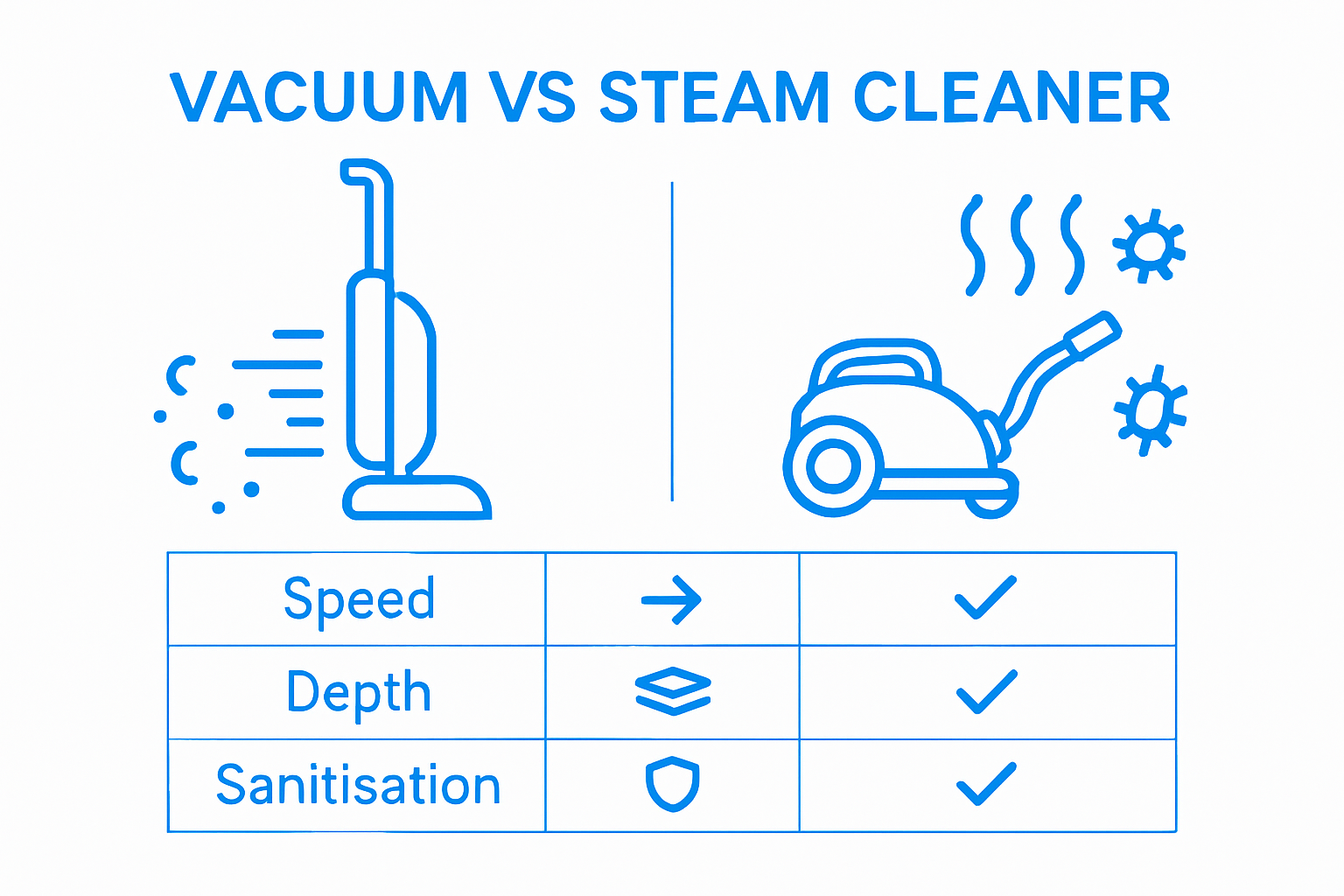
Vacuuming excels at removing loose debris, dust, and dry particulate matter from carpets, rugs, and hard floors. Its primary strength lies in routine maintenance and quick cleaning tasks. Steam cleaning, conversely, provides deeper sanitisation, penetrating fabric fibres and eliminating bacteria, dust mites, and embedded grime that standard vacuuming cannot address.
Key considerations for method selection include:
- Carpet Condition: Frequency of use and level of soiling
- Hygiene Requirements: Presence of allergens or potential bacterial contamination
- Surface Material: Durability and manufacturer cleaning recommendations
- Time and Budget: Frequency of deep cleaning needed
Performance and Health Implications
According to Australian National University research, steam cleaning demonstrates superior effectiveness in reducing allergen concentrations. In local areas like Lilydale, Mooroolbark, and Chirnside Park, residents with respiratory sensitivities or households with children often prefer steam cleaning for its comprehensive sanitisation capabilities.
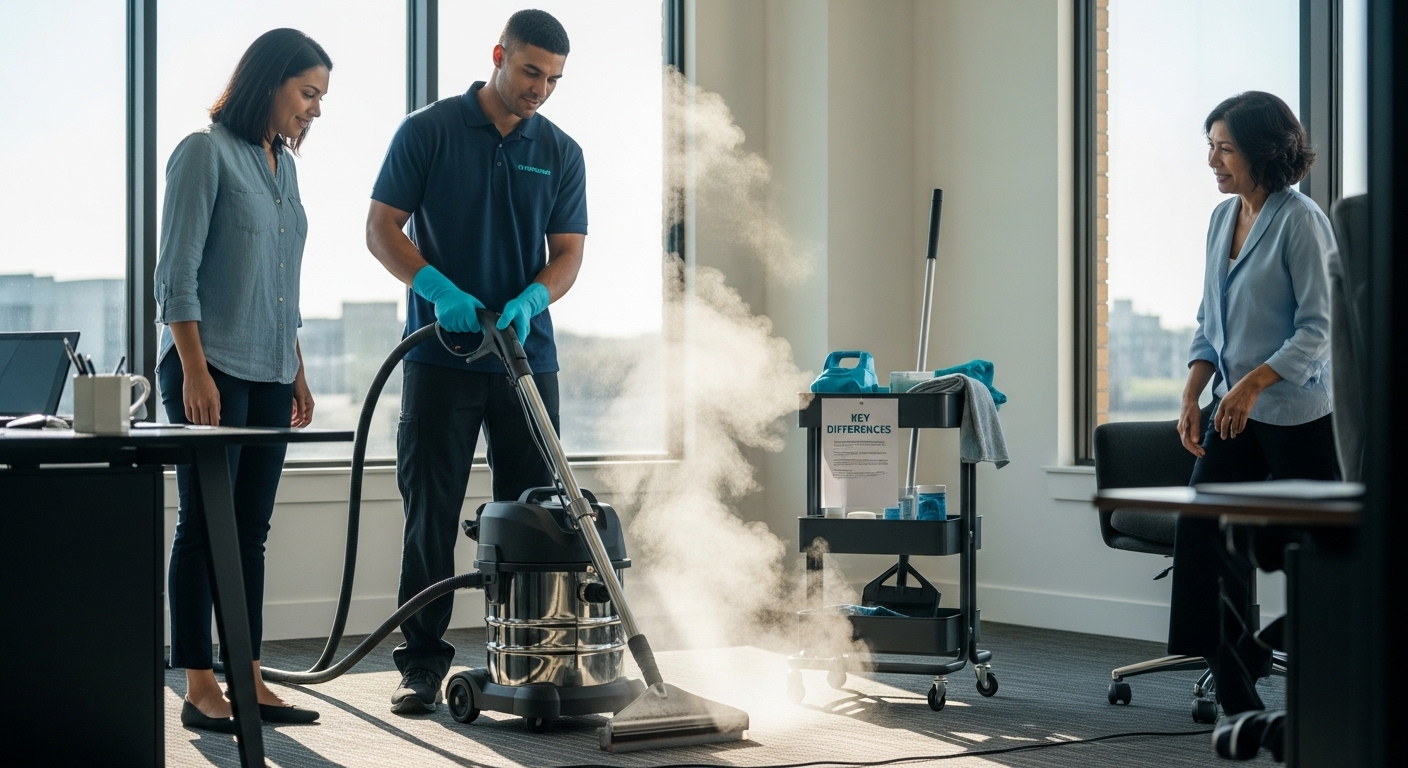
Vacuuming remains essential for daily maintenance, while steam cleaning serves as a periodic deep-cleaning solution. Professional cleaning services recommend integrating both methods to achieve optimal cleanliness and indoor air quality.
Explore our comprehensive cleaning techniques to understand how combining these methods can transform your home’s hygiene and appearance.
Examining the Benefits and Drawbacks of Each
Choosing between vacuuming and steam cleaning requires a nuanced understanding of each method’s strengths and limitations. Professional cleaning experts recognise that no single technique provides a universal solution for all cleaning challenges, making it crucial to comprehend the specific advantages and potential drawbacks of both approaches.
To help clarify the strengths and weaknesses of each cleaning method, the following table compares vacuuming and steam cleaning in terms of their main features and limitations.
| Aspect | Vacuuming | Steam Cleaning |
|---|---|---|
| Cleaning Depth | Surface-level; removes visible dirt, dust, and debris | Deep cleaning; penetrates fibres and sanitises |
| Allergen Removal | Removes loose allergens and dust mites | Eliminates deeply embedded allergens and bacteria |
| Time & Convenience | Fast, suitable for daily maintenance | Slower; requires more preparation and drying time |
| Chemical Use | None required | None; uses only water vapour |
| Equipment Cost | Generally lower | Typically higher due to advanced technology |
| Risk of Water Damage | Very low | Possible on some surfaces if not used correctly |
| Best for | Quick cleans, routine home maintenance | Periodic deep cleans, allergy control, sanitisation |
Vacuuming: Advantages and Limitations
Vacuuming represents a quick, convenient method for routine surface cleaning. Its primary advantages include rapid debris removal, ease of use, and suitability for daily maintenance. However, the technique also presents notable constraints in addressing deeply embedded dirt and potential microbial contamination.
Key advantages of vacuuming include:
- Speed: Rapid surface cleaning with minimal preparation
- Cost-Effectiveness: Lower equipment and operational expenses
- Versatility: Suitable for multiple surface types
- Low Moisture: Minimal risk of water damage
Drawbacks encompass limited deep cleaning capabilities and potential particle redistribution during the process.
Steam Cleaning: Comprehensive Sanitisation Approach
According to Queensland University of Technology research, steam cleaning offers superior sanitisation by effectively eliminating microscopic contaminants. In local areas like Lilydale, Mooroolbark, and Chirnside Park, this method has gained significant traction for its ability to provide deep, chemical-free cleaning.
Steam cleaning’s primary benefits include comprehensive bacterial elimination, deep fabric penetration, and allergen reduction. The technique proves particularly effective for households requiring intensive sanitisation, especially those with children, pets, or individuals with respiratory sensitivities.
However, steam cleaning also presents challenges such as longer processing times, higher equipment costs, and potential surface moisture risks for certain materials.
Learn more about selecting the right cleaning approach for your specific residential or commercial requirements.
Real-World Applications of Vacuuming Versus Steam Cleaning
Both vacuuming and steam cleaning play critical roles in maintaining cleanliness across diverse environments, from residential spaces to commercial facilities. Understanding their practical applications helps homeowners and businesses select the most appropriate cleaning strategy for specific scenarios and surface requirements.
Residential Cleaning Scenarios
In residential settings, vacuuming and steam cleaning serve complementary functions. Vacuuming provides daily maintenance, quickly removing surface-level dust, pet hair, and loose debris from carpets, rugs, and hard floors. Steam cleaning, conversely, offers periodic deep sanitisation, addressing embedded dirt, allergens, and microbial contamination that routine vacuuming cannot effectively eliminate.
Key residential applications include:
- Daily Living Areas: Quick vacuum maintenance
- High-Traffic Zones: Regular steam cleaning for deep sanitisation
- Upholstered Furniture: Combination of vacuuming and occasional steam treatment
- Allergy-Sensitive Spaces: Comprehensive steam cleaning for allergen reduction
Commercial and Specialised Environments
According to Australian Bureau of Statistics research, professional cleaning services employ diverse techniques across different sectors. In local areas like Lilydale, Mooroolbark, and Chirnside Park, businesses ranging from childcare centers to medical facilities rely on both vacuuming and steam cleaning to maintain hygienic environments.
Commercial settings demand rigorous cleaning protocols. While vacuuming addresses routine dust and debris removal, steam cleaning provides critical sanitisation for spaces requiring stringent hygiene standards. Healthcare facilities, educational institutions, and hospitality venues particularly benefit from the comprehensive cleaning approach that combines both methods.
Explore our advanced cleaning solutions designed to meet the unique requirements of residential and commercial spaces.
Confused About the Best Way to Keep Your Carpets Spotless? Let a Local Expert Help
Still wondering whether regular vacuuming is enough or if your home needs the deeper sanitation of steam cleaning? Many homeowners across the Yarra Valley struggle to choose between these approaches, especially when battling stubborn stains, lingering smells, or allergy concerns. As the article explains, vacuuming lifts daily dust and debris, while professional steam cleaning penetrates fibres to remove allergens and bacteria that simple suction just cannot reach.
If you want peace of mind and a healthier home environment, trust the experienced team at Yarra Valley Carpet Cleaning. We specialise in advanced steam cleaning and stain removal for both homes and businesses. Browse our Uncategorized Archives or get in touch now for a tailored service. Discover just how fresh your carpets and upholstery can be. Book today and enjoy premium cleaning with genuine local care.
Frequently Asked Questions
What is the primary difference between vacuuming and steam cleaning?
Vacuuming focuses on removing loose dirt, dust, and debris from surfaces, while steam cleaning uses high-temperature steam to sanitise and deep clean materials, effectively eliminating bacteria and allergens.
When should I use steam cleaning instead of vacuuming?
Steam cleaning should be used when deep sanitisation is required, especially in homes with children or pets, or in situations where allergens and bacteria are a concern. Vacuuming is suitable for regular maintenance and quick clean-ups.
Can vacuuming eliminate allergens from carpets and upholstery?
Vacuuming can remove loose allergens such as dust and pet hair, but it may not effectively eliminate deeply embedded allergens or bacteria. For comprehensive allergen reduction, steam cleaning is recommended.
Are there any surfaces where steam cleaning is not recommended?
Steam cleaning is not suitable for all surfaces. Delicate fabrics, certain types of hardwood, and materials sensitive to moisture may sustain damage. Always check manufacturer guidelines before using steam cleaning on specific surfaces.
Recommended
- How Steam Cleaning Works: A Practical Guide for Homes and Businesses – Yarra Valley Carpet Cleaning
- Steam Cleaning vs Dry Cleaning: Best Options for Yarra Valley in 2025 – Yarra Valley Carpet Cleaning
- Commercial vs Residential Cleaning: Key Differences for Yarra Valley in 2025 – Yarra Valley Carpet Cleaning
- Why Choose Steam Cleaning? Understanding Its Benefits – Yarra Valley Carpet Cleaning