
Choosing between hard floors and carpets feels simple at first. They both cover your space and give each room its own look. Most people think that picking a floor comes down to the way it feels or suits the décor, but there is so much more riding on your decision. Professional cleaning can remove up to 98% of embedded dirt and bacteria from carpets, which shows just how much your flooring type affects your health and home. The biggest surprise is that what’s under your feet could be deciding how clean your air is and how long your investment lasts.
Table of Contents
- Defining Hard Floors And Carpet: Key Characteristics
- The Importance Of Proper Care For Each Flooring Type
- Understanding Maintenance Methods For Hard Floors And Carpets
- Common Issues Faced With Hard Floors And Carpets
- Environmental Considerations In Flooring Care
Quick Summary
| Takeaway | Explanation |
|---|---|
| Choose flooring based on lifestyle needs | Evaluate your daily activities and preferences when selecting hard floors or carpets to ensure optimal functionality and aesthetics. |
| Implement routine and professional cleaning | Regular vacuuming for carpets and surface cleaning for hard floors, combined with professional deep cleaning, enhances longevity and hygiene. |
| Address spills immediately to prevent damage | Quick spot cleaning helps mitigate stains and maintains the integrity of both carpet and hard floor surfaces over time. |
| Protect from environmental factors | Manage humidity and sunlight exposure to prevent deterioration of flooring materials, especially in the diverse climate of the Yarra Valley. |
| Understand material-specific care | Utilize tailored cleaning techniques compatible with each flooring type to preserve their unique features and longevity. |
Defining Hard Floors and Carpet: Key Characteristics
Understanding the fundamental characteristics of hard floors and carpets is crucial for effective home maintenance and care. These two flooring types represent distinctly different surfaces with unique properties, maintenance requirements, and aesthetic qualities that significantly impact your living environment.
Material Composition and Structure
Hard floors encompass a variety of materials including timber, ceramic tiles, vinyl, laminate, and natural stone. Each material brings its own set of characteristics – timber floors offer warmth and natural grain patterns, while ceramic tiles provide durability and moisture resistance. Learn more about deep cleaning different floor types in our comprehensive guide.
Carpets, by contrast, are textile floor coverings typically constructed from synthetic or natural fibres like nylon, polyester, wool, or polypropylene. Their woven or tufted structure creates a soft, insulating surface that traps heat and provides sound absorption, making them popular in residential settings across the Yarra Valley, from Lilydale to Mooroolbark.
Performance and Maintenance Characteristics
The performance differences between hard floors and carpets are substantial. Hard floors generally offer easier cleaning and are more resistant to stains and moisture, making them ideal for high-traffic areas or spaces prone to spills. They typically require sweeping, mopping, and occasional professional deep cleaning.
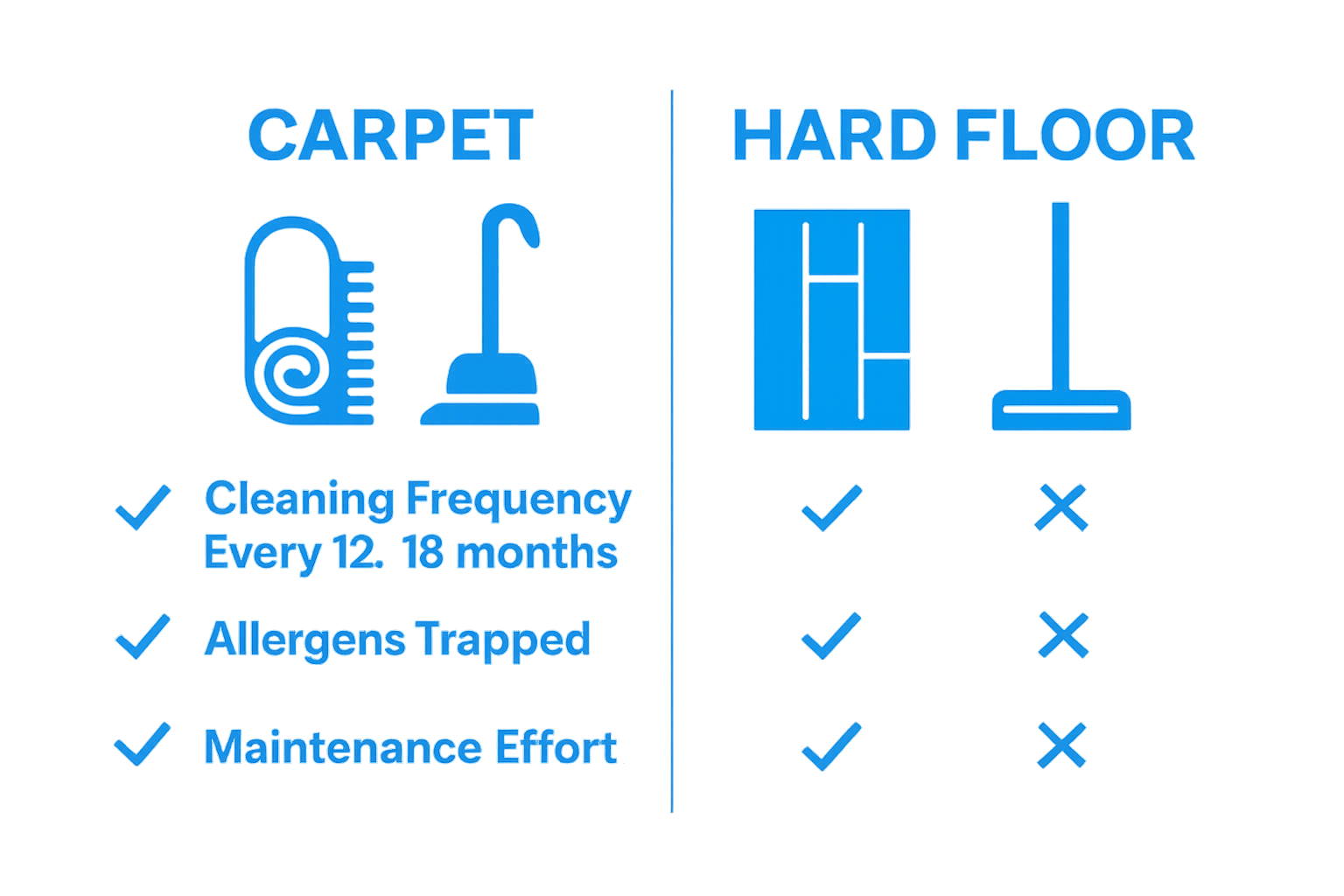
Carpets demand more intricate maintenance strategies. Their fibrous structure can trap dust, allergens, and microscopic particles, necessitating regular vacuuming and periodic professional steam cleaning. According to research from the Australian Cleaning and Restoration Institute, professional carpet cleaning every 12-18 months helps maintain fibre integrity and indoor air quality.
Key maintenance considerations for both floor types include:
- Immediate spot cleaning for spills
- Regular surface cleaning and maintenance
- Professional deep cleaning at recommended intervals
- Protection from excessive moisture and direct sunlight
Choosing between hard floors and carpets involves evaluating your specific lifestyle, aesthetic preferences, and maintenance capabilities. Each flooring type offers unique benefits and challenges that require tailored care approaches.
To help you compare the two most common home flooring options, the table below summarises the key characteristics, strengths, and care challenges for hard floors and carpets.
| Flooring Type | Main Materials | Key Features | Maintenance Needs | Notable Challenges |
|---|---|---|---|---|
| Hard Floors | Timber, ceramic tiles, vinyl, laminate, stone | Durable, easy cleaning, moisture resistant | Sweeping, mopping, deep cleaning | Susceptible to scratching, warping, sun fading |
| Carpets | Nylon, polyester, wool, polypropylene | Warmth, sound absorption, soft underfoot | Vacuuming, spot cleaning, steam | Traps allergens, stains, matting, mould risk |
The Importance of Proper Care for Each Flooring Type
Proper maintenance of hard floors and carpets goes far beyond aesthetic appeal – it directly impacts the longevity, hygiene, and overall value of your home. Understanding the nuanced care requirements for different flooring surfaces ensures they remain functional, attractive, and durable over extended periods.
Protecting Investment and Surface Integrity
Each flooring type represents a significant financial investment that requires strategic maintenance. Hard floors like timber or natural stone can deteriorate rapidly without appropriate care, leading to scratching, discolouration, and structural damage. Explore our family-friendly cleaning tips for comprehensive home maintenance.
Carpets, with their intricate fibrous structure, are even more vulnerable to degradation. Regular professional cleaning prevents fibre breakdown, removes embedded dirt, and maintains the carpet’s original texture and appearance. In high-traffic areas across the Yarra Valley, from Lilydale to Mooroolbark, this becomes particularly crucial.
Health and Hygiene Considerations
Beyond visual appeal, proper floor care directly influences indoor air quality and health. Carpets can harbour microscopic allergens, dust mites, and bacteria within their fibres, potentially triggering respiratory issues. According to research from the Australian Indoor Air Quality Research Institute, regular professional cleaning significantly reduces airborne particulate matter.
Hard floors present different hygiene challenges. Grout lines in tiles, microscopic cracks in timber, and surface imperfections can accumulate bacteria and mould if not properly maintained. Professional cleaning techniques help sanitise these surfaces, creating a healthier living environment.
Key benefits of consistent floor maintenance include:
- Preservation of original surface quality
- Extended lifespan of flooring materials
- Improved indoor air quality
- Prevention of permanent staining and damage
- Enhanced aesthetic appeal of living spaces
Whether you have hardwood, tiles, or plush carpeting, tailored maintenance strategies are essential.
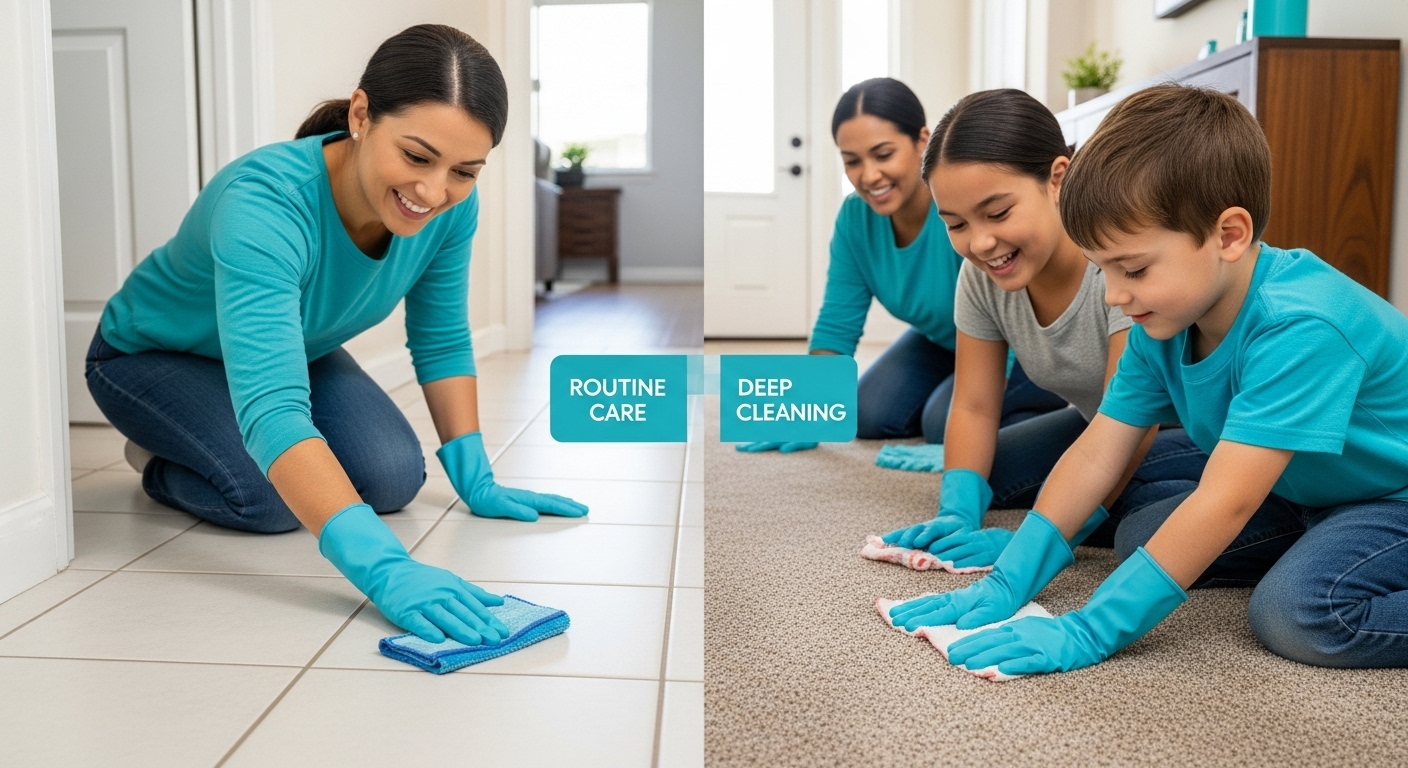 Professional cleaning services specialising in different floor types can provide targeted solutions that protect your investment and maintain your home’s overall cleanliness and appearance.
Understanding Maintenance Methods for Hard Floors and Carpets
Effective floor maintenance demands a comprehensive understanding of specialised cleaning techniques tailored to specific surface materials. Different flooring types require unique approaches to preserve their structural integrity, aesthetic appeal, and long-term performance.
Routine and Professional Cleaning Techniques
Hard floors necessitate distinct cleaning strategies based on their composition. Timber floors require gentle cleaning with microfibre mops and pH-neutral cleaners, avoiding excessive moisture that might cause warping. Ceramic and porcelain tiles demand grout-specific treatments to prevent discolouration and bacterial growth. Learn more about professional cleaning best practices for commercial spaces.
Carpet maintenance involves more intricate processes. Regular vacuuming removes surface debris, but professional steam cleaning penetrates deep into carpet fibres, extracting embedded dirt, allergens, and microscopic contaminants. In high-traffic areas across the Yarra Valley, from Mooroolbark to Lilydale, this becomes particularly crucial for maintaining carpet health.
Advanced Cleaning Technology and Considerations
Modern cleaning technologies have revolutionised floor maintenance. According to research from the Australian Cleaning and Restoration Institute, advanced steam cleaning and extraction methods can remove up to 98% of embedded dirt and bacteria from carpet fibres.
Professional cleaning services utilise specialised equipment and eco-friendly solutions that adapt to different floor types.
These methods not only clean surfaces but also provide protective treatments that extend flooring lifespan and maintain aesthetic quality.
Key considerations for effective floor maintenance include:
- Using material-specific cleaning solutions
- Avoiding excessive moisture on sensitive surfaces
- Regular professional deep cleaning
- Immediate treatment of spills and stains
- Implementing protective treatments
Successful floor maintenance requires a proactive, knowledgeable approach that considers the unique characteristics of each flooring material. By understanding and implementing targeted cleaning strategies, homeowners can preserve their investment and maintain a clean, healthy living environment.
Common Issues Faced with Hard Floors and Carpets
Floor surfaces are subjected to continuous wear and environmental challenges that can compromise their structural integrity and aesthetic appeal. Understanding these potential issues helps homeowners implement proactive maintenance strategies that protect their valuable flooring investments.
Surface Degradation and Damage Patterns
Hard floors experience unique deterioration mechanisms. Timber floors are particularly susceptible to moisture damage, causing warping, splitting, and colour distortion. Ceramic and stone surfaces can develop micro-fractures from heavy impacts, temperature fluctuations, and improper cleaning techniques. Check out our comprehensive guide on addressing common carpet stains.
Carpets face more complex degradation challenges. Their fibrous structure traps dirt, allergens, and moisture, leading to matting, discolouration, and potential mould growth. High-traffic areas in Yarra Valley homes, from Mooroolbark to Lilydale, experience accelerated wear that can rapidly compromise carpet quality.
Environmental and Usage Impact
Multiple environmental factors contribute to flooring deterioration. According to research from the Australian Building and Renovation Authority, indoor humidity levels between 40-60% significantly impact floor material longevity. Sunlight exposure can cause fading and material breakdown, while temperature variations create expansion and contraction stress.
Pet ownership, children, and daily foot traffic introduce additional wear challenges. Sharp objects, liquid spills, and constant friction gradually erode both hard floor and carpet surfaces, necessitating strategic maintenance approaches.
Critical issues affecting floor surfaces include:
- Moisture penetration and water damage
- UV radiation and colour degradation
- Mechanical wear from foot traffic
- Chemical damage from inappropriate cleaning agents
- Biological contamination like mould and bacteria
Recognising these common challenges allows homeowners to implement targeted protection strategies. Proactive maintenance, professional cleaning, and understanding material-specific vulnerabilities are essential for preserving floor surfaces and maintaining a healthy, attractive living environment.
Environmental Considerations in Flooring Care
Environmental factors play a pivotal role in determining the longevity, performance, and maintenance requirements of different flooring surfaces. Understanding how temperature, humidity, sunlight, and local conditions impact hard floors and carpets helps homeowners develop targeted preservation strategies.
Climate and Humidity Impact
Different flooring materials respond uniquely to environmental variations. Timber floors are particularly sensitive to humidity fluctuations, experiencing expansion and contraction that can cause warping, splitting, and structural instability. Ceramic and stone surfaces might develop micro-fractures during extreme temperature shifts. Learn more about maintaining clean and healthy floor surfaces throughout the year.
Carpets absorb moisture differently, making them susceptible to mould and mildew growth in humid environments. In regions like the Yarra Valley, from Mooroolbark to Lilydale, where humidity levels can vary significantly, understanding moisture management becomes crucial for carpet preservation.
Sunlight and UV Radiation Exposure
Ultraviolet radiation presents substantial challenges for floor surfaces. According to research from the Australian Environmental Materials Institute, prolonged sun exposure can cause significant colour fading and material degradation across various flooring types.
Hard floors like timber and certain tiles are susceptible to discolouration and finish breakdown when exposed to direct sunlight. Carpets experience similar challenges, with fibres losing vibrancy and structural integrity under consistent UV radiation. Strategic placement of window treatments, rugs, and periodic rotation of furniture can help mitigate these environmental impacts.
Key environmental considerations for floor maintenance include:
- Monitoring indoor humidity levels
- Protecting surfaces from direct sunlight
- Managing temperature fluctuations
- Implementing preventative moisture barriers
- Using appropriate window treatments
Successful floor care requires a holistic approach that considers the complex interactions between flooring materials and environmental conditions. By understanding these intricate relationships, homeowners can develop comprehensive maintenance strategies that preserve their floor surfaces and maintain a healthy, attractive living environment.
The following table provides a concise overview of how environmental factors affect the longevity and upkeep requirements for hard floors and carpets in Australian homes.
| Environmental Factor | Impact on Hard Floors | Impact on Carpets |
|---|---|---|
| Humidity | Can cause timber warping or cracks in tiles | May lead to mould and mildew growth |
| Sunlight/UV Exposure | Fading, finish breakdown, material degradation | Fading, loss of fibre strength and vibrancy |
| Temperature Fluctuations | Expansion/contraction causing surface stress | Can affect adhesive and promote fraying |
| Moisture | Promotes warping, swelling, and surface breakdown | Increases risk of mould and odours |
Protect Your Floors and Breathe Easier with Expert Care
You have just learned how the demands of hard floor and carpet maintenance shape the comfort, cleanliness and value of your home. The article highlights real challenges faced by homeowners – from stubborn stains on soft carpet fibres to the silent build-up of allergens and the risk of damage on timber or tile. These pain points can leave you feeling frustrated and worried about your family’s health or the long-term condition of your flooring.
Why struggle with surface wear, ingrained dirt or fast-spreading moisture problems when help is close at hand? The team at Yarra Valley Carpet Cleaning has the specialised skills and advanced equipment needed to care for any surface, delivering spotless results every time. For reliable local support and solutions tailored to every flooring type, discover more on our Uncategorized Archives or connect directly with us at Yarra Valley Carpet Cleaning. Do not wait until minor issues become costly repairs. Get in touch now to ask about our deep cleaning services or to book your next professional clean.
Frequently Asked Questions
What are the main differences between hard floors and carpets?
Hard floors are made from materials like timber, ceramic tiles, vinyl, and natural stone, offering durability and ease of cleaning. Carpets are textile floor coverings made from natural or synthetic fibres, providing warmth and sound absorption but requiring more intricate maintenance.
How do I maintain hard floors effectively?
To maintain hard floors, regularly sweep and mop them using appropriate cleaners for the specific material. Additionally, consider professional deep cleaning to remove built-up dirt and ensure their longevity, while protecting them from excessive moisture and scratches.
What are the best maintenance practices for carpets?
Regular vacuuming is essential for carpet maintenance to remove surface debris, followed by professional steam cleaning every 12-18 months to prevent fibre breakdown and improve indoor air quality. Promptly address spills with spot cleaning to prevent stains.
How does the environment impact the maintenance of flooring types?
Environmental factors like humidity and sunlight exposure can affect the integrity of both hard floors and carpets. For instance, high humidity can lead to mould growth in carpets, while direct sunlight can cause fading and degradation in both hard floors and carpets.
Recommended
- Family-Friendly Carpet Cleaning Tips for Safe and Fresh Homes 2025 – Yarra Valley Carpet Cleaning
- Carpet Cleaning Hotels: Expert Tips for Clean Spaces 2025 – Yarra Valley Carpet Cleaning
- How Often Clean Carpets: Guide for Yarra Valley Homes 2025 – Yarra Valley Carpet Cleaning
- Deep Cleaning Carpets at Home: 2025 Guide for Yarra Valley – Yarra Valley Carpet Cleaning
- The Actionable Guide to the Best Flooring for High Traffic Areas – Mats4U USA