
Carpet care usually gets treated as a routine chore in property management, just another line on the to-do list. But the numbers say otherwise. Regular professional maintenance can extend a carpet’s lifespan by up to 50 percent according to industry research. Most people think fresh carpets are all about looks and first impressions. Turns out, effective carpet care is a strategic move that saves money, keeps tenants healthier, and can even help property managers avoid major headaches down the track.
Table of Contents
- What Is Carpet Care And Why Is It Important For Property Managers?
- Key Concepts In Carpet Materials And Maintenance
- The Impact Of Proper Carpet Care On Property Management
- Understanding Carpet Cleaning Techniques And Their Benefits
- Long-Term Considerations For Carpet Upkeep In Managed Properties
Quick Summary
| Takeaway | Explanation |
|---|---|
| Regular carpet care is crucial for property management | Effective maintenance enhances durability, reduces replacement costs, and elevates property value. |
| Understand different carpet materials for proper care | Each material type requires specific maintenance approaches tailored to its unique properties. |
| Incorporate professional cleaning techniques | Employ methods like steam cleaning or encapsulation to ensure thorough cleaning and maintain quality. |
| Prioritise preventive maintenance schedules | Consistent assessments and cleaning can preempt extensive damage and unexpected costs. |
| Consider environmental factors affecting carpets | Evaluate foot traffic, climate, and tenant habits to optimise maintenance strategies and increase lifespan. |
What is Carpet Care and Why is it Important for Property Managers?
Carpet care represents a strategic approach to maintaining the cleanliness, appearance, and longevity of carpeted surfaces in residential and commercial properties. For property managers in the Yarra Valley, understanding carpet care goes far beyond simple aesthetic maintenance.
The Core Elements of Professional Carpet Care
Professional carpet care involves comprehensive management of carpet surfaces through systematic cleaning, protection, and preservation techniques. According to research from the Carpet and Rug Institute, regular professional maintenance can significantly extend carpet lifespan and maintain indoor environmental quality.
Key components of effective carpet care include:
- Regular vacuuming to remove daily accumulated dirt and debris
- Prompt stain removal using appropriate cleaning solutions
- Periodic professional deep cleaning to extract embedded contaminants
- Protective treatments that create barriers against future staining
Economic and Health Implications for Property Management
For property managers in locations like Lilydale, Chirnside Park, and Croydon, carpet care represents a critical investment strategy. Well-maintained carpets reduce long-term replacement costs, enhance property value, and create healthier living environments. Properly maintained carpets prevent the accumulation of allergens, dust mites, and potential health hazards.
Understanding carpet care allows property managers to make informed decisions about maintenance schedules, cleaning protocols, and budget allocation. By implementing systematic carpet care practices, managers can protect their property investments while ensuring tenant satisfaction. Learn more about maintaining carpets in rental properties.
Key Concepts in Carpet Materials and Maintenance
Understanding carpet materials and maintenance requires a nuanced approach that considers the specific characteristics of different carpet types, their performance attributes, and tailored care strategies. For property managers in the Yarra Valley, this knowledge is crucial for making informed decisions about flooring investments.
Carpet Material Classifications
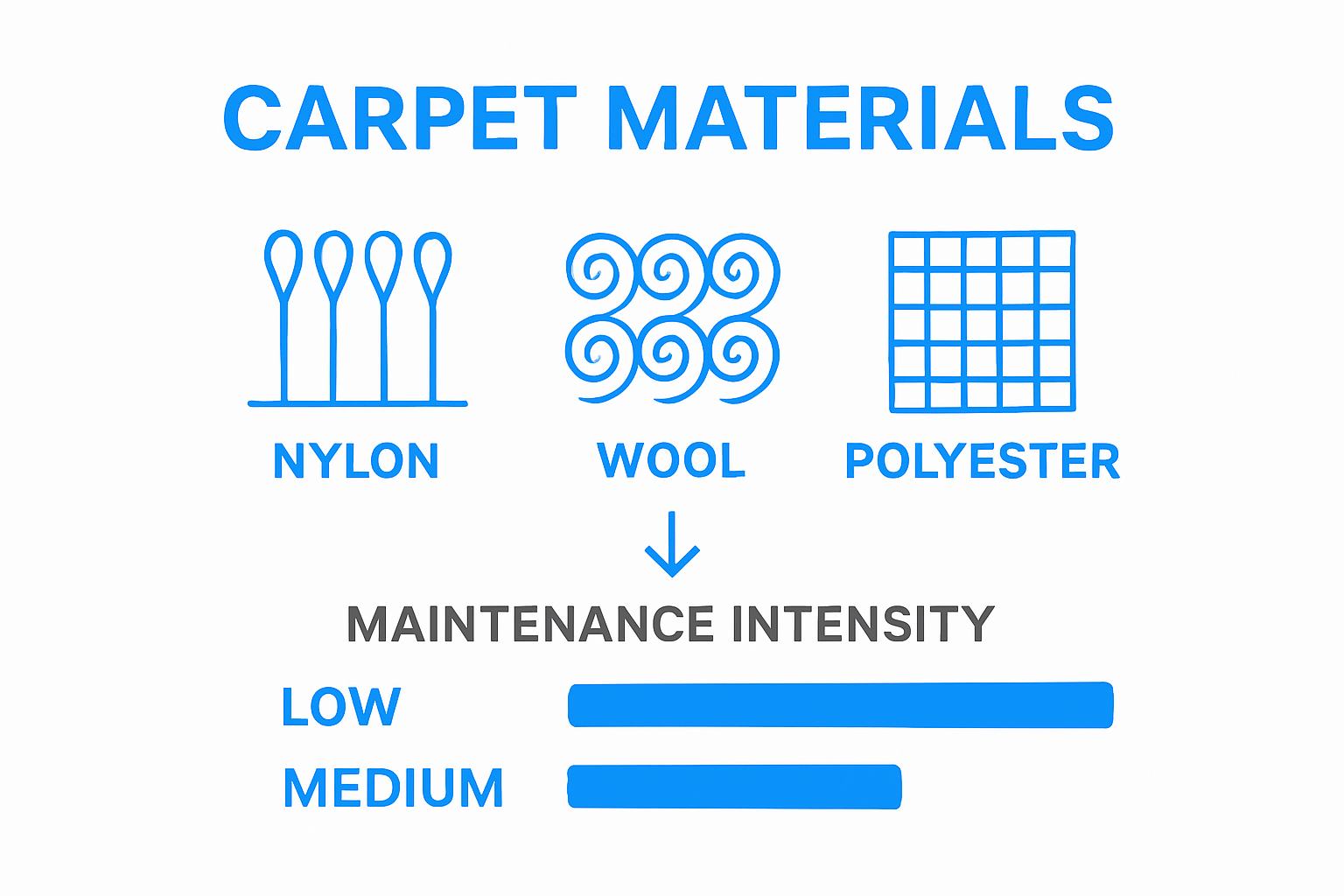
Carpet materials significantly influence cleaning techniques, durability, and maintenance requirements. According to flooring industry research, carpet materials can be broadly categorised into several key types:
- Synthetic Fibres: Nylon, polyester, and polypropylene
- Natural Fibres: Wool, cotton, and silk
- Blended Fibres: Combinations designed to enhance specific performance characteristics
Each material presents unique challenges and requires specialised maintenance approaches. Synthetic fibres, for instance, offer superior stain resistance and durability, making them popular in high-traffic areas like commercial spaces in Lilydale and Chirnside Park.
Here is a comparison of the main carpet material types and their key properties, which can help property managers determine the appropriate care approach for each type:
| Carpet Material Type | Common Examples | Key Features / Properties | Maintenance Considerations |
|---|---|---|---|
| Synthetic Fibres | Nylon, Polyester, Polypropylene | Strong stain resistance, high durability | Suits high-traffic areas, responds well to deep cleaning |
| Natural Fibres | Wool, Cotton, Silk | Luxurious feel, more delicate, good insulation | Requires gentle cleaning, can be stain-prone |
| Blended Fibres | Synthetic & Wool mix | Combines strengths of mixed fibres | Maintenance varies, check manufacturer guidelines |
Performance and Maintenance Considerations
Performance characteristics directly impact maintenance strategies. Fibre density, pile height, and construction method determine a carpet’s resilience and cleaning requirements. Wool carpets demand gentler cleaning methods compared to robust synthetic alternatives.
Property managers must consider factors such as:
- Traffic volume and usage patterns
- Specific environmental conditions
- Tenant demographic and potential wear
- Budget for ongoing maintenance
Explore advanced carpet maintenance techniques to protect your property investments and extend carpet lifespan. Understanding these material nuances enables strategic maintenance planning that balances aesthetic appeal, durability, and cost-effectiveness.
The Impact of Proper Carpet Care on Property Management
Proper carpet care extends far beyond aesthetic maintenance, representing a critical strategic approach that directly influences property value, tenant satisfaction, and long-term financial performance. For property managers in the Yarra Valley, understanding these comprehensive implications is essential.
Financial and Asset Protection Strategies
Carpet maintenance is fundamentally an investment protection strategy. According to research from the American Lung Association, regular professional cleaning prevents premature carpet deterioration and maintains property asset value. Property managers can significantly reduce replacement costs by implementing systematic maintenance protocols.
Key financial considerations include:
- Extending carpet lifespan through strategic maintenance
- Reducing long-term replacement expenses
- Minimising potential tenant dispute risks
- Maintaining property market competitiveness
Health and Environmental Implications
Beyond financial considerations, proper carpet care directly impacts indoor environmental quality. Carpets act as passive air filters, trapping dust, allergens, and potential contaminants. Without regular professional cleaning, these accumulated particles can compromise tenant health and property air quality.
Property managers in locations like Lilydale, Croydon, and Chirnside Park must recognize that carpet maintenance is a critical health management strategy. Professional cleaning removes embedded pollutants, creating safer living environments and demonstrating proactive property management.
Discover expert carpet maintenance techniques that balance cost-effectiveness with comprehensive property care. Strategic carpet maintenance represents a sophisticated approach to property management that protects both financial and human assets.
Understanding Carpet Cleaning Techniques and Their Benefits
Carpet cleaning is a sophisticated science that combines advanced technology, targeted methodologies, and specialised knowledge to restore and maintain carpet integrity. Property managers in the Yarra Valley must understand the nuanced approaches that ensure optimal carpet performance and longevity.
Professional Cleaning Methodologies
Professional carpet cleaning encompasses multiple sophisticated techniques designed to address specific carpet materials and contamination levels. According to research from the Carpet and Rug Institute, different cleaning methods produce varying outcomes based on carpet composition and environmental conditions.
Key professional cleaning techniques include:
- Steam Cleaning: Deep extraction method using high-temperature water
- Dry Cleaning: Low-moisture technique suitable for delicate carpet fibres
- Hot Water Extraction: Comprehensive cleaning approach removing deep-seated dirt
- Encapsulation: Modern technique using specialized cleaning polymers
Performance and Maintenance Considerations
Each cleaning technique offers unique advantages for property managers in locations like Lilydale, Croydon, and Chirnside Park. Choosing the appropriate method depends on multiple factors such as carpet material, traffic volume, and specific contamination challenges.
Critical performance considerations involve:
- Minimal drying time
- Preservation of carpet structural integrity
- Comprehensive soil and allergen removal
- Prevention of future contamination
This table outlines the primary professional carpet cleaning methods, their suitability for different carpet types, and main advantages to help property managers select the right option for their properties:
| Cleaning Method | Best For | Main Advantages | Notes |
|---|---|---|---|
| Steam Cleaning | Most carpet types, especially synthetics | Deep extraction, excellent soil removal | Longer drying time |
| Dry Cleaning | Delicate/natural fibres | Low moisture, rapid drying | Not as deep as steam/hot water |
| Hot Water Extraction | High-traffic, synthetic carpets | Thorough deep cleaning, removes embedded dirt | Needs professional equipment |
| Encapsulation | Commercial, synthetic carpets | Quick drying, effective for routine maintenance | Modern technique, best on light/medium soiling |
Explore professional carpet cleaning techniques that deliver exceptional results. Understanding these advanced cleaning methodologies empowers property managers to make informed decisions that protect their investments and maintain superior property standards.
Long-Term Considerations for Carpet Upkeep in Managed Properties
Property managers must adopt a strategic approach to carpet maintenance that balances proactive preservation with cost-effective management. Understanding the holistic lifecycle of carpeted surfaces requires comprehensive planning and systematic interventions designed to maximise asset longevity and performance.
Strategic Maintenance Planning
Long-term carpet upkeep transcends routine cleaning and involves sophisticated asset management strategies. According to research from the Carpet and Rug Institute, successful property managers implement systematic approaches that anticipate potential degradation and mitigate risks before they become significant problems.
Key strategic considerations include:
- Predictive maintenance scheduling
- Comprehensive wear and tear assessments
- Material-specific preservation techniques
- Budget allocation for periodic replacement
Environmental and Usage Impact Analysis
Carpet degradation in properties across the Yarra Valley regions like Lilydale, Croydon, and Chirnside Park is influenced by multiple environmental and usage factors. Property managers must assess unique contextual elements that accelerate carpet wear, such as local climate conditions, tenant demographics, and specific property usage patterns.
Critical environmental impact factors involve:
- Humidity and temperature variations
- Foot traffic intensity
- Potential exposure to sunlight
- Presence of children or pets
Explore comprehensive carpet maintenance strategies that transform reactive approaches into proactive asset management. Developing a nuanced understanding of carpet lifecycle management enables property managers to make informed decisions that protect their investments and maintain superior property standards.

Protect Your Property’s Value and Tenants with Professional Carpet Care
As a property manager, you know how crucial it is to safeguard your investment and provide a clean, healthy environment for your tenants. The article touched on challenges like carpet wear, allergy and dust build-up, and managing long-term maintenance costs across busy properties. Finding time for regular deep cleans and choosing the right techniques for different carpet materials can be overwhelming on your own.
Let our trusted local team at Yarra Valley Carpet Cleaning take these worries off your plate. We specialise in deep steam cleaning, stain removal, odour treatment, and tailored solutions for both residential and commercial properties. With advanced tools and eco-friendly products, we help you extend carpet lifespan and reduce ongoing expenses. For more tips on keeping your properties in top shape, explore our latest insights or reach out now to see how easy it is to enhance your property’s appeal. Book with us today for a cleaner, fresher space and peace of mind knowing your assets are cared for by Yarra Valley locals who understand your needs.
Frequently Asked Questions
What are the core elements of professional carpet care?
Professional carpet care includes regular vacuuming, prompt stain removal, periodic professional deep cleaning, and protective treatments to extend carpet lifespan and maintain indoor air quality.
How does carpet material influence cleaning techniques?
Different carpet materials, such as synthetic and natural fibres, require tailored cleaning approaches. Synthetic fibres tend to be more durable and stain-resistant, while natural fibres like wool need gentler cleaning methods.
What are the financial benefits of regular carpet maintenance for property managers?
Regular carpet maintenance helps extend carpet lifespan, reduces replacement costs, minimises tenant disputes over carpet condition, and maintains the property’s market competitiveness.
How can property managers ensure optimal carpet cleaning results?
Property managers can achieve optimal results by selecting the appropriate cleaning method based on carpet material, traffic volume, and specific contamination challenges, while ensuring minimal drying time and thorough soil removal.