
TL;DR:
- Yarra Valley’s variable climate requires season-specific carpet and upholstery cleaning routines.
- Natural fibers like wool and cotton need gentle, low-moisture cleaning to prevent damage in damp seasons.
- Professional deep cleaning helps manage mould, odours, and embedded dirt caused by climate fluctuations.
Living in the Yarra Valley means enjoying one of Victoria’s most beautiful regions, but it also means dealing with a climate that can be genuinely tough on carpets and upholstery. Damp winters roll in fast, summer heat dries everything out, and autumn brings muddy footprints through every doorway. Without a cleaning routine that actually responds to these shifts, your carpets and soft furnishings can age well before their time. This guide walks you through practical, season-by-season strategies to keep your home feeling fresh all year, with tips tailored specifically to the conditions Yarra Valley homeowners face every day.
Table of Contents
- Understanding the Yarra Valley climate impact on your carpets
- Spring and summer carpet and upholstery care essentials
- Winter and autumn cleaning: Combat dampness and mould
- Material matters: Cleaning tips for different fibres and fabrics
- What most miss about seasonal carpet care
- Professional support for a fresh home year-round
- Frequently asked questions
Key Takeaways
| Point | Details |
|---|---|
| Adapt to local climate | Tailor your cleaning routine to match Yarra Valley’s variable conditions each season. |
| Match methods to material | Consider fibre type so your carpets and upholstery stay fresh and damage-free. |
| Prioritise quick drying | Speed up drying in winter to prevent mould and protect indoor air quality. |
| Seasonal routines work best | Small, regular cleaning actions prevent big seasonal messes and extend your carpet’s life. |
Understanding the Yarra Valley climate impact on your carpets
The Yarra Valley sits in a region known for its lush greenery, and that greenery exists for a reason: the area receives significant rainfall, particularly through winter and autumn. This moisture doesn’t just affect your garden. It works its way into your home through boots, pets, open windows, and rising humidity levels that carpets and upholstery absorb silently over time.
In summer, the opposite problem emerges. Dry heat causes natural fibres to contract and become brittle, while dust and pollen settle deep into pile carpets faster than you might expect. The result is that a single seasonal cleaning approach simply won’t work here. You need a routine that flexes with the weather.
Before you choose any cleaning method, it helps to know what your carpets are actually made of. The most common fibre types in Yarra Valley homes include:
- Wool: Naturally resilient and warm, but sensitive to harsh chemicals and moisture if left to dry slowly
- Cotton: Soft and breathable but prone to shrinkage and mildew in humid conditions
- Microfibre: Highly durable and easy to clean, making it well suited to high-traffic rooms
- Synthetic blends: Generally forgiving, though they can trap odours more readily than natural fibres
Understanding your fibre type is genuinely important. As outlined in guidance on seasonal furniture fabric cleaning, natural fibres like wool and cotton need gentler care than synthetics, and in a variable climate like the Yarra Valley’s, quick-dry methods and the use of fans during winter are essential to prevent moisture damage.
Good seasonal carpet care starts with knowing your materials and your climate. Rushing a cleaning job without accounting for humidity or drying time can cause more harm than the original dirt.
For carpet care during winter, the priority shifts from deep saturation cleans to low-moisture methods that reduce the risk of mould taking hold beneath the pile.
Spring and summer carpet and upholstery care essentials
With a clear picture of how your climate and materials interact, the warmer months offer a genuine window of opportunity for thorough cleaning. Longer daylight hours, lower humidity, and better airflow make spring and summer the ideal time for deeper work.
Here’s a practical sequence to work through during the warmer season:
- Vacuum thoroughly before any wet cleaning. Removing loose dirt first means your cleaning solution isn’t just pushing grime deeper into the pile.
- Open windows and doors before starting. Cross-ventilation dramatically shortens drying times and reduces the chance of residual moisture causing odour.
- Rotate rugs and soft furnishings every few months. This evens out wear patterns and stops one patch from ageing faster than the rest.
- Spot clean spills immediately during entertaining season. Summer gatherings mean more foot traffic and more drink spillages. Acting within minutes prevents permanent staining.
- Schedule a professional deep clean in early spring. This removes the grime built up over winter and starts the warmer season fresh.
- Address allergens proactively. Spring pollen levels in the Yarra Valley can be high. A proper clean combined with regular vacuuming using a HEPA filter keeps allergy triggers at bay.
When it comes to upholstery, the principles from your spring cleaning checklist apply just as much to sofas and armchairs as to floor coverings. For natural fibres, gentle care in warmer conditions is essential to avoid weakening the fabric structure.
Pro Tip: For quick-drying after spot cleaning, blot with a clean white cloth rather than rubbing, then place a small pedestal fan nearby for 20 to 30 minutes. You’ll be surprised how fast the area dries without any heat damage.
For deep cleans, always test any product on a hidden section of carpet or upholstery first. What works brilliantly on a synthetic blend can shrink or discolour a wool rug in a matter of minutes.
Winter and autumn cleaning: Combat dampness and mould
After refreshing your spaces for the warmer months, let’s tackle the unique challenges autumn and winter bring. This is where most Yarra Valley homeowners run into real trouble, often without realising it until a musty smell becomes impossible to ignore.
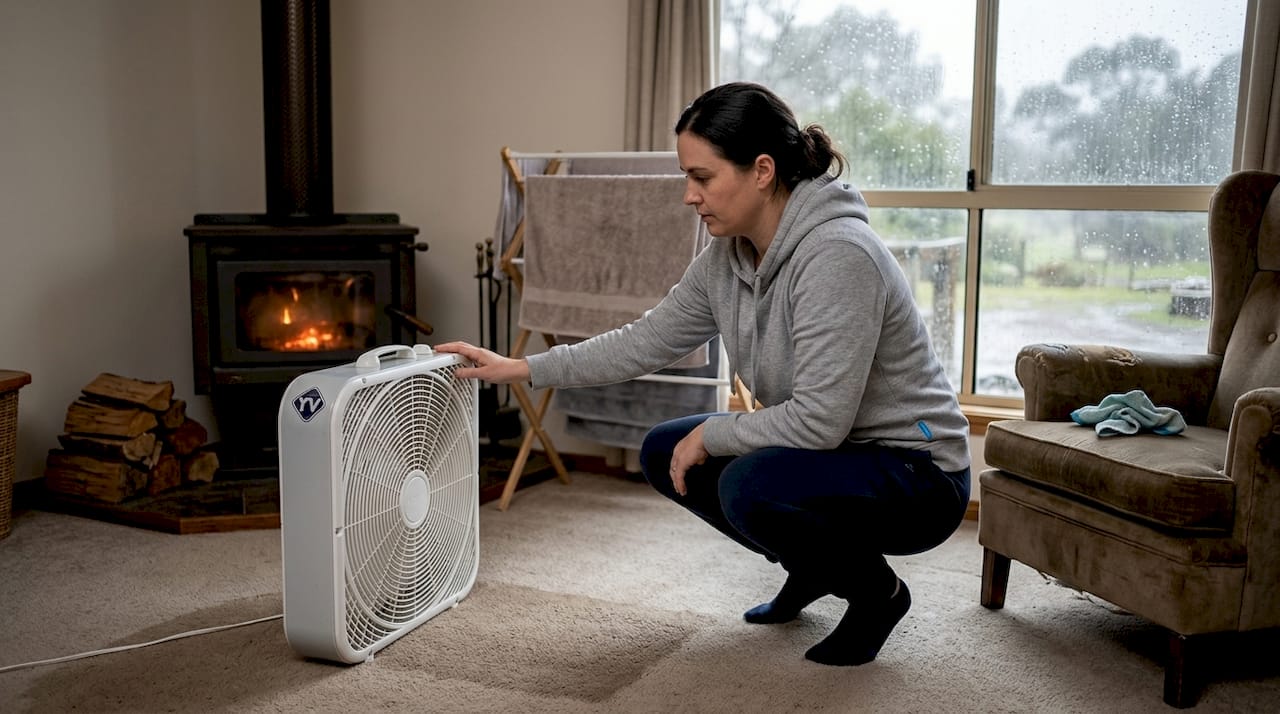
Mould beneath carpet underlay is disturbingly common in homes that experience repeated wet-boot traffic without a solid drying routine. The key is speed. When moisture enters your carpet, you have a narrow window to remove it before mould spores begin to establish.
Here are the most effective steps for managing dampness in the colder months:
- Place boot mats and trays at every entryway to capture mud and water before it reaches the carpet
- Use a dehumidifier in high-risk rooms such as lounges with poor ventilation
- Run ceiling fans or pedestal fans after any wet cleaning to accelerate drying
- Open windows briefly on dry winter days to flush out stale, moist air
- Treat muddy footprints by letting the mud dry completely, then vacuuming before spot cleaning
For more targeted guidance, dry wet carpets quickly with methods that minimise saturation in the first place.
As noted in advice on seasonal fabric care, quick-dry methods and fans are key to preventing mould during Yarra Valley winters. This isn’t just comfort advice. Mould remediation costs significantly more than prevention.
| Task | Spring/Summer | Autumn/Winter |
|---|---|---|
| Cleaning method | Steam or low-moisture | Low-moisture preferred |
| Drying approach | Open windows, sunlight | Fans, dehumidifiers |
| Frequency | Deep clean every 6 months | Spot clean frequently |
| Priority concern | Allergens, fading | Mould, odour, mud |
Pro Tip: If you notice a slightly musty smell in a room after a wet week, don’t wait. Sprinkle baking soda over the carpet, leave it for a few hours, and vacuum it up. It won’t solve a mould problem, but it buys you time while you arrange a proper carpet cleaning during winter service.
Material matters: Cleaning tips for different fibres and fabrics
Knowing how the weather impacts your routine, it’s vital to consider what your carpets and fabrics actually need at the fibre level. Two carpets that look identical can require completely different cleaning approaches depending on what they’re made of.
The simplest way to identify your upholstery type is to look for the manufacturer’s cleaning code tag, usually found under cushions or on the furniture base. The codes typically read:
- W: Water-based cleaners are safe
- S: Solvent-based cleaners only
- WS: Either water or solvent cleaners can be used
- X: Vacuum only, no liquids
For carpets, the label is usually attached to the back of the rug or accessible under a furniture corner. If there’s no label, treat it as a natural fibre until you know otherwise.
Here’s a practical breakdown of cleaning methods by fibre type:
| Fibre type | Best cleaning method | Key caution |
|---|---|---|
| Wool | Low-moisture, pH-neutral solution | Avoid heat and aggressive scrubbing |
| Cotton | Gentle water-based cleaner | Prone to shrinkage if over-wet |
| Microfibre | Steam or standard cleaning | Highly forgiving, handles high-traffic well |
| Synthetic blends | Most methods suitable | Can trap odours; regular vacuuming essential |
For high-traffic zones like hallways and living rooms, synthetics handle the load better than natural fibres and are far less likely to retain moisture or suffer permanent wear marks. Natural fibres are better suited to lower-traffic bedrooms and sitting rooms where they can be properly maintained.
When choosing cleaning methods for sensitive materials, low-moisture or dry-cleaning approaches reduce the risk of fibre damage significantly. For the toughest spots in the house, read up on high-traffic carpet tips to build a maintenance plan that holds up over time.
For stubborn stains on natural fibres, always blot rather than scrub. Scrubbing breaks down the fibre structure and makes the stained area more visible, not less.
What most miss about seasonal carpet care
Most seasonal cleaning guides hand you a checklist and call it done. But here’s the honest reality: a checklist built for a generic Australian suburb doesn’t account for what it’s actually like to live in the Yarra Valley. The climate here is genuinely variable, sometimes dramatically so within a single week.
The bigger issue is that many homeowners treat seasonal cleaning as a once-off reset rather than an ongoing habit. One big spring clean feels satisfying but won’t protect against the mould risk that builds quietly through June and July. Real protection comes from knowing your home’s patterns, which rooms dry slowly, which entry points bring in the most mud, and which upholstery is most vulnerable.
The best time to clean carpets isn’t simply a fixed date on the calendar. It’s whenever your home signals that it needs attention: an unfamiliar odour, a patch of discolouration, or a section of pile that looks flattened and worn. Responding to those signals promptly is far more effective than waiting for the next season to roll around.
Building small, frequent habits around your actual usage patterns will outperform any seasonal mega-clean every time.
Professional support for a fresh home year-round
If you’re ready to elevate your results, specialist support is just around the corner. There are moments when DIY methods reach their limit, and that’s exactly when a professional clean makes the biggest difference. Embedded grime, persistent odours, and post-winter mould risk are situations where expert equipment and eco-friendly solutions do what household tools simply cannot.
At Yarra Valley Carpet Cleaning, we service homes across Lilydale, Mooroolbark, Healesville, Croydon, and the wider region with deep steam cleaning and upholstery care tailored to local conditions. Whether you need carpet cleaning near you, advice from our upholstery cleaning guide, or want to know the best after-cleaning care tips to extend your results, we’re here to help. Contact us to book a seasonal refresh you’ll actually notice.
Frequently asked questions
How often should I clean my carpets each season in the Yarra Valley?
Vacuum weekly and schedule a professional deep clean every 6 to 12 months, increasing frequency during high-pollen spring or wet winter periods.
What’s the best way to dry carpets after cleaning in winter?
Use fans and open windows on dry days, and opt for low-moisture cleaning methods to avoid mould in Yarra Valley winters taking hold under the pile.
Are natural or synthetic fibres better for busy homes?
Synthetics like microfibre handle high-traffic zones well, while natural fibres like wool need gentler, less frequent cleaning.
Is it safe to use standard spot-cleaners on all upholstery?
Always check the manufacturer’s cleaning code label first, as natural fabrics can be permanently damaged by harsh or water-based chemicals.
Recommended
- Just Cleaned: Keeping Carpets Fresh and Lasting Longer – Yarra Valley Carpet Cleaning
- 7 Essential Carpet Cleaning Tips 2026 for Yarra Valley Homes – Yarra Valley Carpet Cleaning
- Seasonal Carpet Care – Impact on Yarra Valley Homes – Yarra Valley Carpet Cleaning
- How to Maintain Clean Carpets: 2025 Guide for Yarra Valley Homes – Yarra Valley Carpet Cleaning