
Water damage can turn your carpet from a cosy feature to a complete headache in just a matter of hours. Most people focus on the mess, but the real risk usually slips under the radar. Mould can start growing within 24 to 48 hours if you miss even a little bit of moisture. That means a slow or sloppy response can cost you more than just a patchy carpet.
Table of Contents
- Step 1: Assess The Extent Of Water Damage
- Step 2: Remove Any Excess Water From The Carpet
- Step 3: Improve Air Circulation Around The Carpet
- Step 4: Apply Drying Techniques And Tools
- Step 5: Monitor The Drying Process Regularly
- Step 6: Finalize Cleanup And Check For Issues
Quick Summary
| Key Point | Explanation |
|---|---|
| 1. Assess water damage severity first | Determine the source and extent of carpet water damage to inform your restoration steps and whether professional help is needed. |
| 2. Remove excess water quickly | Use absorbent towels and a wet/dry vacuum to extract maximum moisture from the carpet and padding, preventing long-term damage. |
| 3. Improve air circulation | Position fans and dehumidifiers to enhance airflow and lower humidity, accelerating drying and reducing the risk of mould. |
| 4. Monitor the drying process regularly | Check carpet moisture levels frequently, using a moisture meter if available, to ensure complete drying and prevent mould growth. |
| 5. Finalize cleanup and check for issues | Conduct a thorough inspection and sanitize the carpet to eliminate bacteria and prevent mould, ensuring a safe environment post-damage. |
Step 1: Assess the extent of water damage
When water damages your carpet, the first critical step is understanding exactly how severe the situation is. Carpet water damage can range from minor surface moisture to complete saturation that threatens your entire flooring system. Quick and accurate assessment determines your entire restoration strategy.
Start by identifying the water source. Was this from a burst pipe, flooding, or an accidental spill? The water’s origin significantly impacts your cleaning approach. Clean water from a broken pipe requires different handling compared to contaminated water from external flooding or sewage backup.
Carefully inspect the affected carpet area, checking not just the visible surface but also the underlying padding and subfloor. Look for tell-tale signs of water penetration such as discoloration, dark spots, warping, or a musty odor. Pay special attention to edges and corners where moisture tends to accumulate.
Measure the affected area meticulously. Use a moisture meter if possible to determine precise saturation levels. For residents in Lilydale or Mooroolbark experiencing water damage, understanding the extent helps determine whether professional intervention is necessary. Our guide on water damage cleaning provides additional insights into professional assessment techniques.
Remember that timing is crucial. The longer water sits, the higher the risk of permanent carpet damage and potential mould growth. Research from emergency services confirms that mould can develop within 24 to 48 hours if moisture persists.
Successful assessment means you can confidently move to the next steps of carpet restoration, knowing precisely what you’re dealing with and how to proceed most effectively.
Step 2: Remove any excess water from the carpet
Removing excess water quickly is crucial to preventing long-term carpet damage and potential mould growth. This step requires strategic action and the right tools to extract maximum moisture from your carpet and underlying padding.
Start by gathering essential equipment: absorbent towels, a wet/dry vacuum cleaner, and protective gloves. For residents in Chirnside Park or Mooroolbark dealing with water damage, working swiftly can make a significant difference in carpet preservation. Our deep cleaning guide offers additional insights into effective water extraction techniques.
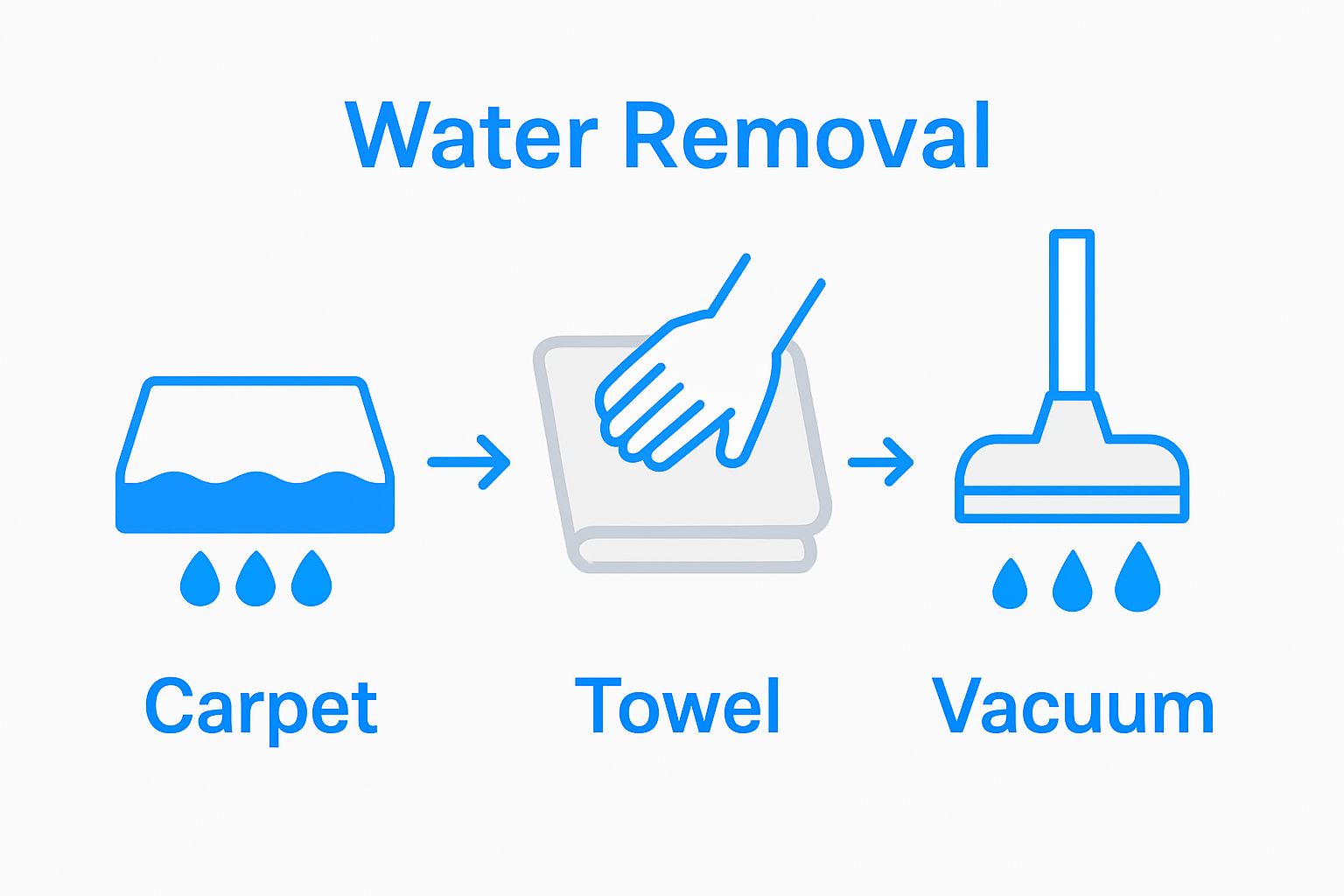
Begin by pressing clean, thick towels firmly into the wet carpet area. Use your body weight to apply consistent pressure, helping towels absorb maximum moisture. Work from the carpet’s outer edges toward the center to prevent water spreading. Replace towels frequently as they become saturated, ensuring you’re continuously using dry materials.
A wet/dry vacuum is your most powerful tool in this process. According to emergency services guidelines, systematic water extraction can dramatically reduce potential damage. Position the vacuum at a slight angle, moving slowly to maximize water suction. Empty the vacuum’s collection tank regularly to maintain optimal performance.
Pay special attention to carpet edges and corners where water tends to pool. These areas are most susceptible to prolonged moisture and potential mould development. If possible, lift carpet edges slightly to check and extract water from the underlying padding.
Verify your water removal success by touching the carpet. It should feel damp but not soaking wet. No standing water should remain visible, and the carpet should not squish when walked upon.
Here is a quick-reference table of essential tools and equipment you will need for effective wet carpet drying, along with their specific purposes.
| Tool/Equipment | Purpose |
|---|---|
| Absorbent towels | To blot up and absorb surface water from carpet |
| Wet/dry vacuum | For deep moisture extraction from carpet & pad |
| Protective gloves | For safe handling of wet and contaminated areas |
| Fans | To circulate air and speed up drying |
| Dehumidifier | Removes excess moisture from indoor air |
| Carpet dryer/air mover | Delivers powerful, targeted airflow to carpet |
| Moisture meter | Measures moisture level in carpet and underlay |
| Carpet cleaning solution | Disinfects and sanitises the carpet surface |
 This careful, methodical approach sets the stage for effective carpet drying and restoration.
Step 3: Improve air circulation around the carpet
Effective air circulation is the key to accelerating carpet drying and preventing potential mould growth. This critical step transforms your moisture-laden carpet into a quickly drying surface by maximizing airflow and reducing humidity.
Position multiple fans strategically around the affected carpet area, creating a comprehensive air movement pattern. Residents in Lilydale and Mooroolbark know that smart positioning can dramatically reduce drying time. Place fans at different angles to ensure comprehensive coverage. Our carpet care guide offers additional insights into optimal drying techniques.
If possible, create cross ventilation by opening windows and positioning fans to push moist air outside. Ceiling fans can also provide supplementary air circulation, helping move moisture away from the carpet surface. Aim to create a continuous air current that sweeps across the entire wet area.
According to emergency management guidelines, consistent air movement reduces humidity and prevents secondary water damage. Rotate fans every few hours to ensure all carpet sections receive direct airflow. Electric fans work best, but portable industrial blowers can provide even more powerful drying for extensive water damage.
For carpets in enclosed spaces like Croydon or Chirnside Park homes, consider using a dehumidifier alongside fans. This combination removes moisture from the air while fans continue moving air across the carpet surface. Maintain a consistent temperature between 20-25 degrees Celsius for optimal drying conditions.
Verify your air circulation strategy by checking carpet dampness every few hours. The carpet should gradually feel less wet, and the surrounding air should not feel excessively humid. Successful air circulation means your carpet is on its way to complete dryness, preventing potential long-term water damage.
Step 4: Apply drying techniques and tools
Targeted drying techniques can transform a waterlogged carpet from potential disaster to salvageable flooring. This critical step involves precise application of specialised tools and strategic approaches to remove remaining moisture effectively.
For homeowners in Mooroolbark and Lilydale facing water damage, professional-grade tools can make a significant difference. A powerful dehumidifier becomes your primary weapon in moisture elimination. Position the dehumidifier centrally in the affected room, ensuring it can pull moisture from both the carpet and surrounding air. Our expert carpet care guide provides additional insights into advanced drying techniques.
Consider using a carpet dryer or industrial air mover, which provides direct, concentrated airflow specifically designed to accelerate carpet drying. These powerful machines create a consistent air stream that penetrates deep into carpet fibers and underlying padding. Angle the air mover slightly above the carpet surface to maximise moisture extraction.
According to emergency management guidelines, lifting the carpet can significantly improve drying efficiency. If possible, carefully raise carpet edges to expose the underlay and subfloor. This allows complete air circulation and prevents moisture trapped beneath the carpet from causing long-term damage.
Heated fans or portable heaters can complement your drying strategy, but use them cautiously. Maintain a consistent temperature between 20-25 degrees Celsius to prevent fiber damage while accelerating moisture evaporation. Keep heaters at a safe distance from the carpet to avoid potential scorching or additional damage.
Verify your drying progress by checking carpet moisture levels periodically. Use a moisture meter if available, or perform a simple touch test. The carpet should feel progressively drier, with no dampness detected when pressing firmly. Successful drying means preventing potential mould growth and preserving your carpet’s integrity.
Step 5: Monitor the drying process regularly
Consistent monitoring is the final crucial step in preventing long-term water damage and potential mould growth. This vigilant approach ensures your carpet recovers completely and remains in optimal condition after water exposure.
Residents in Chirnside Park and Mooroolbark understand that diligence can save expensive carpet replacements. Check the carpet multiple times daily, feeling for moisture and observing any changes. Look for subtle signs of potential issues like slight discoloration, unusual odors, or texture changes. Our comprehensive carpet care guide offers additional insights into post-water damage monitoring.
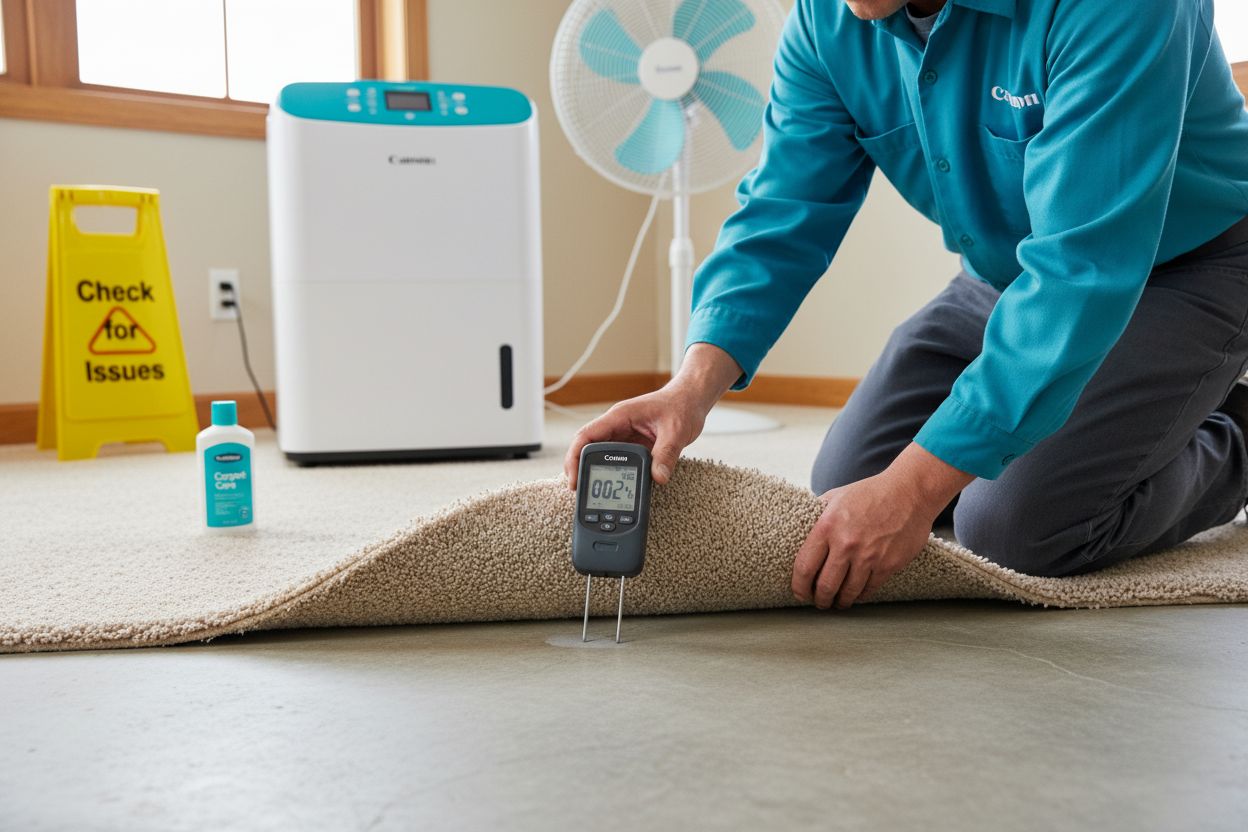
Utilise a moisture meter for precise tracking of carpet dryness. These affordable tools provide exact moisture percentage readings, helping you determine when the carpet is truly dry. Press the meter into different carpet areas, including edges and corners where moisture often lingers. Professional restoration teams typically aim for moisture levels below 15% to prevent potential mould development.
According to health and environmental guidelines, continuous monitoring helps prevent health risks associated with dampness. Pay special attention to the carpet’s underside and surrounding floor surfaces. Any persistent dampness could indicate deeper moisture issues requiring professional intervention.
Maintain your drying setup during this monitoring phase. Keep fans running, dehumidifiers active, and windows strategically positioned for optimal air circulation. Rotate equipment positions periodically to ensure comprehensive drying. If you notice areas remaining consistently damp after 48 hours, consider consulting professional carpet restoration specialists.
Successful monitoring means your carpet gradually returns to its original texture and appearance. The surface should feel consistently dry to touch, with no residual dampness or musty odors. By dedicating time to careful observation, you protect your carpet from potential long-term water damage and preserve its quality for years to come.
Step 6: Finalize cleanup and check for issues
The final stage of carpet water damage recovery requires thorough inspection and strategic cleaning to prevent long-term damage. This crucial step transforms your water-damaged carpet from a potential liability to a restored flooring surface.
Begin by conducting a comprehensive visual and tactile examination of the entire carpet area. For homeowners in Lilydale and Mooroolbark, this means checking every inch carefully. Look for subtle signs of water damage like discoloration, fiber distortion, or potential mould growth. Our expert carpet care guide provides additional insights into post-water damage assessment.
Sanitise the carpet surface using a specialized carpet cleaning solution designed to eliminate potential bacteria and prevent mould spore development. Choose a product specifically formulated for water damage restoration, applying it evenly across the entire affected area. Pay extra attention to edges and corners where moisture tends to accumulate and microorganisms can proliferate.
According to health management guidelines, thorough disinfection is critical in preventing potential health risks associated with water damage. Use a soft-bristled brush to gently work the cleaning solution into carpet fibers, ensuring complete coverage without causing additional damage.
Inspect the underlying carpet pad and subfloor for any remaining moisture or potential structural issues. In some cases, particularly severe water damage might require professional replacement of the carpet pad. Watch for signs of warping, discoloration, or soft spots in the subfloor that could indicate more extensive water penetration.
Verify the cleanup’s success by performing a final moisture test and odor check. The carpet should feel completely dry, with no musty smells or dampness. If any concerns remain, consider consulting professional carpet restoration specialists who can provide advanced diagnostic and restoration services. By completing this final step meticulously, you protect your carpet investment and maintain a healthy indoor environment.
This troubleshooting table outlines possible issues detected after drying your carpet, their common causes, and suggested solutions as detailed in the guide.
| Problem | Possible Cause | Recommended Action |
|---|---|---|
| Persistent dampness | Inadequate drying, hidden moisture | Continue air circulation, check underlay & subfloor |
| Musty or mouldy odour | Mould/mildew beginning to develop | Apply carpet sanitiser, increase drying, seek help |
| Surface warping or buckling | Excess water not extracted | Inspect underlay/subfloor, consult professionals |
| Discolouration or dark spots | Staining from standing water | Clean & sanitise, check for ongoing dampness |
| Soft spots in subfloor | Water penetrated support layers | Inspect, may need repair or replacement |
| Recurring moisture at edges | Insufficient edge extraction | Re-extract edges, lift carpet if needed |
Dry Carpets Fast With Professional Care in the Yarra Valley
Homeowners know how stressful it can be when water soaks into their carpets. Quick action is vital to avoid long-lasting damage, stubborn stains, or mould. But even with careful assessment, towels and fans, some water and odours linger beneath the surface. The reality is that home remedies alone can only go so far, especially when you need to protect your family’s health and restore your home’s comfort. That is where our expert carpet cleaning services make a real difference.
Why wait and risk deeper damage or expensive replacements? Yarra Valley Carpet Cleaning uses powerful steam equipment and eco-friendly products to extract hidden moisture and neutralise odours and bacteria. We offer fast, local support – so your carpets get dry, fresh and completely clean, no matter how tough the job. If you have lingering dampness or want peace of mind after a water incident, take the safe option today. Visit Yarra Valley Carpet Cleaning or learn more from our carpet care guide and deep cleaning guide. Book now and ensure your carpets recover fully – with no compromise on cleanliness or health.
Frequently Asked Questions
How can I assess the extent of water damage to my carpet?
Start by identifying the water source and inspecting the carpet for discoloration, dark spots, and musty odors. Check the underlying padding and use a moisture meter to measure saturation levels.
What tools do I need to remove excess water from my carpet?
You’ll need absorbent towels, a wet/dry vacuum cleaner, and protective gloves. These tools will help extract moisture efficiently from your carpet and padding.
How can I improve air circulation to help dry my wet carpet?
Position multiple fans around the affected area, creating a cross ventilation system by opening windows. Ensure fans are aimed at different angles for maximum air movement.
What drying techniques should I use for effective carpet restoration?
Utilise a powerful dehumidifier and consider using a carpet dryer or industrial air mover to focus air flow on the carpet. Maintain a stable temperature between 20-25 degrees Celsius to optimise drying conditions.
Recommended
- How Long Does Carpet Cleaning Take? Guide for Yarra Valley in 2025 – Yarra Valley Carpet Cleaning
- Carpet Care After Cleaning: Expert Tips for Long-Lasting Results – Yarra Valley Carpet Cleaning
- Deep Cleaning Carpets at Home: 2025 Guide for Yarra Valley – Yarra Valley Carpet Cleaning
- Family-Friendly Carpet Cleaning Tips for Safe and Fresh Homes 2025 – Yarra Valley Carpet Cleaning