
TL;DR:
- Carpets trap over 70% of allergens deep within their layers, making surface cleaning insufficient.
- Professional hot water extraction reduces allergens in carpets by over 95%, improving indoor air quality.
- Proper maintenance, including regular deep cleaning and humidity control, is key to a healthier home environment.
Most of the allergens in your home aren’t floating in the air. They’re buried deep in your carpet fibres, well beyond the reach of your weekly vacuum. For families across the Yarra Valley, especially those with young children, asthma sufferers, or anyone who sneezes their way through spring, this is more than a curiosity. It’s a genuine health concern. Understanding how allergens get into your carpet, why they stay there, and what actually removes them can make a real difference to how your household breathes every single day.
Table of Contents
- Why carpets are a magnet for allergens
- How allergens get trapped deep in carpets
- Carpets vs hard floors: Airborne allergens compared
- Best ways to remove trapped allergens from carpets
- A new perspective: Why most cleaning advice misses the mark
- Breathe easier: Next steps for a healthier home
- Frequently asked questions
Key Takeaways
| Point | Details |
|---|---|
| Carpet base stores allergens | More than 70% of allergens hide deep in the base layer, far below what surface cleaning can reach. |
| Vacuuming is not enough | Vacuuming only removes about one-fifth of surface allergens, leaving most trapped beneath. |
| Professional cleaning is essential | Hot water extraction can remove over 90% of allergen particles, making it the best option for allergy-prone homes. |
| Carpets reduce airborne dust | Carpets hold allergens on the floor so fewer stay floating in the air, unlike hard floors which release more particles whenever disturbed. |
Why carpets are a magnet for allergens
Carpets are remarkably effective at capturing particles from the air. Every time someone walks through the door, a pet shakes itself dry, or a window lets in a gust of spring air, particles settle into your carpet’s fibres. This is partly why why carpets trap allergens is such a common question from Yarra Valley homeowners who notice their allergy symptoms flaring indoors.
The main allergen sources you’ll find in any family home include:
- Dust mites and their waste particles, which thrive in warm, humid carpet environments
- Pet dander from dogs, cats, and other animals that sheds continuously and settles into fibres
- Pollen tracked in from outside or carried on clothing and shoes
- Mould spores that develop in carpets exposed to moisture or poor ventilation
- Insect debris and skin flakes from household occupants
What makes carpets particularly tricky is where these particles end up. Research confirms that allergens accumulate in the base layer, with over 70% settling deep beneath the surface fibres, making surface cleaning insufficient to address the real problem.
“Allergens penetrate deep into carpet layers, with over 70% accumulating in the base layer, making surface cleaning insufficient.”
Hard floors behave differently. Rather than trapping particles, smooth surfaces like timber or tiles allow allergens to sit on top and become airborne again with the slightest disturbance. A child running across a hard floor, a door opening, even someone walking briskly through a room can send those particles back into the breathing zone. Understanding carpets and indoor air quality helps explain why the relationship between flooring and allergens is far more complex than most people assume.
| Activity | Airborne particles (carpet) | Airborne particles (hard floor) |
|---|---|---|
| Normal walking | Low | High |
| Vacuuming | Moderate | Very high |
| Running or playing | Low to moderate | Extremely high |
| Sitting still | Very low | Low to moderate |
The carpet acts as a reservoir, holding particles down rather than letting them circulate. The problem is that reservoir fills up over time.
How allergens get trapped deep in carpets
Knowing that allergens end up in the base layer is one thing. Understanding how they get there helps you make smarter decisions about your cleaning routine.
Here’s how allergens move through your carpet:
- Initial landing — Particles settle onto the carpet surface through air movement, foot traffic, or direct contact with pets and people.
- Mechanical pressure — Foot traffic pushes particles downward through the pile with every step taken across the surface.
- Electrostatic attraction — Carpet fibres carry a natural static charge that actively pulls fine particles deeper into the structure.
- Humidity and moisture — Damp conditions cause fibres to swell slightly, drawing particles further in and giving mould spores the conditions they need to multiply.
- Settling over time — Gravity and repeated disturbance gradually move particles toward the carpet backing and underlay.
This layered process explains why standard vacuuming struggles to make a meaningful dent. Vacuuming removes only ~20% of surface allergens, while most allergens remain trapped in the deeper carpet base where suction simply cannot reach.
Humidity deserves special attention here. Dust mites reproduce rapidly in environments above 50% relative humidity, and Yarra Valley homes can experience significant seasonal moisture fluctuations. Mould spores also become far more active in damp carpet conditions. Following carpet cleaning for allergies tips that address moisture management alongside cleaning frequency gives you a much stronger defence.
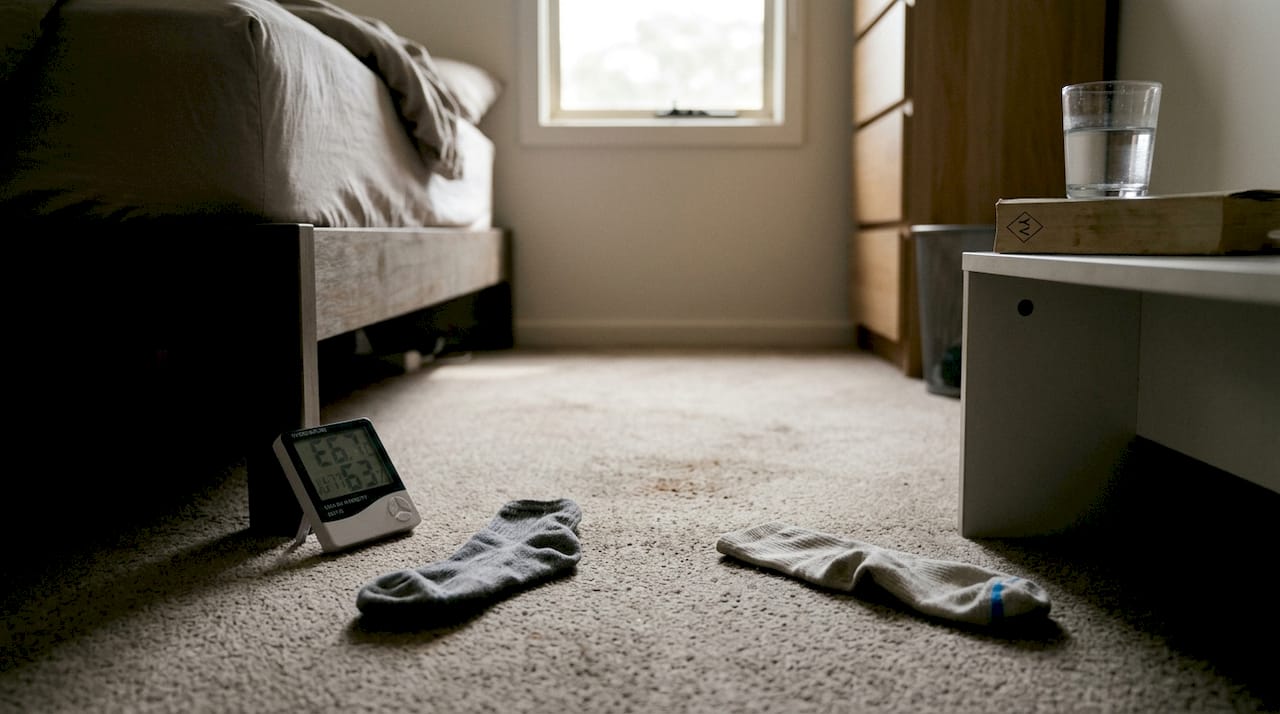
Pro Tip: Use a simple hygrometer (a humidity monitor available from most hardware stores) to keep an eye on indoor moisture levels. Aim to keep humidity below 50% to slow dust mite reproduction and reduce mould risk in your carpets.
For households with allergy sufferers, reviewing expert carpet cleaning tips tailored to local conditions can help you build a practical routine that accounts for Yarra Valley’s climate patterns.
Carpets vs hard floors: Airborne allergens compared
Many families dealing with allergies assume the obvious solution is to rip out the carpet and install hard floors. It feels logical. Fewer fibres means fewer places for allergens to hide. But the science tells a more interesting story.
While carpets do accumulate allergens in their layers, carpets reduce airborne exposure compared to hard floors during disturbances like walking or vacuuming. Hard floors release particles back into the breathing zone far more readily.
The numbers are striking. Hard floor disturbances can release up to 50 times more airborne particles than the equivalent activity on carpet. For someone with carpet cleaning for asthma as a priority concern, this changes the conversation entirely.
| Disturbance type | Carpet airborne count | Hard floor airborne count |
|---|---|---|
| Walking (per step) | Low | Very high |
| Vacuuming | Moderate (with HEPA filter) | Extremely high |
| Children playing | Low | High |
| Sweeping/mopping | N/A | High during activity |
This doesn’t mean carpet is always the better choice. A heavily soiled, infrequently cleaned carpet will eventually release allergens too, particularly when disturbed. The key variable is maintenance. Well-maintained carpet, cleaned regularly with the right methods, can genuinely outperform hard floors for allergy management.
For families focused on reducing asthma triggers at home, the practical takeaway is this: carpet type and cleaning frequency matter more than flooring material alone. Low-pile carpets in synthetic fibres like nylon are easier to clean thoroughly and accumulate fewer allergens than thick, high-pile options. Pairing the right carpet choice with proper cleaning habits, and following broader tips for improving air quality throughout the home, gives you a genuinely healthier indoor environment.
Best ways to remove trapped allergens from carpets
Given that vacuuming only scratches the surface, what actually works? The answer is hot water extraction, commonly called steam cleaning, and the results are backed by solid research.
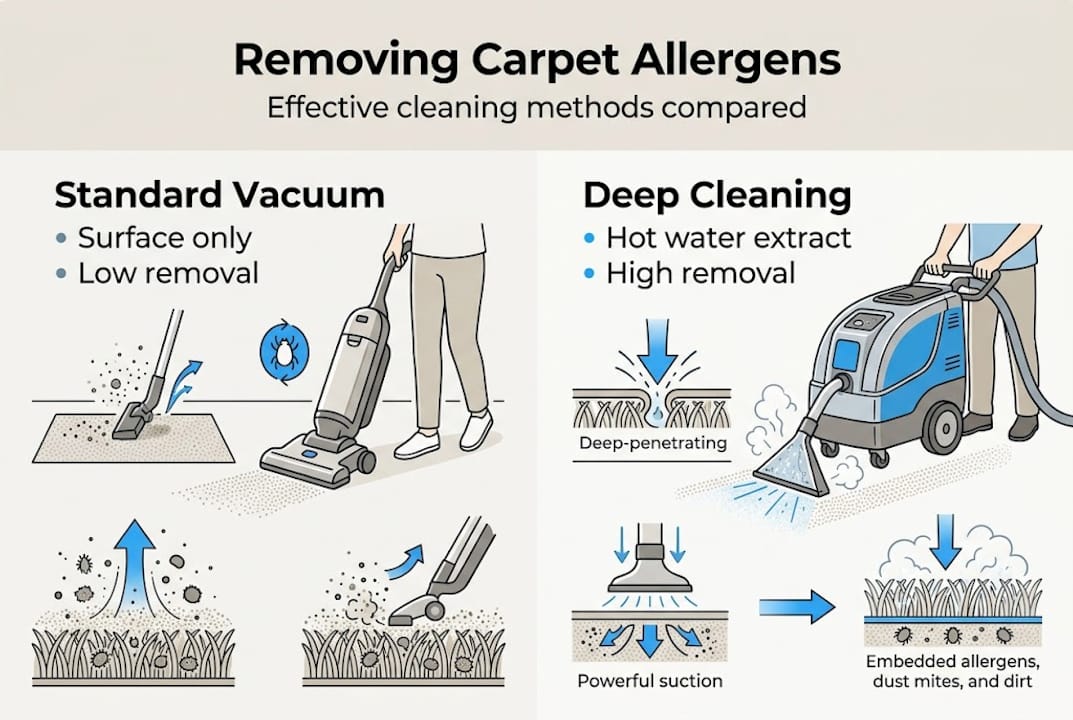
Hot water extraction achieves a 91 to 97% surface reduction for dust mite, cat, and dog allergens on carpets, along with a 67% reduction in airborne cat allergen. These are not marginal improvements. They represent a fundamentally different outcome compared to vacuuming alone.
The most effective approaches for Yarra Valley households include:
- Professional hot water extraction — Reaches the base layer where allergens accumulate, using high-temperature water and powerful suction to extract particles that vacuums miss
- HEPA-filter vacuuming — A meaningful improvement over standard vacuums for surface allergen removal between professional cleans
- Low-pile nylon carpet selection — Easier to clean thoroughly, less likely to harbour deep allergen deposits over time
- Dry compound cleaning — Useful for maintenance between deep cleans, though less effective than hot water extraction for allergen removal
- Spot treatment of moisture — Addressing spills and damp patches immediately prevents mould spore development
Reviewing safest cleaning methods helps you choose products and techniques that won’t introduce new irritants while removing existing ones. This matters particularly for households with young children or severe allergy sufferers.
Pro Tip: For households with known allergy sufferers, schedule a professional deep clean every six months rather than annually. The difference in allergen load between a six-month and twelve-month cycle is significant, especially through pollen season.
Understanding the broader health benefits of carpet cleaning goes beyond allergens too. Professionally cleaned carpets also remove bacteria, mould spores, and chemical residues that accumulate over time. For families committed to carpet allergen removal in Yarra Valley, professional cleaning is the single highest-impact action available.
A new perspective: Why most cleaning advice misses the mark
Here’s something most allergy guides won’t tell you. Vacuuming more often is the most common recommendation given to allergy-prone households, and it’s genuinely not enough. It addresses the visible surface while leaving the actual problem untouched in the layers below.
The uncomfortable reality is that the carpet you think looks clean after a vacuum is still holding the vast majority of its allergen load. You can’t see it. You can’t smell it. But your airways can find it.
Humidity and carpet type play a far bigger role in allergen accumulation than most homeowners realise. A thick, plush carpet in a poorly ventilated room will outpace a low-pile carpet in a well-aired space within weeks, regardless of how often either is vacuumed.
We’ve seen this pattern repeatedly across Yarra Valley homes. Families who vacuum daily but never deep clean are often living with far higher allergen loads than those who vacuum less but schedule regular professional treatments. The role of carpet cleaning in air quality is something that genuinely cannot be replicated by surface maintenance alone. For allergy-prone households, professional deep cleaning isn’t a luxury. It’s a health decision.
Breathe easier: Next steps for a healthier home
If this article has shifted how you think about your carpet and your family’s health, the next step is straightforward. Choosing a local carpet cleaning service with genuine experience in allergen removal means you’re getting equipment and techniques that actually reach the base layer, not just the surface. At Yarra Valley Carpet Cleaning, our hot water extraction process is designed precisely for this. We work across Lilydale, Mooroolbark, Healesville, Croydon, and the wider Yarra Valley, bringing professional-grade results to family homes that need them most. Following up with solid carpet care after cleaning habits keeps allergen levels lower for longer between professional visits.
Frequently asked questions
Why do carpets trap more allergens than hard floors?
Carpet fibres physically catch and hold dust mites, pet dander, pollen, and mould spores, keeping them out of the air but concentrating them deep in the layers where over 70% accumulate in the base, while hard floors release more particles into the air when disturbed.
Does vacuuming get rid of most carpet allergens?
No. Vacuuming removes only 20% of surface allergens, leaving the majority trapped in deeper layers that standard suction simply cannot reach.
Which cleaning method is most effective for removing allergens?
Professional hot water extraction is the most effective option, with research showing it reduces cat and dog allergens on carpet surfaces by 95 to 97% and airborne allergens by 67%.
Should I replace carpet with hard floors to reduce allergies?
Not necessarily. Hard floors reduce allergen reservoirs but release far more particles into the air during daily activity, so expertly cleaned carpets can actually result in lower indoor allergen exposure overall.
Recommended
- Why carpets trap allergens and how to stay healthy – Yarra Valley Carpet Cleaning
- Carpet allergen removal: breathe easier in Yarra Valley – Yarra Valley Carpet Cleaning
- 7 Expert Carpet Cleaning Tips for Allergies at Home – Yarra Valley Carpet Cleaning
- Air Quality and Carpets: Complete Guide for Homes – Yarra Valley Carpet Cleaning
- Residential Cleaning: 3 Types & 90% Allergen Removal in 2026