
Pet stains on your carpet can seem impossible to tackle and every pet owner knows the frustration when a hidden urine spot keeps your home smelling less than fresh.
But get this. A simple black light torch can reveal those sneaky stains in seconds, showing a distinct yellowish green glow where you thought the carpet was clean. Most people scramble for random cleaners or start scrubbing straight away, but the real trick is nailing the stain type and its age first. The right prep makes all the difference between a fresh smelling lounge and a lingering pet disaster.
Table of Contents
- Step 1: Assess Your Carpet And Identify Stains
- Step 2: Gather Necessary Cleaning Supplies
- Step 3: Treat Stains With Appropriate Solutions
- Step 4: Perform A Deep Clean With A Carpet Cleaner
- Step 5: Allow Carpet To Dry And Check For Remaining Stains
Quick Summary
| Key Point | Explanation |
|---|---|
| 1. Identify stains thoroughly before cleaning | Assess the type, age, and location of pet stains to select the best cleaning method and prevent carpet damage. |
| 2. Use enzymatic cleaners for effective treatment | Enzymatic cleaning solutions break down organic stains at a molecular level, ensuring complete odour and stain removal. |
| 3. Employ a carpet cleaner for deep cleaning | Deep clean your carpet to eliminate embedded dirt and lingering odours, enhancing overall carpet appearance and hygiene. |
| 4. Ensure proper drying to prevent mould | Create cross ventilation and maintain appropriate temperatures to ensure carpets dry completely, preventing the growth of mould and mildew. |
| 5. Inspect for remaining stains post-cleaning | Conduct a thorough inspection after drying to confirm complete stain removal; persistent stains might need further treatment or professional help. |
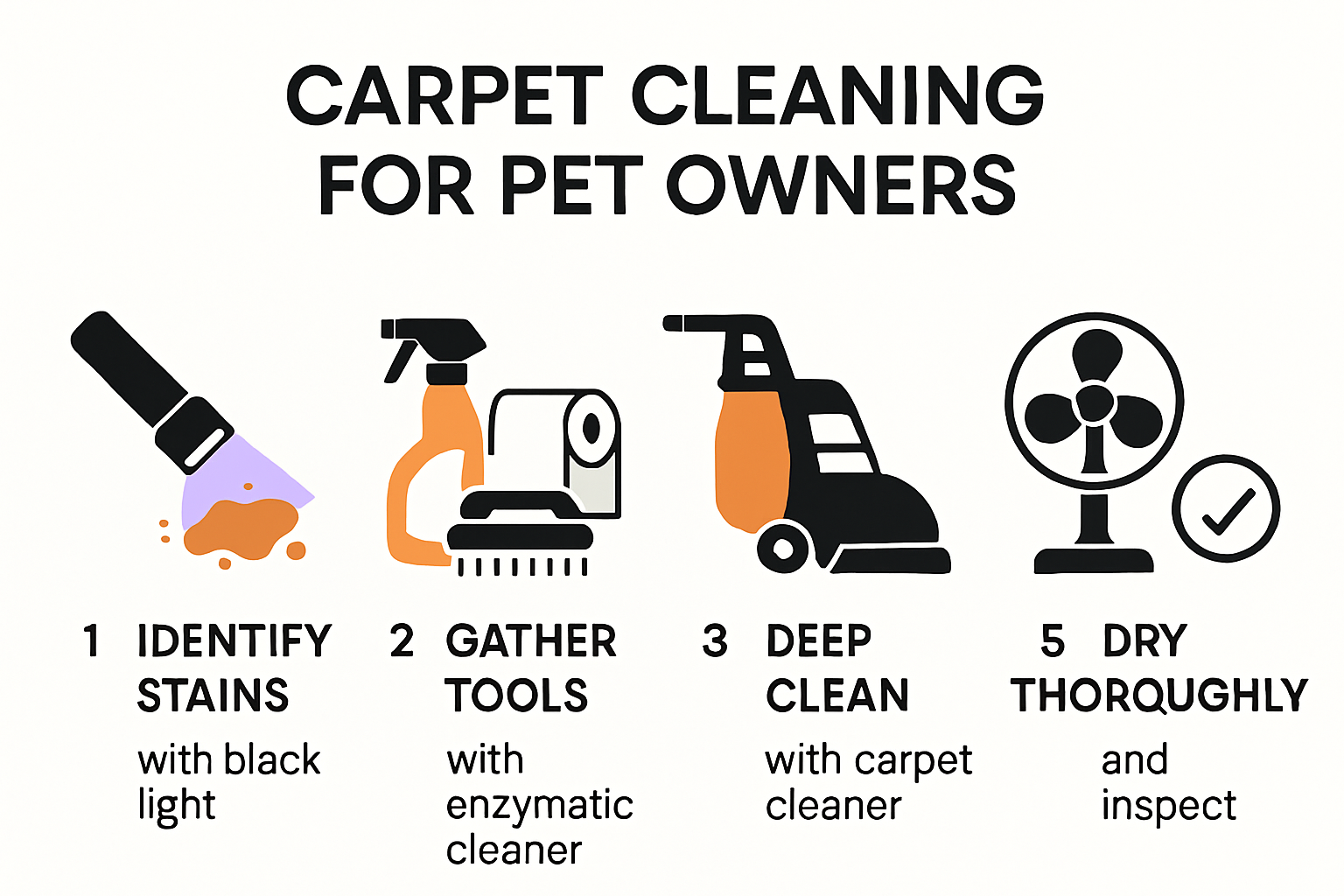
Step 1: Assess Your Carpet and Identify Stains
Successful carpet cleaning for pet owners starts with a thorough initial assessment. Understanding the specific types of stains and their age helps you choose the most effective cleaning strategy. Different pet stains require unique treatment approaches, and identifying them accurately prevents potential long term damage to your carpet fibres.
Locating and Detecting Hidden Pet Stains
Detecting pet stains can be challenging, especially when they are not immediately visible. Professional carpet cleaners recommend using a black light torch to reveal hidden urine spots that might have dried or been partially cleaned. When you shine the black light in a darkened room, dried urine stains will fluoresce a distinct yellowish green colour, revealing exactly where your pet has had accidents.
Before cleaning, carefully examine your carpet for multiple types of potential stains. Not all pet stains are simple liquid marks. Some might involve solid waste, vomit, or tracked mud. Note the location, size, and apparent age of each stain. Fresh stains are typically easier to remove compared to older, set in marks that have had time to penetrate deep into carpet fibres.
Preparing for Targeted Cleaning
After identifying stains, assess the carpet material and colour. Wool, synthetic, and natural fibre carpets respond differently to cleaning solutions. Some delicate carpets might require specialised treatment to prevent colour bleeding or fibre damage. Take photographs of significant stains for reference, which can help track progress and assist professional cleaners if needed.
According to the Carpet and Rug Institute, immediate identification and treatment of pet stains are crucial to preventing permanent carpet damage. Their research highlights that prompt action can significantly reduce the likelihood of long lasting odours and discolouration.
For comprehensive guidance on managing different types of carpet stains, check out our detailed stain removal guide.
Remember, successful stain identification sets the foundation for effective carpet cleaning. By taking time to carefully examine and document your carpet’s condition, you create a targeted cleaning strategy that protects your investment and keeps your home fresh and clean.
Step 2: Gather Necessary Cleaning Supplies
Preparing the right cleaning supplies is crucial for effectively managing pet stains and maintaining your carpet’s quality. The tools and solutions you choose can make a significant difference in removing stubborn pet marks while protecting your carpet fibres. Professional carpet cleaners understand that a well equipped approach saves time and prevents potential damage during the cleaning process.
The following table summarises the essential tools and materials required for expert carpet cleaning when you have pets. Use this list to ensure you are well-equipped before beginning the cleaning process.
| Tool/Material | Purpose/Use | Notes |
|---|---|---|
| Black light torch | Detect hidden urine stains | Reveals stains with yellow-green glow |
| White microfibre cloths | Blot and absorb stains | Prevents colour transfer |
| Enzymatic cleaning solution | Breaks down organic pet stains and eliminates odour | Suitable for urine, faeces, vomit |
| Spray bottle | Applies cleaning solution evenly | Use for targeted stain treatment |
| Rubber gloves | Protects hands from cleaning chemicals | Use during all chemical application |
| Portable carpet cleaner | Deep cleans larger or stubborn stained areas | Choose model suited for pet stains |
| Dry towels | Absorbs excess moisture after cleaning | Prevents mould and mildew |
Essential Tools for Pet Stain Removal
Your cleaning arsenal should include several key items designed specifically for pet owners. Start with white microfibre cloths, which are superior for blotting stains without spreading or embedding them deeper into carpet fibres. Microfibre materials absorb moisture efficiently and prevent colour transfer. Pair these with enzymatic cleaning solutions that break down organic pet stains at a molecular level, eliminating both visible marks and underlying odours.
Additional critical supplies include a sturdy spray bottle for applying cleaning solutions, protective rubber gloves to keep your hands safe from chemicals, and a black light torch for identifying hidden stains. A portable carpet cleaner can be particularly helpful for larger or more challenging areas. Some models are specifically designed for pet owners, featuring stronger suction and specialised cleaning attachments.
According to the Carpet and Rug Institute, selecting cleaning products with their Seal of Approval ensures you are using solutions that effectively clean without damaging carpet integrity. This certification becomes especially important when dealing with pet related stains and odours.
Preparing Your Cleaning Station
Organise your supplies in a readily accessible area before beginning. Create a dedicated cleaning station with all tools within reach to streamline the process. Important tip: Always test cleaning solutions on a small, inconspicuous carpet area first to ensure colour fastness and prevent potential damage.
Learn more about our professional carpet cleaning techniques to enhance your home maintenance strategy. By gathering the right supplies and understanding their proper use, you will be well prepared to tackle even the most challenging pet stains effectively and efficiently.
Step 3: Treat Stains with Appropriate Solutions
Treating pet stains requires a strategic approach that targets both the visible mark and the underlying organic residue. Different types of stains demand specific cleaning solutions to effectively remove discolouration and prevent lingering odours. Understanding the nuanced approach to stain treatment protects your carpet fibres and ensures a thorough cleaning process.
Understanding Enzymatic Cleaning Techniques
Enzymatic cleaners are the gold standard for pet stain removal. These specialised solutions contain protein based enzymes that break down organic matter at a molecular level, effectively neutralising urine, faeces, and vomit stains. When applying enzymatic solutions, work from the outer edges of the stain towards the centre to prevent spreading. Gently blot the area with a clean white microfibre cloth, allowing the enzymatic solution to penetrate deeply into carpet fibres.
The application technique matters as much as the cleaning solution itself. Avoid rubbing or scrubbing, which can push stains deeper into carpet fibres and potentially damage the carpet pile. Instead, use a gentle blotting motion, allowing the enzymatic cleaner to do its work. For fresh stains, apply the solution immediately after identifying the mark. Older, set in stains might require multiple applications and potentially longer treatment times.
According to Rutgers Cooperative Extension, oxygen based and enzymatic cleaners are significantly more effective at removing organic pet stains compared to traditional cleaning methods. Their research highlights the importance of selecting specialised solutions that target the specific chemical composition of pet stains.
Pet owners should prepare a systematic approach to stain treatment. Start by removing any solid waste carefully, then apply the appropriate cleaning solution. Some carpets might require different treatments based on their material composition. Wool carpets, for instance, need gentler enzymatic solutions compared to synthetic fibres.
Explore our professional stain removal techniques to understand the nuanced approaches professional cleaners use. The key is patience and precision. Allow the enzymatic solution sufficient time to break down stain molecules completely. After treatment, use clean dry cloths to absorb excess moisture, helping prevent potential mould or mildew growth.
Successful stain treatment means the area should be clean, odour free, and show no visible discolouration. If the stain persists after multiple treatments, it might be time to consult professional carpet cleaning services specialising in pet stain removal.
Step 4: Perform a Deep Clean with a Carpet Cleaner
Deep cleaning your carpet after spot treating pet stains is essential for comprehensive carpet maintenance. This step removes embedded dirt, neutralises lingering odours, and restores your carpet’s overall appearance. Professional carpet cleaners understand that thorough deep cleaning goes beyond surface treatment, targeting microscopic contaminants that can cause long term damage.
Preparing Your Carpet Cleaning Machine
Choose a carpet cleaner with strong suction and adjustable heat settings to effectively manage pet related carpet challenges. Most home carpet cleaners work best when filled with a specialised pet stain removal solution that contains both cleaning agents and deodorising compounds. Begin by thoroughly vacuuming the carpet to remove loose debris, ensuring the deep cleaning process can focus on ground in dirt and stubborn stains.
When operating the carpet cleaner, move slowly and methodically across the carpet. Important technique: Overlap your cleaning passes slightly to ensure complete coverage and prevent missed areas. Most machines work by releasing a cleaning solution and then immediately extracting moisture, which helps prevent oversaturation. Pay extra attention to high traffic areas and zones where pet stains were previously identified. The cleaning solution should be distributed evenly, allowing sufficient time to break down organic residues without flooding the carpet.
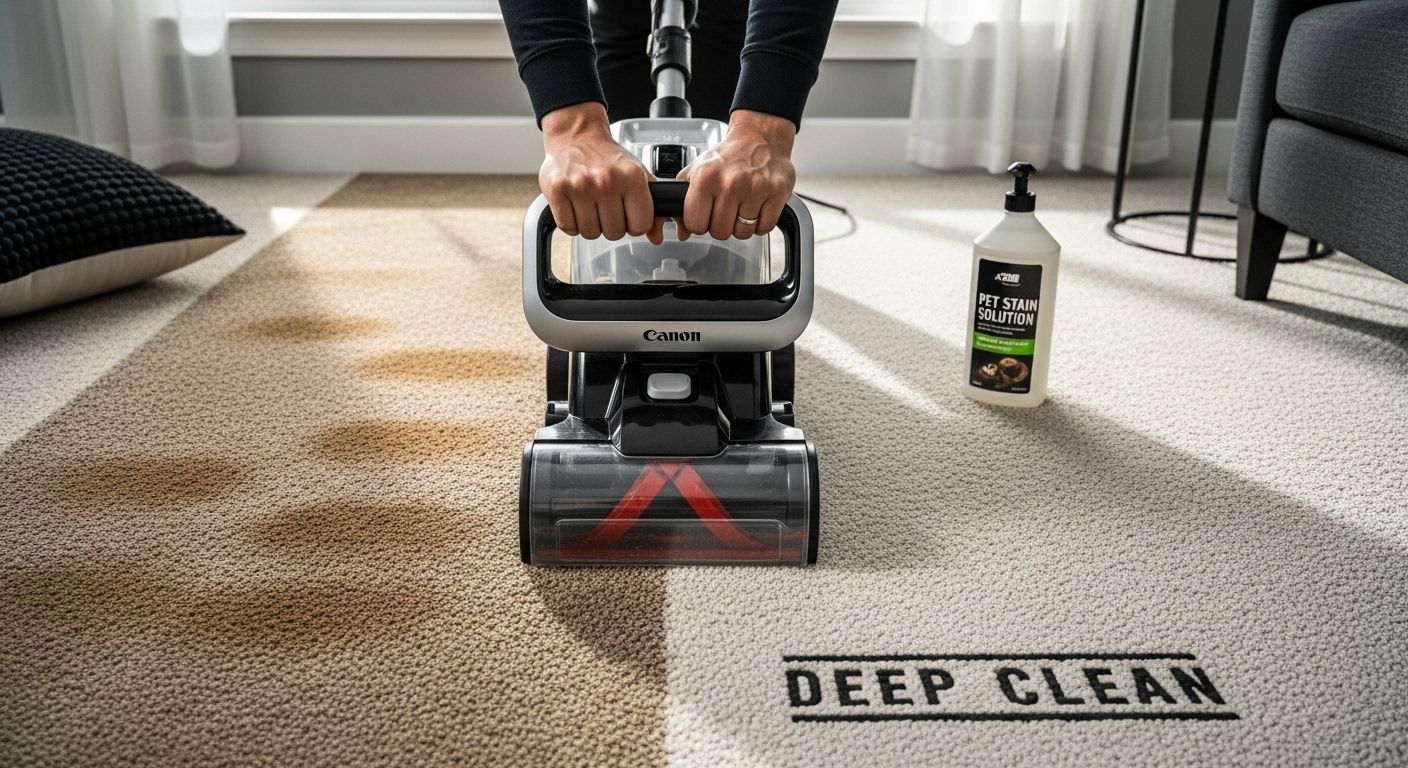
The cleaning process requires careful moisture management. Excessive water can lead to mould growth and potential carpet backing damage. After cleaning, use clean dry towels to absorb excess moisture. Position fans or open windows to accelerate drying, ideally maintaining room temperatures between 20 to 24 degrees Celsius for optimal drying conditions.
Discover our comprehensive home carpet cleaning techniques to refine your approach. A successful deep clean means your carpet looks refreshed, smells neutral, and feels soft underfoot. Signs of effective cleaning include consistent carpet colour, absence of odours, and no remaining dampness after 24 hours.
If your carpet remains visibly soiled or continues to emit pet odours after home cleaning, it might be time to consult professional carpet cleaning services. Some stains and odours require specialised industrial equipment and professional grade solutions that domestic machines cannot match.
Step 5: Allow Carpet to Dry and Check for Remaining Stains
The final stage of carpet cleaning involves careful drying and thorough inspection to ensure complete stain removal. Proper drying prevents potential mould growth and allows you to assess the effectiveness of your cleaning efforts. This crucial step transforms your cleaning process from basic spot treatment to comprehensive carpet restoration.
Strategic Drying and Inspection Techniques
Ventilation is key to efficient carpet drying. Open windows, activate ceiling fans, and position portable fans strategically around the cleaned areas. Aim to create cross ventilation that accelerates moisture evaporation. If possible, maintain room temperatures between 20 to 24 degrees Celsius, which provides optimal drying conditions. Avoid walking on damp carpet areas, as this can cause fibres to compress and potentially redistribute remaining dirt or stains.
Once the carpet approaches complete dryness, conduct a meticulous visual and olfactory inspection. Use natural daylight for the most accurate assessment, as artificial lighting can sometimes mask subtle discolourations. Run your hand gently over the cleaned areas, feeling for any remaining dampness or texture irregularities. Pay close attention to previously stained zones, checking for any lingering odours or faint stain outlines that might have been missed during initial cleaning.
According to the Carpet and Rug Institute, carpets should dry completely within 24 hours to prevent potential mould and mildew development. If you notice any persistent stains or odours after the carpet has dried, this indicates that additional targeted treatment might be necessary.
Learn more about post cleaning carpet maintenance to extend the life of your freshly cleaned carpets. Professional carpet cleaners recommend keeping the room well ventilated for at least 48 hours after deep cleaning. Signs of a successful cleaning include a uniform carpet colour, neutral smell, and soft, resilient carpet fibres that spring back when touched.
Below is a step-by-step overview of the expert carpet cleaning process for pet owners. Refer to this table for guidance on each stage, its main goal, and what you should look for at completion.
| Step | Main Action | Goal/Outcome |
|---|---|---|
| 1. Assess & Identify Stains | Locate all pet stains, note type and age | Accurate stain identification |
| 2. Gather Supplies | Prepare necessary tools and products | Readiness for targeted cleaning |
| 3. Treat with Appropriate Solutions | Apply enzymatic/appropriate cleaners | Remove stains and odours |
| 4. Deep Clean with Carpet Cleaner | Use machine for comprehensive cleaning | Refresh and sanitise entire carpet |
| 5. Dry & Inspect | Ensure thorough drying and inspect results | Prevent mould, confirm clean carpet |
If stubborn stains or odours persist after thorough drying and inspection, it might be time to consult professional carpet cleaning services. Some deep set pet stains require specialised industrial equipment and professional grade treatments that home cleaning methods cannot completely resolve.
Ready to Transform Your Carpets After Pet Accidents?
Pet stains and odours can quickly turn your comfortable home into a source of stress. As covered in the article, tackling hidden pet accidents, using enzymatic cleaners, and ensuring thorough drying are steps every pet owner faces. Yet, many still struggle to fully eliminate deep-set stains or persistent smells, especially when carpets have been affected repeatedly. If you are tired of battling unwanted odours or patchy cleaning results, professional help can make all the difference.
Take the hassle out of pet stain removal by trusting your local experts. At Yarra Valley Carpet Cleaning, our family-run team uses advanced steam cleaning and eco-friendly methods designed for tough pet mess. We understand the challenges unique to pet owners and tailor our service to restore freshness and give you peace of mind. Check out more tips and stories in our Articles section or simply book a service with us today for fast, spotless results. Take the next step now to protect your carpets and enjoy a cleaner, healthier home.
Frequently Asked Questions
How can I identify hidden pet stains on my carpet?
You can use a black light torch to detect hidden urine stains, as they will fluoresce a distinct yellowish-green colour in a dark room.
What cleaning supplies are essential for tackling pet stains on carpets?
Key supplies include white microfibre cloths for blotting, enzymatic cleaning solutions to break down organic stains, a sturdy spray bottle, and a black light for stain detection.
What is the best method for applying enzymatic cleaners to pet stains?
Apply the enzymatic cleaner from the outer edges of the stain towards the centre, using a gentle blotting motion rather than rubbing or scrubbing to avoid spreading the stain.
How can I ensure my carpet dries properly after cleaning?
Improve drying conditions by increasing ventilation; open windows, use fans, and maintain a temperature between 20 to 24 degrees Celsius to help accelerate moisture evaporation.
Recommended
- Spring Cleaning Your Carpets: A Fresh Start for Every Home – Yarra Valley Carpet Cleaning
- Deep Cleaning Carpets at Home: 2025 Guide for Yarra Valley – Yarra Valley Carpet Cleaning
- Family-Friendly Carpet Cleaning Tips for Safe and Fresh Homes 2025 – Yarra Valley Carpet Cleaning
- Move Out Carpet Cleaning Guide for Homes and Businesses – Yarra Valley Carpet Cleaning
- [
Managing Winter Dog Shedding: Tips to Keep Your Home Fur-Free
– iPupPee](https://ipuppee.com/blogs/news/managing-winter-dog-shedding-tips-to-keep-your-home-fur-free)