
Your carpets hold more than meets the eye. Dust mites, pet dander, mould spores, and chemical residues from conventional cleaning products all build up deep in carpet fibres, quietly affecting the air your family breathes every day. For Yarra Valley homeowners, where lush surroundings bring in extra pollen and moisture, this is a real concern. The good news is that eco-friendly carpet cleaning reduces VOCs by up to 90% and measurably improves indoor air quality. This guide walks you through a practical, step-by-step workflow using non-toxic methods that are safe for your kids, your pets, and your home.
Table of Contents
- Why choose eco-friendly carpet cleaning?
- What you need: Tools and eco-friendly solutions
- Step 1: Maintain with regular eco vacuuming
- Step 2: Treating stains and odours with natural solutions
- Step 3: Deep cleaning with professional hot water extraction
- Common mistakes and care for speciality carpets
- How to know it worked: Results and maintenance tips
- Book your next eco-friendly carpet cleaning in the Yarra Valley
- Frequently asked questions
Key Takeaways
| Point | Details |
|---|---|
| Eco cleaning boosts health | Switching to eco-friendly carpet cleaning reduces indoor air pollutants and allergens dramatically. |
| DIY and pro methods work | Both natural home ingredients and professional hot water extraction deliver deep, safe cleans. |
| Routine matters most | Regular vacuuming and prompt spot treatment keep your carpets fresh between annual professional cleans. |
| Fibre type guides care | Check your carpet’s fibre before choosing a method to avoid damage and mould. |
| Book local, eco expertise | Yarra Valley professionals can provide tailored, plant-based cleaning for lasting results. |
Why choose eco-friendly carpet cleaning?
Switching to eco-friendly carpet cleaning is not just about being kind to the environment. It directly affects how clean your home feels and how healthy your indoor air is. Conventional cleaning products often leave behind chemical residues that attract more dirt over time, meaning your carpets get dirty faster after each clean.
Eco-friendly methods, by contrast, use plant-based agents and low-moisture techniques that leave no sticky residue behind. This means your carpets stay cleaner for longer. According to research on eco-friendly carpet cleaning methods, these approaches leave no VOCs or residue, extend carpet life, and keep fibres cleaner between cleans. You can read more about green cleaning practices and why they matter for long-term home health.
Here is what you gain by going eco:
- Significantly reduced volatile organic compounds (VOCs) in your indoor air
- No chemical residue, so carpets resist re-soiling
- Longer carpet lifespan with gentler cleaning agents
- Safer for children, pets, and anyone with allergies or sensitivities
- Less water and energy used per clean
Eco-friendly carpet cleaning removes VOCs, leaves no residue, and can extend your carpet’s life by years. Families in the Yarra Valley with young children or pets notice the difference almost immediately.
For a full breakdown of local options, our Yarra Valley eco guide covers what to look for when choosing a provider, and our range of eco-friendly solutions is tailored specifically for local homes.
What you need: Tools and eco-friendly solutions
Before you start cleaning, it helps to know what tools and products are actually worth using. The difference between DIY and professional eco cleaning comes down to equipment power and product quality.
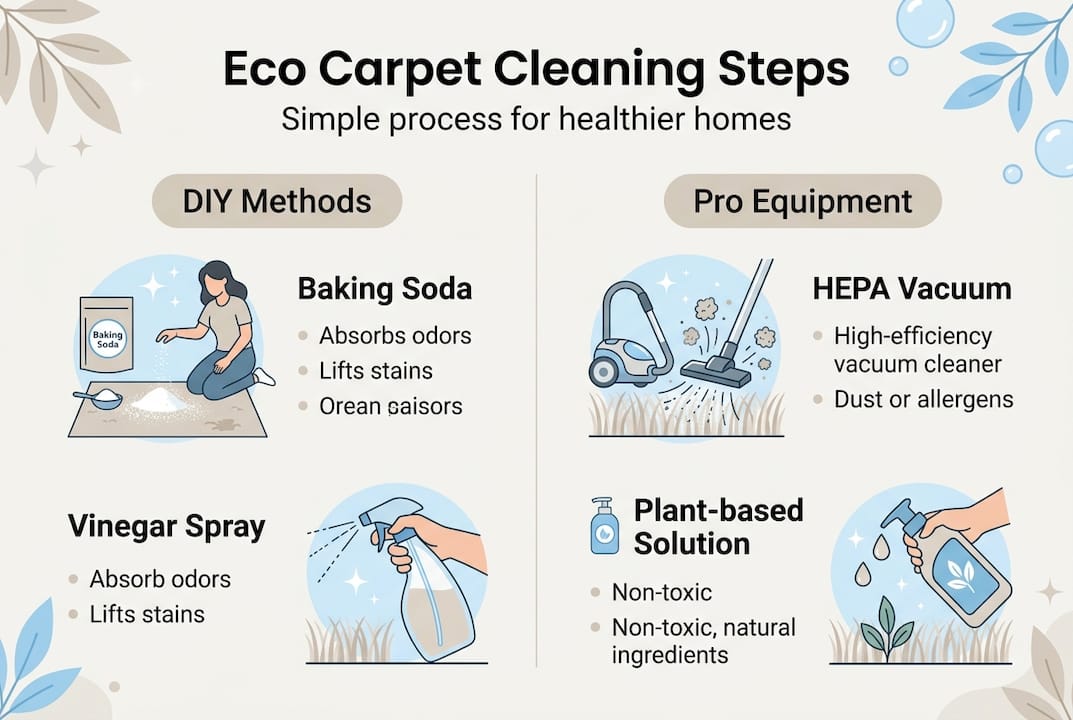
DIY methods use baking soda and vinegar, while professionals rely on HEPA vacuums and plant-based extraction solutions for deeper results. Here is a quick comparison:
| Item | DIY approach | Professional approach |
|---|---|---|
| Vacuum | Standard vacuum | HEPA-filter vacuum |
| Cleaning agent | Vinegar, baking soda | Plant-based eco-detergent |
| Extraction | Blotting with cloth | Hot water extractor |
| Drying method | Air dry | Rapid extraction, fans |
| Suitable for | Light maintenance | Deep allergen removal |
For DIY maintenance between professional visits, stock up on:
- A HEPA-filter vacuum
- White vinegar in a spray bottle
- Bicarbonate of soda (baking soda)
- Microfibre cloths
- A pH-neutral carpet detergent
For deeper results, explore our eco process details and compare the best eco methods available for Yarra Valley homes. You can also browse eco cleaning methods for a broader overview of what works.
Pro Tip: Always spot-test any cleaning solution on a small, hidden section of carpet before applying it to a visible area. Even natural products can affect certain dyes or fibres.
With your eco-friendly equipment ready, you can confidently step into the process, starting with routine maintenance.
Step 1: Maintain with regular eco vacuuming
Vacuuming is the foundation of any good carpet care routine. It sounds simple, but most people do it too infrequently or with the wrong equipment. A standard vacuum without a HEPA filter just redistributes fine particles back into the air.
Weekly HEPA vacuuming removes dust and allergens, reducing the need for intensive cleaning sessions and keeping your indoor air quality consistently high. Aim for at least twice a week in high-traffic areas. For technique, follow these steps:
- Clear the area of furniture and small objects
- Vacuum in one direction first, then go over the same area in a perpendicular direction
- Pay extra attention to edges and corners where dust accumulates
- Empty the bin or replace the bag before it reaches full capacity
- Check and clean the filter regularly
For more guidance, our essential tips article covers vacuuming and beyond. You can also check out this deep clean advice for additional technique pointers.
Pro Tip: Replace your HEPA filter every three to six months. A clogged filter reduces suction and allows allergens to escape back into the room.
Once regular vacuuming is part of your routine, it is time to treat stains and odours with natural DIY solutions.
Step 2: Treating stains and odours with natural solutions
Spills happen. The key is acting fast and using the right natural ingredients. Most everyday stains and odours respond well to a simple baking soda and vinegar workflow.
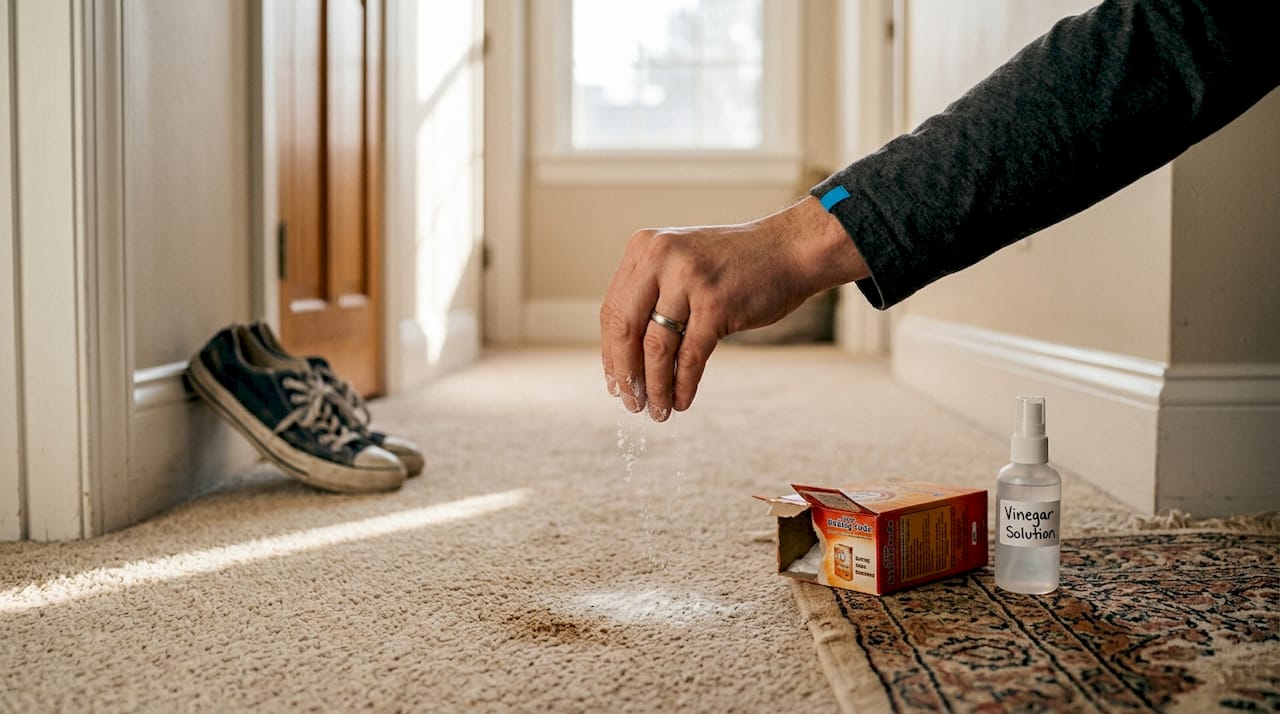
Baking soda and vinegar effectively treat odours and light stains, with vinegar on synthetic carpets drying in 30 to 60 minutes. Follow this process:
- Blot up as much of the spill as possible with a clean microfibre cloth
- Lightly spray the area with white vinegar diluted 50/50 with water
- Allow it to sit for five minutes, then blot again without rubbing
- Sprinkle a generous layer of baking soda over the damp area
- Leave for 15 to 30 minutes, then vacuum thoroughly
Here is how the main DIY methods compare:
| Method | Drying time | Best for | Effectiveness |
|---|---|---|---|
| Baking soda | Immediate | Odours, dry stains | High for odours |
| White vinegar spray | 30 to 60 minutes | Light stains, synthetics | Moderate to high |
| Low-moisture dry clean | 1 to 2 hours | Delicate fibres | High for surface soil |
For tougher situations, our DIY vs pro guide helps you decide when to call in a professional. Our stain removal guide also covers set-in stains in detail. For more DIY eco solutions, the Royal Cleaning Co has useful additional tips.
DIY spot cleaning covers most everyday needs, but for the deepest clean, it is wise to consider professional extraction.
Step 3: Deep cleaning with professional hot water extraction
Hot water extraction, often called steam cleaning, is the gold standard for eco-friendly deep cleaning. It uses heated water and plant-based detergent injected deep into carpet fibres, then extracted along with loosened soil and allergens.
Hot water extraction removes up to 94% of allergens and can extend carpet life to 10 to 15 years when done regularly. The professional process typically follows these stages:
- Thorough inspection of carpet type and condition
- Pre-treatment of stains and high-traffic zones with eco-detergent
- Hot water injection deep into the carpet pile
- Mechanical agitation to loosen embedded soil
- Powerful extraction removing water, soil, and allergens
- Rapid drying with airflow equipment, usually within two to four hours
Compared to conventional methods, hot water extraction stands out:
- Removes far more allergens than dry chemical methods
- Dries in two to four hours rather than 24 hours with wet shampooing
- Uses no harsh VOC-producing chemicals
- Extends carpet life significantly over repeated use
Professional hot water extraction removes up to 94% of soil and allergens, dries in two to four hours, and can extend your carpet’s life to 15 years. That is a result no DIY method can match.
Learn more about the deep steam cleaning benefits for Yarra Valley homes, and explore our eco cleaning process in detail. For a broader view of eco cleaning advantages, the research is clear.
Common mistakes and care for speciality carpets
Even with the best intentions, it is easy to damage carpets by using the wrong products or too much water. Natural fibre carpets like wool and sisal are especially vulnerable.
Wool and sisal need pH-neutral care, and over-wetting risks mould growth and irreversible shrinkage. Avoid these common mistakes:
- Using harsh alkaline cleaners on wool or natural fibre carpets
- Applying too much water, which saturates the backing and promotes mould
- Ignoring fibre type and using a one-size-fits-all approach
- Scrubbing stains instead of blotting, which spreads the damage
- Skipping the spot test before applying any new product
Always use low-moisture methods on wool, test pH before cleaning any natural fibre, and avoid alkaline products entirely on delicate carpets. When in doubt, call a professional.
For more on protecting your home environment, our healthier homes guide is a great resource. You can also review HWE precautions for professional-grade guidance on moisture management.
By avoiding these errors and caring properly for each carpet type, you can expect lasting cleanliness and a genuinely healthier home.
How to know it worked: Results and maintenance tips
A successful eco-friendly clean is easy to recognise. Your carpets look brighter, smell fresh without any chemical scent, and dry faster than after a conventional clean. If your household suffers from allergies, you may notice improvement within a day or two.
Professional eco-friendly cleaning is recommended every 12 to 18 months to maintain freshness and keep allergen levels low. Between professional visits, keep your carpets in top shape with these habits:
- Respond to spills immediately rather than letting them set
- Open windows after a professional clean to speed up drying and air out the room
- Use a doormat and encourage a no-shoes policy indoors
- Groom pets regularly to reduce the amount of dander tracked onto carpets
- Vacuum high-traffic areas at least twice a week
For ongoing guidance, our carpet care tips page covers everything from post-clean drying to long-term fibre protection. The maintenance best practices outlined by industry experts align closely with what we recommend for Yarra Valley conditions.
Pro Tip: Mark your calendar now for your next professional eco clean. Booking 12 months in advance means you never let allergens and soil build up to the point where they affect your family’s health.
Book your next eco-friendly carpet cleaning in the Yarra Valley
Now that you have a clear workflow from daily vacuuming through to professional deep extraction, the next step is putting it into practice. At Yarra Valley Carpet Cleaning, we use advanced hot water extraction equipment and plant-based, non-toxic cleaning agents that are safe for your family and kind to the environment. Our team services homes across Lilydale, Mooroolbark, Healesville, Yarra Glen, Croydon, and the wider Yarra Valley region. Whether you are dealing with stubborn stains, pet odours, or simply want fresher air in your home, we bring professional results with a personal touch. Book a local clean today and experience the difference that genuinely eco-friendly cleaning makes. After your service, our aftercare tips will help you keep your carpets looking and feeling their best year-round.
Frequently asked questions
How often should carpets be professionally cleaned using eco-friendly methods?
Every 12 to 18 months is the recommended frequency for most homes to maintain freshness, reduce allergens, and protect carpet fibres over time.
Are DIY natural cleaners safe for all carpet types?
Most synthetic carpets handle DIY cleaners well, but wool and natural fibres require pH-neutral products and minimal moisture to avoid shrinkage and mould.
What is the difference between steam cleaning and hot water extraction?
Hot water extraction injects water and eco-detergent deep into fibres and extracts it along with soil, removing up to 94% of allergens. It is often called steam cleaning, but the two terms are not exactly the same.
Does eco-friendly carpet cleaning really reduce allergens?
Yes. Professional eco methods remove up to 94% of soil and allergens, making a measurable difference to indoor air quality, particularly for allergy sufferers.
Can I use vinegar on all carpets?
Vinegar works well on synthetic carpets but should be avoided on wool and natural fibres, which require pH-neutral solutions to prevent fibre damage and discolouration.
Recommended
- Eco-friendly carpet cleaning guide for healthier homes – Yarra Valley Carpet Cleaning
- Choosing Eco-Friendly Carpet Cleaners in 2025: A Guide for Yarra Valley Residents – Yarra Valley Carpet Cleaning
- Eco-Friendly Carpet Cleaning: Complete Yarra Valley Guide – Yarra Valley Carpet Cleaning
- Eco-Friendly Carpet Cleaning Process for Yarra Valley Homes – Yarra Valley Carpet Cleaning
- Eco-friendly Garden Cabins Guide For Sustainable Living