
TL;DR:
- Proper cleaning frequency is essential for hygiene, employee satisfaction, and cost efficiency.
- Factors like industry type, foot traffic, surface risks, and environment determine your cleaning schedule.
- Regular review and adjustment of cleaning routines ensure ongoing effectiveness and align with business needs.
Most business owners assume more cleaning is always better, or that a weekly tidy is plenty. Neither extreme is right. Getting your commercial cleaning frequency wrong costs you money, creates hygiene risks, and can quietly damage your reputation with customers and staff alike. Whether you run a café in Healesville, a retail shop in Lilydale, or an office in Chirnside Park, a well-planned cleaning schedule is one of the most practical investments you can make. This guide breaks down the key principles, real-world factors, and specific recommendations to help Yarra Valley businesses build a cleaning routine that actually works.
Table of Contents
- Why cleaning frequency matters for Yarra Valley businesses
- Key factors that shape commercial cleaning frequency
- Recommended cleaning schedules for different spaces
- Adapting cleaning frequency to your business needs
- What most cleaning guides miss about frequency
- Professional cleaning solutions for your Yarra Valley business
- Frequently asked questions
Key Takeaways
| Point | Details |
|---|---|
| Cleaning frequency matters | Setting the right cleaning schedule keeps your workplace safe, healthy, and looking its best. |
| Tailor to your business | Factors like foot traffic, space type, and local environment all influence how often you should clean. |
| Use evidence, not guesswork | Frameworks like ISSA 612 offer strong starting points, but regular review and adjustment are key. |
| Regular checks improve results | Monitor outcomes and adapt your schedule to ensure efficient, effective cleaning long-term. |
Why cleaning frequency matters for Yarra Valley businesses
There is a common belief that cleaning is just about appearances. In reality, it is a direct health and safety measure. Poorly maintained commercial spaces allow bacteria, allergens, and viruses to accumulate on surfaces, carpets, and shared equipment. This translates into sick days, reduced productivity, and in some industries, regulatory penalties.
Customers notice too. A single visit to a grimy bathroom or a stained reception carpet can undo months of good service. Staff morale also takes a hit when workspaces feel neglected. Studies consistently link workplace cleanliness to employee satisfaction and retention, which matters in tight regional labour markets like the Yarra Valley.
From an operational standpoint, best practices for commercial cleaning show that scheduled, consistent cleaning is more cost-effective than reactive deep cleans. When you let grime build up, you end up paying more per clean and potentially replacing flooring or furniture prematurely.
Understanding the difference between commercial vs residential cleaning is also important. Commercial spaces face far greater foot traffic, more varied surface types, and stricter hygiene expectations than a home environment.
Here is what poor cleaning frequency can cost your business:
- Increased staff sick leave due to preventable infections
- Negative online reviews mentioning hygiene or cleanliness
- Fines or warnings from health inspectors in food service or healthcare settings
- Accelerated wear on carpets, upholstery, and hard flooring
- Loss of repeat customers who quietly choose a competitor
Key insight: Proper scheduling based on ISSA 612 rates ensures efficient and hygienic outcomes by matching cleaning effort to the actual demands of each space, rather than applying a blanket approach across your entire premises.
Key factors that shape commercial cleaning frequency
No two businesses are the same, and no two cleaning schedules should be either. Several practical factors determine how often different areas of your premises need attention.
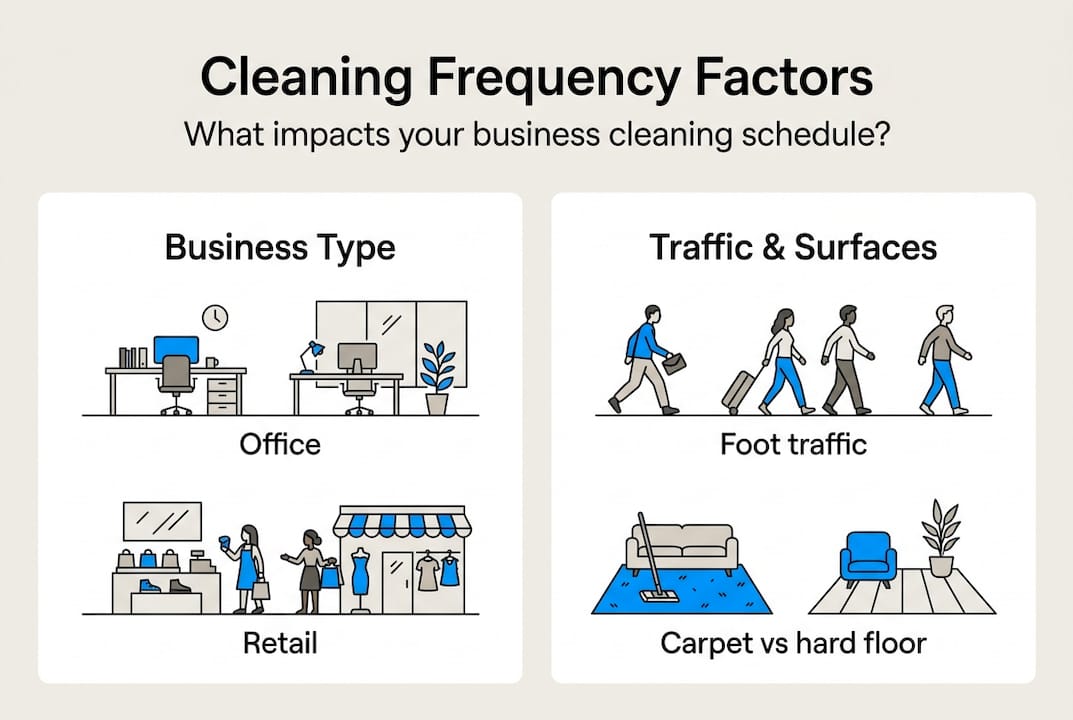
Industry type is the starting point. A medical clinic in Mooroolbark has fundamentally different hygiene requirements to a warehouse in Wandin North. Retail spaces need frequent floor and surface cleaning due to constant customer contact. Offices accumulate dust and shared surface bacteria over time. Hospitality venues face the most demanding schedules, often requiring multiple cleans per day in kitchens and bathrooms.
Foot traffic is the next variable. A boutique with 20 visitors a day needs far less frequent floor cleaning than a supermarket with 500. Tracking your actual visitor numbers, even roughly, helps you set a realistic baseline.
Surface types and risk areas matter enormously. Carpet holds allergens, dust mites, and bacteria far longer than hard flooring. Kitchens and washrooms are classified as high-risk zones in most health codes. Office carpet cleaning frequency needs to account for both daily foot traffic and the slower accumulation of allergens that builds up over weeks.
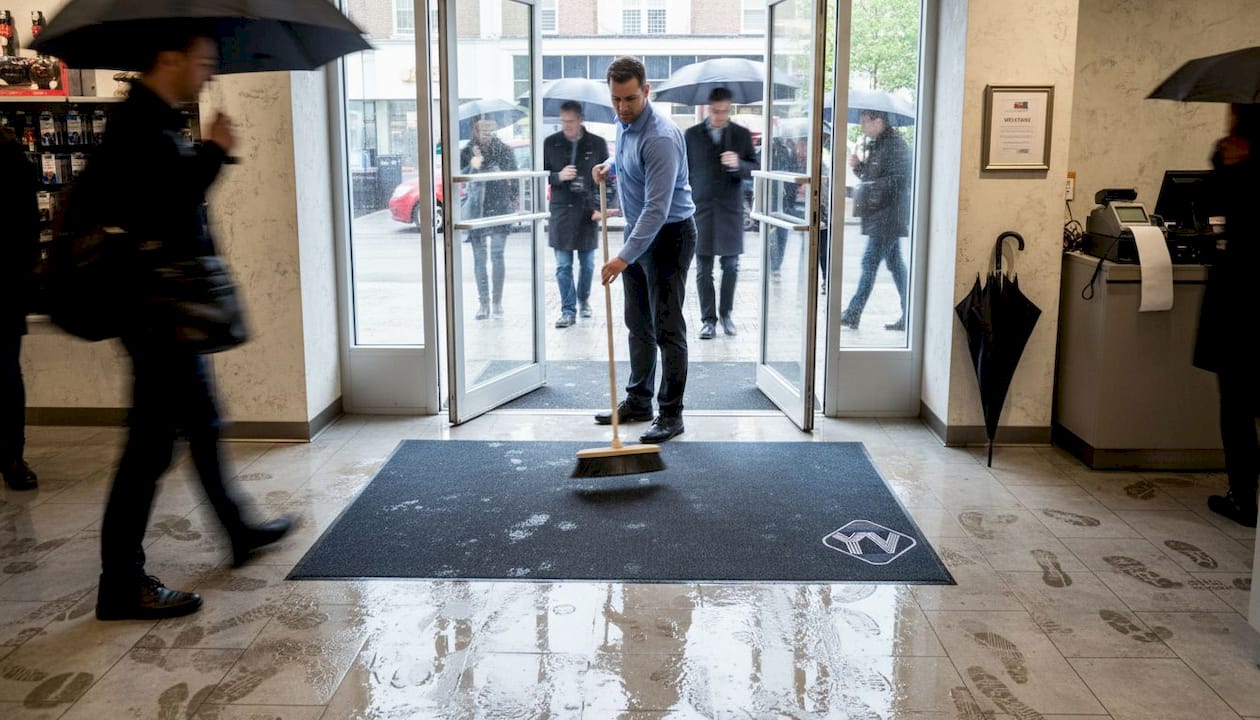
Local environmental factors are often overlooked. The Yarra Valley’s wet winters bring mud and moisture into entryways. Spring pollen season increases allergen loads indoors. Summer dust from surrounding rural areas settles on surfaces and into carpet fibres. Your cleaning schedule should flex with the seasons.
Pro Tip: Production rate data like ISSA 612 helps tailor cleaning frequency to your unique space by calculating how long it realistically takes to clean each area to standard. This prevents under-scheduling, which is one of the most common and costly mistakes.
Here is a quick comparison to guide your thinking:
| Space type | Foot traffic | Recommended base frequency |
|---|---|---|
| Office | Low to medium | Daily surfaces, weekly floors |
| Retail | Medium to high | Daily floors and surfaces |
| Hospitality | Very high | Multiple times daily for kitchens and bathrooms |
| Industrial/warehouse | Variable | Weekly general, daily hazard zones |
| Medical/healthcare | High risk | Daily minimum, often multiple times daily |
Don’t forget office furniture cleaning tips when planning your schedule. Upholstered chairs and shared desks are often overlooked but accumulate bacteria quickly in busy workplaces.
Recommended cleaning schedules for different spaces
Once you understand the factors at play, you can build a practical schedule. The table below outlines evidence-based frequency recommendations for common commercial areas, informed by ISSA 612 rates for commercial environments.
| Area | Daily | Weekly | Monthly | Quarterly |
|---|---|---|---|---|
| Entryways and lobbies | Vacuum and mop | Deep clean | Carpet steam clean | Grout and tile treatment |
| Open offices | Wipe surfaces, empty bins | Vacuum carpets | Deep clean desks | Upholstery clean |
| Kitchens and breakrooms | Full clean and sanitise | Appliance clean | Deep degrease | Exhaust and vent clean |
| Washrooms | Full clean and restock | Grout scrub | Deep sanitise | Drain and fixture check |
| Meeting rooms | Wipe surfaces | Vacuum and mop | Deep clean | Upholstery and carpet |
For high-traffic carpet cleaning methods, daily vacuuming is essential to prevent soil from embedding into fibres. Professional steam cleaning should follow every 6 to 12 weeks in busy areas, not just once a year.
Here are practical tips for adapting your schedule during peak periods:
- During the Yarra Valley’s wet season, increase entryway cleaning to twice daily to manage mud and moisture
- Before and after large events or busy retail periods, schedule a full professional clean
- If you run a tourism-related business, align deep cleans with your peak and off-peak seasons
- After any renovation or construction work, schedule a full commercial clean before reopening
Pro Tip: Build a simple inspection checklist and walk your premises at the end of each week. Note areas that look worse than expected. This real-world feedback is more reliable than any generic schedule. Your cleaning high traffic carpet areas guide should be a living document, updated as your business evolves.
For high-traffic carpet care in busy spaces, rotating entry mats and using barrier matting at all external doors can significantly extend the time between professional cleans.
Adapting cleaning frequency to your business needs
Even the best schedule needs regular review. Businesses change, staff numbers fluctuate, and seasonal pressures shift throughout the year. A static cleaning plan quickly becomes outdated.
Here is a simple process to keep your schedule effective:
- Start with the evidence-based recommendations above as your baseline
- Run the schedule for four to six weeks without changes
- Conduct a formal review using your inspection checklist and any complaints or feedback received
- Identify the two or three areas that consistently fall short of your hygiene standard
- Adjust frequency or method for those specific areas only, rather than overhauling the entire schedule
- Repeat the review cycle every quarter, or sooner if your business circumstances change
Several triggers should prompt an immediate schedule review:
- A renovation or fit-out that changes traffic flow or surface types
- A significant increase or decrease in staff numbers
- Customer complaints about cleanliness, even a single serious one
- A health inspection finding or formal notice
- A change in your business type or the services you offer
“Efficiency and hygiene can be balanced by referencing industry benchmarks like ISSA 612, which provide realistic time and frequency targets for each type of commercial space.”
Involving your staff in the review process is underrated. Cleaners and frontline employees notice things that managers miss. A quick monthly conversation about what is and isn’t working costs nothing and often surfaces the most useful insights.
For ongoing maintenance between professional visits, carpet care after cleaning is just as important as the clean itself. Simple habits like removing shoes in certain areas, addressing spills immediately, and using door mats consistently can extend the life of your flooring significantly.
What most cleaning guides miss about frequency
Most cleaning guides hand you a table and call it done. Follow this schedule, tick these boxes, and your premises will be clean. In practice, that approach fails more often than it succeeds.
The real issue is that generic timetables are built for average businesses in average conditions. Your Yarra Valley café is not average. Your seasonal tourism lodge is not average. A schedule built for a city office block will not account for spring pollen rolling in off the ranges, or the mud that follows every wet weekend in winter.
What actually works is treating your cleaning schedule as a feedback loop, not a fixed document. The businesses we see maintaining genuinely clean premises are the ones that review, adjust, and stay curious about what their space needs right now, not what a template says it should need.
Following commercial cleaning best practices is a starting point, not a finish line. The businesses that get this right combine those benchmarks with honest observation and a willingness to change what isn’t working.
Professional cleaning solutions for your Yarra Valley business
If you are ready to move beyond guesswork and build a cleaning schedule that genuinely protects your business, Yarra Valley Carpet Cleaning is here to help. We work with offices, retail spaces, hospitality venues, and industrial sites across the Yarra Valley, offering tailored commercial carpet cleaning solutions that fit your specific needs and budget. Our commercial steam cleaning process uses advanced equipment and eco-friendly products to deliver results that last. We also provide guidance on care after carpet cleaning so your investment goes further between visits. Contact us today for a free consultation and a plan built around your business.
Frequently asked questions
How often should I schedule professional cleaning for my office in the Yarra Valley?
Most offices benefit from professional cleaning at least once per week, though high-traffic or customer-facing areas may need attention more often. ISSA 612 rates are a recognised standard for planning realistic office cleaning schedules.
What factors influence the best cleaning frequency?
Key factors include your business type, foot traffic levels, surface types, hygiene standards required by your industry, and local Yarra Valley environmental factors like seasonal mud and pollen. Production rate and surface type both inform how often each area needs attention.
How do I know if my current schedule is working?
Regularly review customer and staff feedback, spot check high-traffic areas, and track any complaints or illness incidents to gauge whether your current schedule is meeting your hygiene standards.
Are there industry benchmarks for cleaning rates and times?
Yes, guidelines like ISSA 612 specify how quickly different areas should be cleaned to standard, which helps you plan realistic and effective schedules for your commercial space.
Recommended
- Office Carpet Cleaning Frequency: Best Practices for 2025 – Yarra Valley Carpet Cleaning
- Upholstery Cleaning Frequency Guide for a Fresh Home – Yarra Valley Carpet Cleaning
- 7 Best Home Cleaning Routines for Every Household – Yarra Valley Carpet Cleaning
- Carpet Cleaning Frequency Guide for Yarra Valley 2025 – Yarra Valley Carpet Cleaning
- Top hardfloor cleaning methods for immaculate results