
TL;DR:
- Natural DIY solutions are effective for everyday stains but professional cleaning is needed for deep allergens.
- Immediate stain treatment and regular prevention habits keep childcare carpets safer and cleaner.
- Professionals are essential for removing embedded pathogens and allergens in childcare environments.
Spilt juice, muddy footprints, and the occasional mystery smear — if you care for children in a Yarra Valley home or childcare centre, you know carpet stains are a daily reality. What makes this more than a cosmetic problem is the health risk hiding beneath the surface. Children spend enormous amounts of time on the floor, putting their hands in their mouths, crawling, and rolling around. Harsh chemical cleaners are simply not an option in these spaces. This guide walks you through the safest, most practical methods for tackling childcare carpet stains — from the tools you need, to step-by-step stain removal, to recognising when a professional is the only real answer.
Table of Contents
- Before you begin: What you’ll need and safety basics
- Step-by-step stain removal for common childcare spills
- Preventing stains and minimising allergen risk
- Troubleshooting tough stains and common mistakes
- When and why to call a professional carpet cleaner
- A professional’s perspective: Why DIY isn’t always enough for childcare carpets
- Professional carpet cleaning for your childcare centre or home
- Frequently asked questions
Key Takeaways
| Point | Details |
|---|---|
| Child-safe cleaning is essential | Always use products and methods approved for environments with toddlers and young children. |
| Immediate action works best | The quicker you treat a stain, the safer and cleaner your carpet will remain. |
| DIY isn’t always enough | Professional deep cleaning is vital for removing hidden allergens and stubborn stains. |
| Routine prevention saves work | Regular maintenance and prompt responses prevent most stains from becoming permanent issues. |
Before you begin: What you’ll need and safety basics
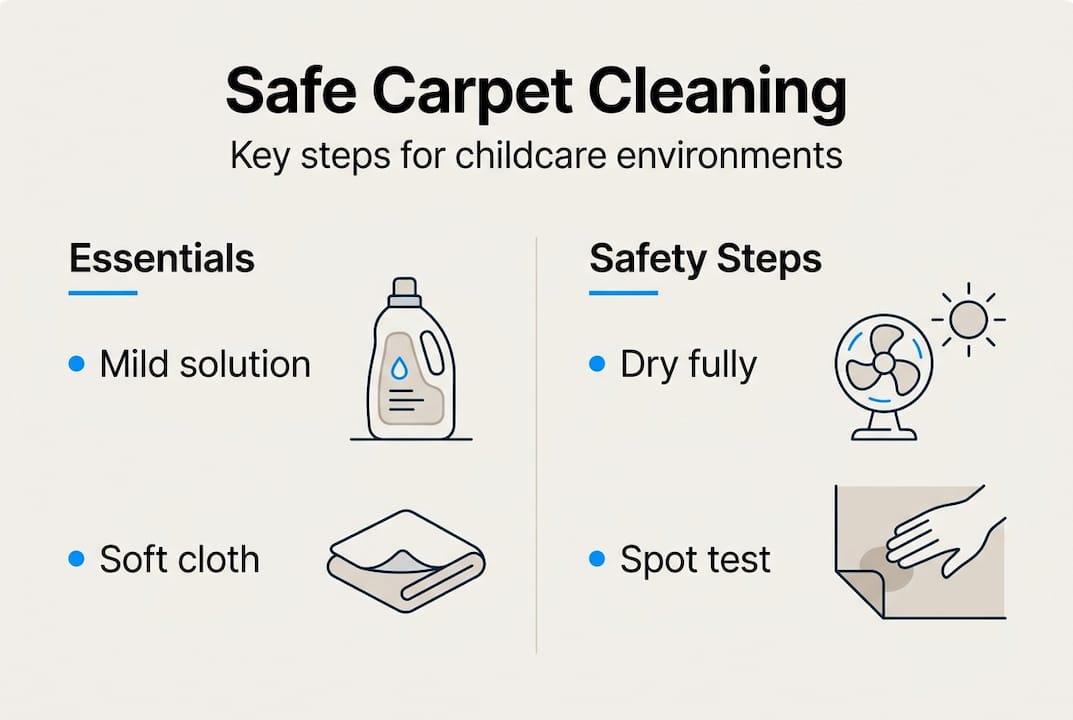
To confidently tackle stains, start by preparing all supplies and ensuring the environment is safe for little ones. Rushing in without the right materials often makes stains worse, or introduces products that linger as fumes children breathe in at floor level.
Here are the essentials every parent and childcare provider should have within reach:
- Clean white cloths or microfibre towels — for blotting without transferring dye
- Cold water — many stains set faster with hot water
- White vinegar (diluted 1:1 with water) — a go-to for food and drink stains
- Bicarbonate of soda — excellent for odour absorption and mild scrubbing
- Mild dish soap (fragrance-free) — for grease-based spills
- A small spray bottle — for controlled application
- Child-safe enzyme cleaner — for bodily fluids, available at most supermarkets
For easy reference, here is a quick-glance table:
| Item | Purpose | Child-safety note |
|---|---|---|
| White vinegar solution | Lifts food and drink stains | Dilute to 1:1; rinse thoroughly |
| Bicarbonate of soda | Odour removal and light stain absorption | Non-toxic; vacuum once dry |
| Enzyme cleaner | Breaks down proteins in bodily fluids | Choose labelled child-safe only |
| Microfibre cloth | Blotting without spreading | Wash after each use |
| Mild dish soap | Grease and paint-based stains | Fragrance-free, rinse completely |
Always clean during nap time or when children are in another room, and allow carpets to dry fully before kids return. Research confirms that natural DIY solutions often match commercial products for everyday stains, though professionals are needed when allergens or pathogens are embedded deeper. For more on child-safe cleaning options, it is worth reviewing what ingredients to avoid entirely. You should also understand which safe carpet cleaning chemicals are appropriate for spaces where children play.
Pro Tip: Before applying any solution, always test it on a hidden section of carpet — such as inside a cupboard or under a piece of furniture. Wait five minutes and check for colour change or texture damage.
Step-by-step stain removal for common childcare spills
With your gear ready, here is exactly how to tackle the most common and worrying stains step-by-step. Speed matters enormously. A stain treated within two minutes is far easier to remove than one left for even half an hour.
For food, drink, and paint stains:
- Scrape or blot up as much of the spill as possible using a clean cloth. Work from the outside of the stain inward.
- Apply your diluted vinegar solution or mild dish soap mix with a spray bottle.
- Blot firmly — never rub. Rubbing spreads the stain and damages carpet fibres.
- Rinse with cold water and blot again until the cloth comes up clean.
- Sprinkle bicarbonate of soda over the damp area, leave for 15 minutes, then vacuum.
For bodily fluids (vomit, urine, blood):
- Remove solids with a spoon or cardboard scraper immediately.
- Apply a child-safe enzyme cleaner directly and let it sit for the time stated on the label.
- Blot thoroughly, then rinse with cold water.
- Dry the area quickly using a fan or opening windows to prevent mould growth.
The acting fast on stains principle cannot be overstated — delay turns a manageable spill into a set stain. For a fuller breakdown, the carpet cleaning steps relevant to childcare centres go into even greater detail.
Here is how DIY compares to commercial options:
| Method | Effectiveness | Child safety | When to use |
|---|---|---|---|
| DIY (vinegar/bicarb) | High for light stains | Excellent | Everyday spills |
| Child-safe enzyme cleaner | High for organic stains | Good if rinsed well | Bodily fluids |
| Commercial stain remover | High overall | Variable — read labels | Stubborn marks |
| Professional cleaning | Highest | Excellent | Deep stains, allergens |
As research confirms, natural DIY solutions work well for most everyday stains, but commercial intervention becomes necessary when deep-seated pathogens or allergens are involved.
Pro Tip: Keep an emergency stain kit — a small zip-lock bag with a microfibre cloth, a spray bottle of diluted vinegar, and a travel-size enzyme cleaner — in every room children regularly use.
Preventing stains and minimising allergen risk
Now you have removed the stains, here is how to keep carpets fresh and child-friendly for the long term. Prevention is genuinely less work than treatment, and the right habits can cut your stain frequency dramatically.
Simple preventative strategies that make a real difference:
- Establish no-shoes zones — shoes track in dirt, allergens, and outdoor pathogens that grind into carpet fibres with every step
- Vacuum daily in high-traffic areas — especially in childcare rooms, this is non-negotiable
- Place absorbent mats at entrances and near eating areas — these catch spills and debris before they reach carpet
- Designate eating and drinking areas — keeping food and drinks away from carpeted zones removes the most common source of stains
- Respond to spills immediately — every minute counts
- Schedule weekly spot checks — look for dried or missed stains before they become permanent
For sustained cleanliness, Yarra Valley carpet care routines designed for group childcare settings provide a practical schedule. Also worth considering is how carpets accumulate invisible threats. Evidence shows that treating carpet allergens requires more than surface cleaning, because dust mites, pet dander, and mould spores settle deep within the pile.
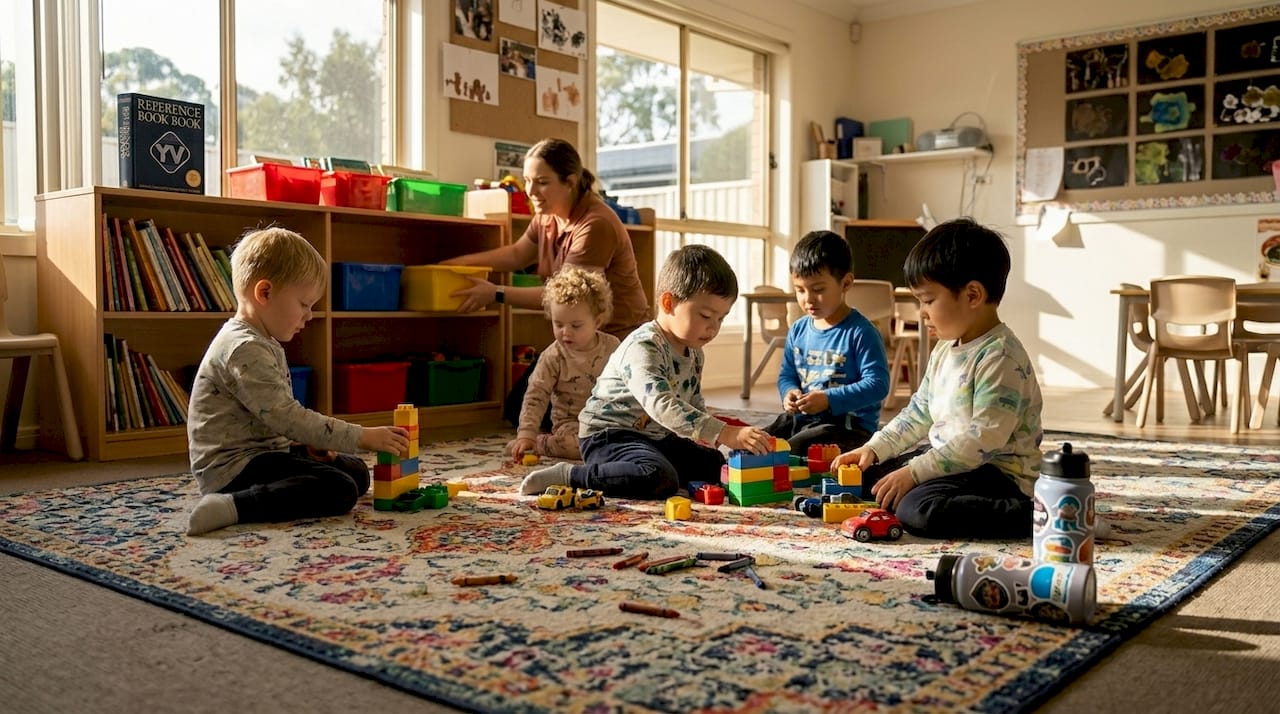
In group care settings, allergen management becomes a shared health responsibility. As experts note, professionals are needed to address deep allergens and pathogens — a concern that scales significantly when many children share the same floor space every day. Scheduling professional cleans at regular intervals is not a luxury for childcare centres; it is part of responsible facility management.
Troubleshooting tough stains and common mistakes
Even with the best plan, some stains or odours seem impossible — here is what to do when things do not go to plan.
These are the five most common mistakes parents and carers make:
- Over-wetting the carpet — soaking the fibres pushes stain particles deeper and creates moisture that breeds mould. Use a damp cloth, not a soaked one.
- Using the wrong cleaning agent — bleach or ammonia-based products can discolour carpet and leave toxic residues at floor level. Stick to child-safe formulas.
- Scrubbing instead of blotting — scrubbing spreads the stain laterally and damages the carpet pile, making it look worse even after the stain lifts.
- Skipping the patch test — a two-minute test in a hidden spot prevents permanent colour damage across a visible area.
- Not drying the carpet properly — a damp carpet left overnight invites mould and odour, which is far harder to remove than the original stain.
Important: Only ever use cleaning products clearly labelled as child-safe in spaces where children play or rest. If a product does not state this on the label, it does not belong near a childcare carpet.
For stains that keep coming back, the likely culprit is wicking. This occurs when moisture reactivates residue left deep in the carpet backing, which then rises to the surface as the carpet dries. Address this by rinsing and blotting more thoroughly, then applying a small amount of bicarbonate of soda before drying.
As cleaning experts confirm, natural cleaning suits light stains well, but deeper contamination may require expert intervention. Reviewing safe stain removal methods can also help you avoid these pitfalls, and understanding healthy carpet routines gives you a longer-term framework to work from.
When and why to call a professional carpet cleaner
Sometimes, a stain or a carpet’s hidden health risks simply require a trained hand. DIY cleaning is valuable and effective for surface-level spills. But there are clear situations where it falls short.
Call a professional carpet cleaner if you notice any of the following:
- A stain that has been treated multiple times but keeps returning
- A persistent smell despite thorough cleaning and drying
- Children or staff experiencing repeated respiratory issues or allergy flare-ups
- Any incident involving significant bodily fluids across a large area
- Carpets that have not received a professional clean in more than six months in a childcare setting
- Visible mould or dark discolouration in carpet fibres
In group childcare environments, incomplete cleaning carries real health consequences. Bacteria and viruses embedded in carpet fibres are not removed by surface treatments. Experts consistently confirm that professionals are required for deep allergens and pathogens — this is especially critical when vulnerable children are in contact with floors every day.
Professional steam cleaning reaches temperatures that eliminate pathogens surface methods cannot touch. It also extracts allergens, dust mites, and contaminants from deep within the carpet backing. For guidance on choosing a local cleaner suited to childcare environments, or for practical family-friendly carpet tips to use between professional visits, these resources are worth bookmarking.
A professional’s perspective: Why DIY isn’t always enough for childcare carpets
Drawing from real Yarra Valley experience, here is what families and providers rarely hear about childcare carpet stains.
Daily cleaning routines are genuinely valuable. But here in the Yarra Valley, we regularly walk into childcare centres where staff have been diligently cleaning every visible stain — and yet the carpet is still harbouring bacteria, viral residue, and allergens that no mop or home spray bottle can reach. The problem is not effort. It is depth.
Surface cleaning treats what you can see. Professional steam cleaning treats what you cannot. As research clearly shows, deep allergens and pathogens in group settings require professional intervention — something we see confirmed again and again in local centres.
“A thorough professional clean reaches what surface methods miss — particularly in the carpet backing where pathogens survive long after the stain itself disappears.”
We recommend reviewing your effective carpet care strategies and treating professional cleaning not as a last resort but as a scheduled part of your care environment.
Pro Tip: Schedule a professional carpet clean before the start of each school term. This resets the hygiene baseline after heavy use and gives children a genuinely clean surface to learn and play on.
Professional carpet cleaning for your childcare centre or home
If it is time for specialist help, Yarra Valley Carpet Cleaning is your trusted local team. We work with families and childcare providers across Lilydale, Mooroolbark, Healesville, Croydon, and the broader Yarra Valley to deliver deep steam cleans that meet the hygiene standards children’s environments demand.
For parents and providers ready to go further than DIY, our carpet cleaning near me service connects you with trained local technicians fast. We also offer professional stain removal for persistent or recurring marks that home methods cannot shift. Once the clean is done, our guide to after-cleaning carpet care helps you protect your investment and keep carpets healthier for longer. Reach out today to book a service that puts your children’s safety first.
Frequently asked questions
Is vinegar safe for removing stains in childcare carpets?
Yes, vinegar is generally safe if diluted and spot-tested first, but always check your carpet manufacturer’s recommendations before applying it. Natural DIY solutions can be as effective as commercial products for most everyday stains.
How quickly should I treat a stain in a childcare setting?
You should treat stains immediately to avoid permanent marks and reduce health risks for children. As research confirms, immediate attention is key to effective stain removal.
When do I need to call a professional carpet cleaner?
Call a professional if the stain persists or recurs, or if there is any risk of allergens or pathogens in a group care environment. Professionals are essential for deep allergens and pathogens that surface methods cannot eliminate.
Are commercial carpet stain removers safe for kids?
Many are not suitable for childcare environments, so always choose products clearly labelled child-safe and rinse carpets thoroughly after use. Safe cleaning agents must be prioritised in any space children occupy.
What routine helps prevent stains in a childcare environment?
Daily vacuuming, quick spill response, and using floor mats in high-traffic areas can substantially reduce stain frequency. Routine preventative actions also reduce allergen build-up over time.
Recommended
- Carpet Cleaning for Childcare Centres: Step-by-Step Guide – Yarra Valley Carpet Cleaning
- Child Friendly Carpet Cleaning: Safe Solutions for Homes – Yarra Valley Carpet Cleaning
- Why prompt carpet stain removal protects your home – Yarra Valley Carpet Cleaning
- 10 Essential Carpet Stain Prevention Tips for Homeowners – Yarra Valley Carpet Cleaning
- Essential child care checklist for East London parents