
TL;DR:
- Carpets trap deep allergens like dust mites, pollen, pet dander, and mould spores.
- Hot water extraction combined with regular vacuuming effectively reduces indoor carpet allergens.
- A comprehensive home strategy includes humidity control, upholstery cleaning, and footwear policies.
If you vacuum regularly and still find yourself sneezing indoors, your carpet could be the culprit. Most people assume a clean-looking carpet is a healthy one, but carpets act like giant filters, trapping allergens deep within their fibres where a standard vacuum simply cannot reach. For homes and businesses across the Yarra Valley, where high pollen counts and variable humidity create the perfect breeding ground for allergens, this is more than a minor inconvenience. It can trigger asthma attacks, persistent hay fever, and skin reactions. This article breaks down what carpet allergens actually are, which removal methods genuinely work, and how to build a whole-home strategy that delivers lasting relief.
Table of Contents
- Understanding carpet allergens: what lurks beneath
- Methods of carpet allergen removal: what works and why
- Real-world results: how effective is carpet allergen removal?
- Beyond the carpet: whole-home strategies for allergen reduction
- Our take: the misunderstood side of carpet allergen removal
- Professional help for carpet allergen removal in the Yarra Valley
- Frequently asked questions
Key Takeaways
| Point | Details |
|---|---|
| Carpet allergens explained | Hidden particles like dust mites and pet dander in carpets can trigger allergies in many Yarra Valley homes. |
| Best removal methods | Combining HEPA vacuuming with professional hot water extraction is the most effective way to reduce carpet allergens. |
| Whole-home strategy needed | Cleaning only carpets won’t solve allergy issues—address all soft furnishings and reduce indoor humidity for best results. |
| Modern cleaning vs. carpet removal | You don’t need to rip out carpets; regular deep cleaning can keep allergen levels comfortably low. |
Understanding carpet allergens: what lurks beneath
Having acknowledged how clean carpets can still harm indoor health, let’s explore exactly what might be hiding underfoot.
The term “carpet allergen” refers to any microscopic particle trapped within carpet fibres that triggers an immune response in sensitive individuals. This is different from ordinary dust, which is largely inert. Primary allergens in carpets include dust mite faeces and body parts, pet dander, pollen tracked indoors, and mould spores from moisture. Each of these has a distinct source and behaves differently inside your carpet.
Here is what you are likely dealing with in a typical Yarra Valley home or business:
- Dust mites: These microscopic creatures thrive in warm, humid environments and feed on shed skin cells. Their waste particles are among the most potent triggers for asthma and rhinitis.
- Pet dander: Even homes with “hypoallergenic” pets accumulate dander in carpet fibres. It is sticky, lightweight, and can remain active for months.
- Pollen: The Yarra Valley sits in a high-pollen corridor. Residents track pollen in on shoes and clothing, and it settles deep into carpet pile where it stays airborne every time someone walks past.
- Mould spores: Moisture from spills, condensation, or over-wetting during cleaning can cause mould to grow at the base of carpet fibres. Spores then circulate through the air whenever the carpet is disturbed.
The Yarra Valley’s mix of rural surrounds, native vegetation, and seasonal humidity makes it particularly prone to elevated pollen and mould levels indoors. Businesses in high-traffic areas like Lilydale and Mooroolbark face additional challenges because foot traffic constantly redistributes these particles.
For residents with carpet cleaning tips for allergies already on their radar, understanding the source of each allergen is the first step. Symptoms linked to carpet allergens range from itchy eyes and sneezing to more serious asthma relief cleaning advice needs, including wheezing and breathing difficulties that worsen at home.
Did you know? A single square metre of carpet can harbour up to 100,000 dust mites under the right conditions. Regular vacuuming removes surface debris but leaves the deeper colony largely untouched.
Methods of carpet allergen removal: what works and why
Now you know what makes carpets a hotspot for allergens, let’s see how different cleaning approaches actually stack up.
Not all cleaning methods are equal when it comes to allergen removal. Surface cleaning and deep extraction work on completely different principles, and choosing the wrong approach means allergens stay put.
| Method | Effectiveness | Pros | Cons |
|---|---|---|---|
| HEPA vacuuming | Moderate | Removes surface particles; 99.97% of particles 0.3 microns and above | Does not reach deep fibres or carpet base |
| Hot water extraction (HWE) | High | Reduces allergens by 91-97%; flushes deep fibres | Requires drying time; risk of over-wetting |
| Dry steam cleaning | Moderate to high | Kills mites with heat; less extraction than HWE | Dead mite matter stays in carpet |
| Encapsulation | Low to moderate | Fast drying; good for maintenance | Does not remove embedded allergens |
| Acaricides (chemical treatments) | Variable | Targets live mites specifically | Does not remove existing allergen particles |
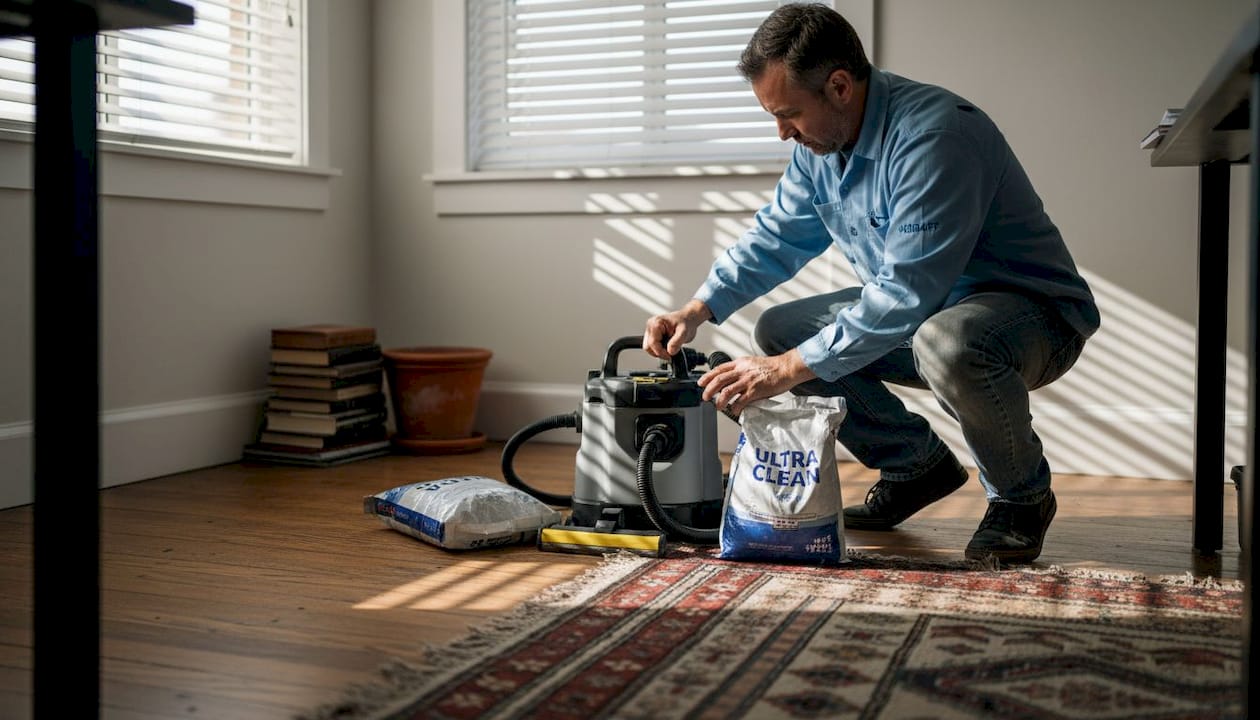
Hot water extraction stands out as the gold standard. It injects hot water and cleaning solution deep into the carpet pile and then extracts it along with loosened allergen particles. The result is a dramatic reduction in both surface and airborne allergen levels.
Here is the recommended sequence for best results:
- HEPA vacuum the entire area before any wet cleaning to lift surface debris.
- Pre-treat high-traffic zones and pet areas with an appropriate cleaning solution.
- Apply hot water extraction using professional-grade equipment.
- Allow thorough drying with ventilation or fans to prevent moisture-related mould growth.
- Re-vacuum once dry to capture any particles disturbed during the process.
Pro Tip: Combining weekly HEPA vacuuming with professional hot water extraction every three to six months delivers the most consistent allergen reduction. Neither method alone is as effective as both together.
For households interested in eco-friendly cleaning methods, it is worth noting that many professional services now use plant-based solutions that are safe for children and pets while still achieving strong allergen reduction. Targeted dust mite carpet removal treatments can also be incorporated into a professional clean for households with severe sensitivities.
Real-world results: how effective is carpet allergen removal?
Understanding the theory is one thing, but how does allergen removal stack up in real Yarra Valley homes and offices?
The numbers from independent research are encouraging. HWE reduces surface allergens by 91 to 97%, airborne cat allergens by 67%, and airborne mould by 55%. These are significant improvements for anyone suffering from persistent allergy symptoms indoors.
| Allergen type | Surface reduction (HWE) | Airborne reduction (HWE) |
|---|---|---|
| Dust mite particles | Up to 97% | Significant |
| Cat dander | Up to 91% | Up to 67% |
| Mould spores | Moderate | Up to 55% |
| Pollen | High | Moderate |
However, results are not uniform across all carpet types. High-pile and shag carpets trap allergens more deeply and are harder to extract from completely. Low-pile and loop carpets respond better to hot water extraction. The carpet base, particularly in older installations, can retain mould and mite colonies even after thorough surface cleaning.
Over-wetting is a real risk. If a carpet takes more than 12 hours to dry after cleaning, moisture can migrate to the base and backing, creating conditions for mould regrowth. This is why professional drying management matters as much as the cleaning itself.
For air quality and carpets improvements to last, cleaning needs to be part of a broader system. Residents who combine professional extraction with indoor humidity control and regular vacuuming consistently report fewer allergy flare-ups, better sleep, and reduced reliance on antihistamines.
“After our first professional deep clean, the difference in how we breathed at home was immediate. We had no idea how much was hiding in the carpet.” This kind of feedback is common from Yarra Valley families who make the switch from DIY to professional extraction.
Beyond the carpet: whole-home strategies for allergen reduction
With the main methods covered, a truly allergen-smart home takes a broader approach.
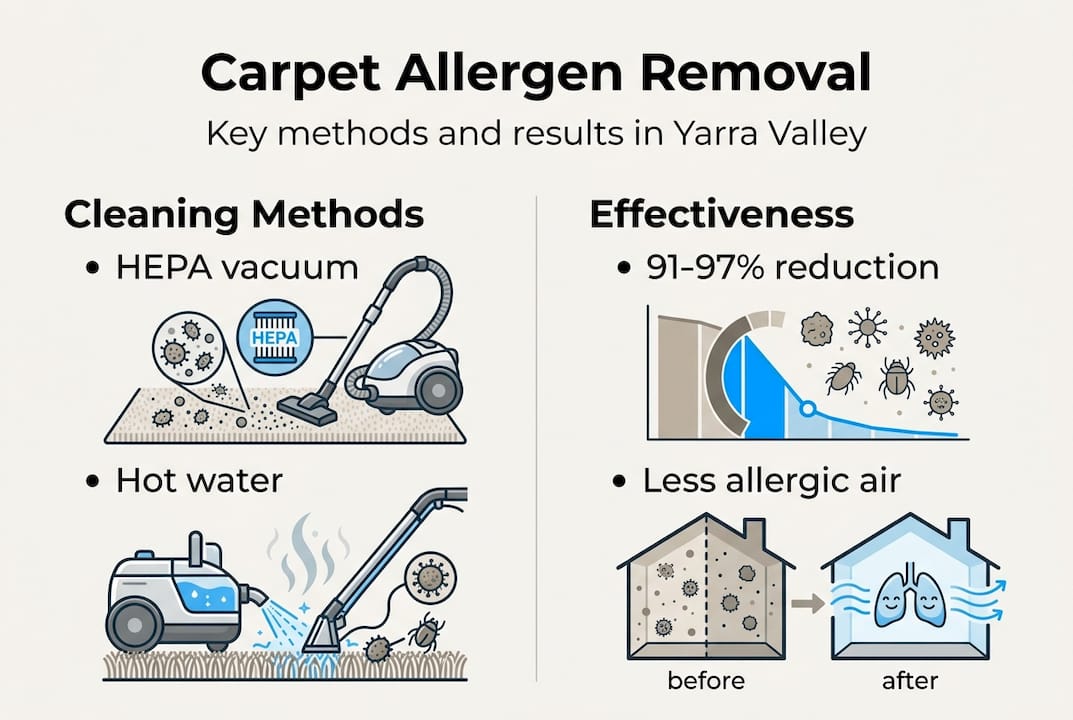
Cleaning the carpet is a powerful first step, but allergens do not live in carpet alone. A comprehensive strategy addresses every soft surface and environmental factor in your home or business. Research supports combining allergen reduction in carpets with keeping indoor humidity below 50%, enforcing a no-shoes policy, and cleaning upholstery and mattresses for severe allergy sufferers.
Here are the most effective whole-home measures to build into your routine:
- Keep indoor humidity below 50%: Dust mites and mould both struggle to survive in drier air. A simple hygrometer lets you monitor this easily.
- Adopt a no-shoes policy: Shoes are the single biggest vector for tracked-in pollen and outdoor allergens, especially during Yarra Valley’s spring pollen season.
- Vacuum with a HEPA-filter machine weekly: Focus on high-traffic areas, under furniture, and along skirting boards where allergens accumulate.
- Clean soft furnishings regularly: Sofas, armchairs, and curtains harbour the same allergens as carpets and are often overlooked.
- Address mattresses: Mattresses are a primary habitat for dust mites. Professional mattress cleaning alongside carpet cleaning dramatically reduces bedroom allergen load.
- Improve ventilation: Fresh air circulation helps dilute indoor allergen concentrations, particularly after cleaning.
One of the most common mistakes allergy-prone households make is focusing entirely on carpet while ignoring the couch or the bedroom. If your sofa sits on a freshly cleaned carpet but has never been professionally cleaned itself, allergens simply transfer back and forth.
For healthy air and cleaning outcomes that last, think of your home as an ecosystem. Every surface connects to the others.
Pro Tip: Book your carpet, upholstery, and mattress cleaning on the same day. This eliminates cross-contamination between surfaces and gives your entire home a simultaneous reset, maximising the allergen reduction benefit in one visit.
Our take: the misunderstood side of carpet allergen removal
After years of working in Yarra Valley homes and businesses, we have noticed that the most persistent myth about carpets and allergies is the advice to simply rip out the carpet. It sounds logical, but it is often wrong. Some research actually shows that carpets can trap allergens and reduce airborne exposure compared to hard floors, where particles become airborne with every footstep.
The real issue is not the carpet itself. It is infrequent deep cleaning, the wrong equipment, and ignoring the rest of the home. A properly maintained carpet in a well-managed home can be a lower-allergen environment than a hard floor that is swept daily.
What most generic advice misses is the importance of pile type, cleaning frequency, and whole-home habits working together. No single product or one-off clean is a miracle solution. The homes we see with the best best allergy cleaning tips outcomes are those where professional extraction is paired with consistent vacuuming, humidity control, and upholstery care. It is a system, not a single event.
Professional help for carpet allergen removal in the Yarra Valley
If you want the ultimate peace of mind and the highest level of relief from carpet allergens, professional support is your next move.
At Yarra Valley Carpet Cleaning, we use advanced hot water extraction equipment and eco-friendly solutions to deliver measurable allergen reduction across homes and businesses in Lilydale, Mooroolbark, Healesville, Chirnside Park, and beyond. Our trained technicians understand the specific allergen challenges of the Yarra Valley region and tailor each clean accordingly. Whether you need carpet cleaning near you or a full-service expert home carpet cleaning package, we are ready to help. Our deep steam cleaning service is especially effective for households dealing with persistent allergy symptoms. Contact us today to book a clean that makes a real difference to your indoor air quality.
Frequently asked questions
What are the main carpet allergens in Yarra Valley homes?
Dust mites, pet dander, tracked pollen, and mould spores are the most common carpet allergens found in Yarra Valley properties, with pollen levels particularly elevated during spring.
How often should carpets be professionally cleaned to reduce allergens?
Professional hot water extraction every three to twelve months is recommended for most homes, with more frequent cleans for households with pets or severe allergy sufferers.
Is carpet removal necessary to prevent allergies?
Removing carpet is rarely necessary. Some studies show carpets can actually trap allergens and reduce airborne exposure compared to hard floors, provided the carpet is cleaned regularly and professionally.
What else should be cleaned to reduce allergies besides carpet?
Furniture upholstery, mattresses, and curtains should also be professionally cleaned, as upholstery and mattresses harbour the same allergens as carpets and contribute significantly to total household allergen load.
Recommended
- 8 Best Carpet Cleaning Tips for Allergies Relief – Yarra Valley Carpet Cleaning
- Effective Carpet Cleaning for Asthma Relief – Yarra Valley Carpet Cleaning
- Dust Mite Removal Carpets: Effective Steps for Yarra Valley – Yarra Valley Carpet Cleaning
- Eco-friendly carpet cleaning: fresher, healthier Yarra Valley homes – Yarra Valley Carpet Cleaning
- Air Filter Replacement | Air Duct and Dryer Vent Cleaning Avondale